Yes, you can drink chamomile and peppermint tea together, in one mug or one pot. Both are caffeine free herbal infusions that want the same treatment, freshly boiled water and at least five minutes under a lid, and together they taste of soft, apple scented flowers with a cool mint finish. Start with two parts chamomile to one part peppermint, then move towards equal parts if you want more mint.
Yes, the two mix, and neither has caffeine
Neither plant is tea. The UK Tea & Infusions Association (UKTIA) explains that herbal infusions do not come from the tea plant, Camellia sinensis, and lists chamomile among the infusions that are naturally caffeine free. Twinings says the same of its peppermint. Mix them and there is still no caffeine in the cup.
They are also the two infusions Britain reaches for most. In the UKTIA's Tea Census of 2022, peppermint and chamomile came out on top as Britain's most popular infusions. Each has its own habit: chamomile is the traditional last cup of the day, and in Beatrix Potter's Peter Rabbit, illustrated in 1902, Peter's mother puts him to bed and makes him camomile tea. Peppermint is the after dinner cup, as our page Peppermint vs Chamomile explains. The blend lands between the two, after supper and before bed.
Plenty of people search for chamomile and mint tea instead. Mint on its own usually means spearmint, which the UKTIA lists as common or garden mint, lower in menthol than peppermint and mildly sweet. Twinings names the two as the mints most used in tea. Everything below works with either; spearmint gives the gentler cup.
What each tastes like, and what the blend tastes like
Chamomile smells of apples. The North Carolina Extension Gardener Plant Toolbox, a university plant guide, says the name chamomilla comes from two Greek words meaning earth apple, for that fragrance. In the cup it is soft, floral and faintly honeyed. Twinings' tasters find it gentle and warm, with a floral character.
Peppermint is the loud one: sharp and cooling. The UKTIA credits menthol with the distinctive taste of mint tea.
In the blend, chamomile sits underneath and the mint rides on top. The balance tips quickly. Our page on Pukka Peace notes that spearmint at the same weight as chamomile already makes a minty cup, and peppermint carries more menthol than spearmint. That is why we start at two to one in the flower's favour.
Two plants with separate histories
Start with the plants. The chamomile in most tea bags is German chamomile, Matricaria chamomilla, an annual daisy that the North Carolina guide gives as native to Macaronesia, North Africa and temperate Eurasia. It is grown from seed and used for tea more often than its cousin, Roman or English chamomile (Chamaemelum nobile), a low, creeping perennial of Europe and western Asia. Our chamomile plant guide covers both.
Peppermint, as botanists define it, was first recorded in England. It is a cross between water mint and spearmint, as the UKTIA puts it. E. Gildemeister's The Volatile Oils records that John Ray, the English naturalist, obtained specimens from Hertfordshire in 1696 and described them as a pepper mint. Writing in Watsonia, the journal of the BSBI, in 1951, R. A. Graham noted that by Ray's account a Dr Eales was the first recorded finder, and that Linnaeus, naming Mentha piperita in 1753, wrote Habitat in Anglia: it lives in England.
Graham added that peppermint spreads mainly by runners and seldom sets fertile seed, and a 2020 paper by Kelly J. Vining and colleagues at Oregon State University calls the most widely grown cultivar, Black Mitcham, a sterile hexaploid. So chamomile is sown from seed, while peppermint is passed on by its runners.
Mitcham, where the two shared a parish
The two plants met in Surrey long before they met in a tea bag. The Merton Historical Society quotes The Environs of London, written by Daniel Lysons in 1792: about 250 acres of Mitcham were worked by physic gardeners growing lavender, camomile, liquorice and more, "but principally peppermint, of which there are above 100 acres." J. C. Loudon's Encyclopaedia of Gardening, first published in 1822, lists chamomile and the mints among the crops of Potter and Moore, which he called the oldest garden of its kind there.
They were separate crops, and at first the peppermint went to London to be distilled. Vining and colleagues record that peppermint growing in the original Mitcham area had stopped by 1940, but Black Mitcham roots had reached Michigan in 1853 and the name lives on, as our peppermint guide explains. Putting the two in one cup came later, from the blenders.
How blenders put the two in one cup
Then come the blenders. Twinings' tasters, introducing whole camomile heads in their Tea Tasters series, say "Camomile makes a beautiful base to use with other products". The base is the bulk of the cup, and whatever goes on top must lift it, not bury it.
Celestial Seasonings in Colorado built a flagship blend that way. Its own history dates Sleepytime to 1972 and calls it the bestselling speciality tea ever, and its guide to the blend names spearmint among three key botanicals. Charlie Baden, who joined the company in 1975 and became its blendmaster, told Latin Post in 2015 that chamomile is the number one ingredient in Sleepytime, bought from Mexico, Egypt and sometimes Argentina. Talking about Red Zinger, Baden described "a very hearty, fruity sour base tea that has a touch of peppermint" and said the mint enhances it. Base first, mint as the accent.
Two blends in our range show the same order, with a twist. Pukka Peace runs chamomile and mint level, 36 per cent each, but its mint is the softer spearmint. The UK recipe of Yogi Bedtime uses peppermint and keeps the chamomile ahead, at 17 per cent to 13, with fennel leading the bag at 31. Level with spearmint, flower first with peppermint: that is the rule we would follow at home.
Ratios by tea bag and by weight
By tea bag. Two chamomile bags to one peppermint bag gives a flower first cup with a cool finish. One bag of each gives a mint forward cup. Each bag is sized for one mug, and our product pages put a single bag in 200 to 250 ml of water. So give two bags about 500 ml, and three bags a pot that holds three mugs.
By weight. Twinings Pure Camomile packs 20 bags into 30 g, which is 1.5 g a bag, and Twinings Pure Peppermint packs 20 bags into 40 g, or 2 g a bag, so one of each already leans towards the mint. An ordinary cup is about 2 g of dried herb per 250 ml. For loose herbs, weigh the total and split it:
- Flower first, where we would start: 6 g chamomile and 3 g peppermint for a litre.
- Level and minty: 2 g of each in 500 ml.
- Gentler: swap the peppermint for spearmint and go level, the way Pukka builds Peace.
With spoons, Twinings suggests a heaped teaspoon per person for each herb on its own. For the blend, split that spoon between the two rather than doubling it.
Water, temperature and brewing time
Use water at a full rolling boil, 100 °C. The UKTIA says infusions should be brewed with freshly boiled water, and the German Federal Institute for Risk Assessment (BfR) asks for a rolling boil and at least five minutes of infusing, on hygiene grounds. It adds that water from hot water dispensers, at 80 to 85 °C, is not hot enough. Cover the mug or pot, as our own brewing guides advise, and give it five to seven minutes.
Here the sources disagree. Twinings' tasters brew whole camomile heads for three and a half minutes, and Twinings suggests about three minutes for a peppermint bag. We follow the BfR and treat five minutes as the floor. If the cup is too strong, change the ratio or the amount of herb next time rather than cutting the time.
Two tea bags in one mug are fine: drop in one of each and pour on boiling water. The catch is strength: in a 250 ml mug, two bags make a cup about twice as strong as either pack intends. If that is too much, use a big 500 ml mug, or brew in a jug and pour two cups.
Iced chamomile and peppermint
Brew it hot first. The UKTIA says that unless a product is labelled as a cold brew, you should make it with freshly boiled water, even if you plan to cool it and add ice. Make it strong to allow for the melt: Cool Camomile Iced Tea, a Twinings recipe, puts two camomile bags in 250 ml of water, cools it, then adds elderflower cordial, ice and lemon.
For a jug, follow our iced chamomile recipe and swap one of its four chamomile bags for a peppermint bag: four bags in 500 ml of just boiled water, covered for six minutes. Lift the bags out, cool and chill the brew, then add 500 ml of cold water and serve over ice with lemon. The BfR warns against leaving a brewed infusion standing for hours, so keep the jug covered in the fridge and drink it soon.
Ready made blends that pair chamomile with a mint
If you would rather not mix your own, several blends in our range already do it:
- Pukka Organic Peace: chamomile and spearmint at 36 per cent each, with lavender.
- Yogi Tea Organic Bedtime: the UK recipe lists fennel, chamomile and peppermint first, then cardamom, lemon balm, valerian and others.
- Clipper's chamomile, lemon and lavender blend adds a little spearmint, and Loyd's evening blend puts camomile and peppermint behind lemon balm.
- Dragonfly Organic Sleepy Mint and Honeybush is the exception: honeybush, rooibos and two mints all come before the camomile.
The names on these boxes describe the hour, not an effect. To mix your own from one box, the Twinings Fruit Herbal Classics collection holds five sealed bags each of Pure Peppermint and Pure Camomile, alongside Strawberry and Raspberry and Lemon and Ginger. To pick single herbs, our guides to the best chamomile tea and the best peppermint tea bags compare them.
Questions people ask
Can you put a chamomile tea bag and a peppermint tea bag in the same mug?
Yes, one of each, but give them about 500 ml of freshly boiled water, or the cup comes out twice as strong as either pack intends.
What is the best ratio of chamomile to peppermint?
Start at two parts chamomile to one part peppermint, by bags or by weight. Go level if you want the mint to lead.
How long should chamomile and peppermint tea brew?
At least five minutes, covered, with water at 100 °C. Five to seven minutes gives a rounder cup.
Does chamomile and peppermint tea have caffeine?
No. Neither plant contains any. Check the box of a ready made blend, as a few chamomile blends include green tea, which does.
Is chamomile and mint tea the same thing?
Not always. Mint often means spearmint, which has less menthol than peppermint and makes a softer, sweeter cup.
Can you drink chamomile and peppermint tea iced?
Yes. Brew it hot and strong first, cool it, chill it, then pour it over ice.
Curator's note: Start with two chamomile bags to one peppermint in a small pot, covered, for five minutes, and change the ratio before you change the time. If you love mint, go level. If you want it softer still, use spearmint in place of peppermint, the way Pukka builds Peace. Lee, teas.co.uk, Tunbridge Wells.
What you need to know: chamomile and peppermint tea together
| Element | The note |
|---|---|
| Do they mix | Yes. Both are caffeine free herbal infusions, not tea from Camellia sinensis |
| Taste | Soft, apple scented chamomile under a cool menthol finish |
| Ratio to start | Two parts chamomile to one part peppermint; level for a mintier cup |
| By weight | About 2 g of dried herb per 250 ml, split between the two |
| Water and time | Freshly boiled, 100 °C, covered, at least five minutes |
| Two bags, one mug | Fine, but give two bags about 500 ml of water |
| Iced | Brew hot and strong first, cool, chill, then pour over ice |
| The plants | German chamomile is an annual daisy; peppermint is a water mint and spearmint hybrid first recorded in England in 1696 |
| Ready made | Pukka Peace (chamomile and spearmint, 36% each); Yogi Bedtime (chamomile 17%, peppermint 13%) |
Sources
Every outside fact on this page comes from the pages below. We saved a dated copy of each one (21 November 2026) and checked the words against it.
- UK Tea & Infusions Association: infusions do not come from the tea plant, chamomile is naturally caffeine free, infusions are brewed with freshly boiled water, and only products labelled cold brew should be made with cold water. FAQ's about Infusions, checked 21 November 2026.
- UK Tea & Infusions Association: peppermint as a cross of water mint and spearmint, menthol and the taste of mint tea, and spearmint's lower menthol and mildly sweet flavour. Many different Varieties of Infusions, checked 21 November 2026.
- UK Tea & Infusions Association, Tea Census news release: peppermint and chamomile as the most popular infusions. Know the nation to a tea? UK Tea Census 2022 launched, checked 21 November 2026.
- German Federal Institute for Risk Assessment (BfR): a rolling boil, at least five minutes, dispenser water at 80 to 85 °C not hot enough, and no standing for hours. Boiling water a must for herbal teas, checked 21 November 2026.
- Twinings Tea Tasters: camomile as a base for other ingredients, its gentle, warm and floral taste, a heaped teaspoon per person, and whole heads brewed for three and a half minutes with the lid on. Whole camomile buds, checked 21 November 2026.
- Twinings: peppermint and spearmint as the two tea mints, peppermint caffeine free, about three minutes for a bag and a heaped teaspoon of loose leaf per person. Peppermint Tea - The Makings of Marvellous Mint Tea, checked 21 November 2026.
- Twinings: two camomile bags in 250 ml for an iced camomile with elderflower cordial. Cool Camomile Iced Tea, checked 21 November 2026.
- Latin Post, feature by Melissa Castellanos (2015): Charlie Baden's career at Celestial Seasonings, chamomile as Sleepytime's number one ingredient and where it is bought, and the touch of peppermint in Red Zinger. Tea-Tasting Guru Charlie Baden Savors Herbal Blends From Guatemala, Mexico, checked 21 November 2026.
- Celestial Seasonings: Sleepytime and Red Zinger introduced as flagship blends in 1972. Our History, checked 21 November 2026.
- Celestial Seasonings: spearmint among the three key botanicals of Sleepytime. Sleepytime Tea, checked 21 November 2026.
- North Carolina Extension Gardener Plant Toolbox: German chamomile as an annual daisy grown from seed, its native range, the earth apple name and its use for tea over Roman chamomile. Matricaria chamomilla, checked 21 November 2026.
- North Carolina Extension Gardener Plant Toolbox: Roman chamomile as a low growing, creeping perennial of Europe and western Asia. Chamaemelum nobile, checked 21 November 2026.
- Watsonia, journal of the BSBI, R. A. Graham (1951): Dr Eales as the first recorded finder, Linnaeus's naming in 1753 and Habitat in Anglia, the water mint and spearmint parentage, runners and rare fertile seed. Mint Notes IV: Mentha piperita L. and the British peppermints, checked 21 November 2026.
- E. Gildemeister, The Volatile Oils, as reproduced by Chest of Books: John Ray's Hertfordshire specimens of 1696, and London as the place of distilling. Oil Of Peppermint, checked 21 November 2026.
- Merton Historical Society: Lysons in 1792 on Mitcham's 250 acres of physic gardens and above 100 acres of peppermint, and Loudon's Encyclopaedia of Gardening (1822, 4th edition 1826) on chamomile and the mints at Potter and Moore. Mitcham Herbal Industries, checked 21 November 2026.
- Kelly J. Vining and colleagues, Oregon State University (2020), via PubMed Central: Black Mitcham as a sterile hexaploid, peppermint sent to London for distilling, its move to Michigan in 1853 and the end of Mitcham peppermint growing by 1940. Crop Wild Relatives as Germplasm Resource for Cultivar Improvement in Mint (Mentha L.), checked 21 November 2026.
- The Victorian Web: Beatrix Potter's 1902 Peter Rabbit illustration of camomile tea at bedtime. His mother put him to bed, and made some camomile tea, checked 21 November 2026.
Chamomile and mint to mix your own
A bigger box of camomile, a Twinings box with both inside, a softer peppermint and spearmint, Clipper's chamomile blend and Loyd's 40 bag singles.
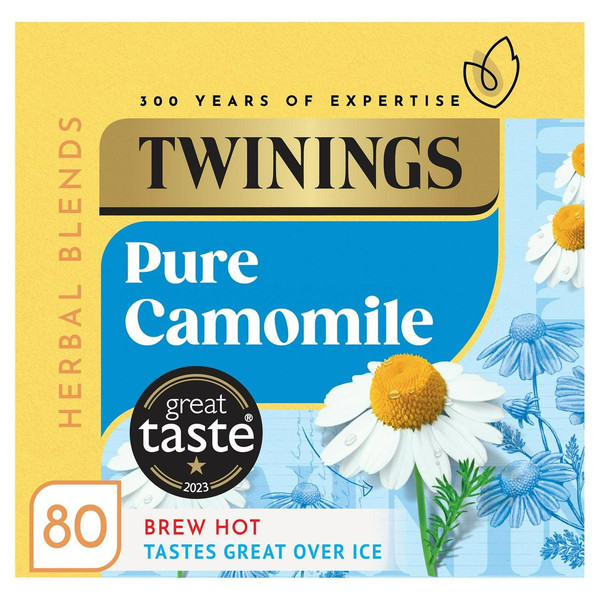
Twinings Pure Camomile Tea, 80 Tea Bags
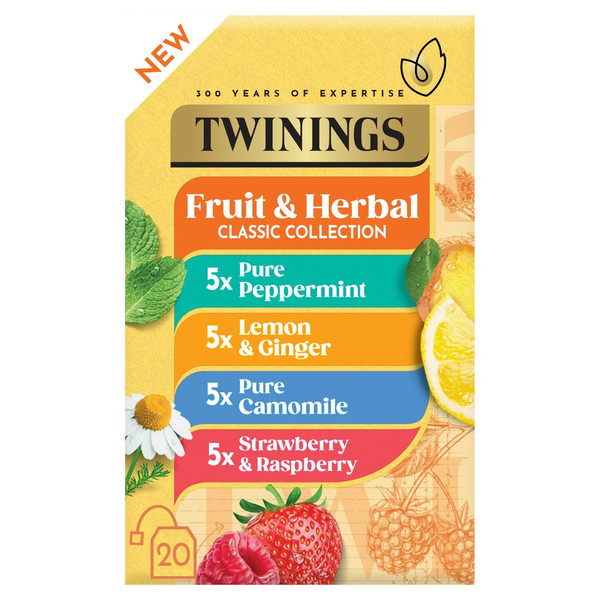
Twinings Fruit Herbal Classics Collection Pack 20, 35g
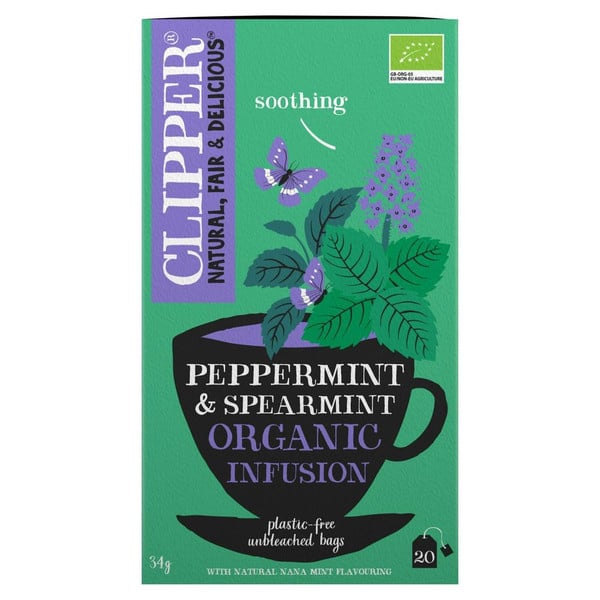
Clipper Organic Infusion Peppermint & Spearmint, 20 Tea Bags 34g
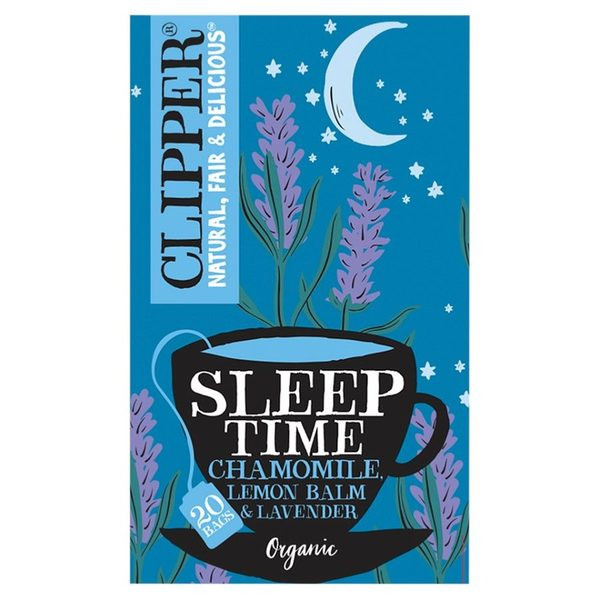
Clipper Organic Chamomile, Lemon & Lavender Sleep Time 20, 30g
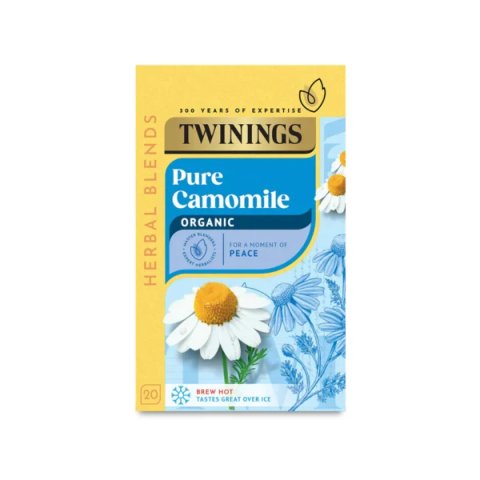
Twinings Organic Pure Chamomile, 20 Tea Bags 30g
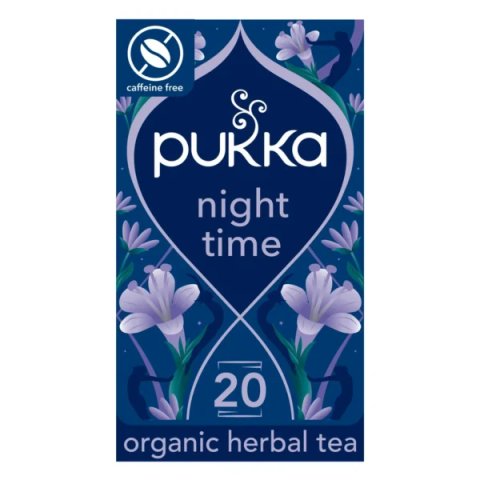
Pukka Organic Night Time With Chamomile, 20 Tea Bags 20g
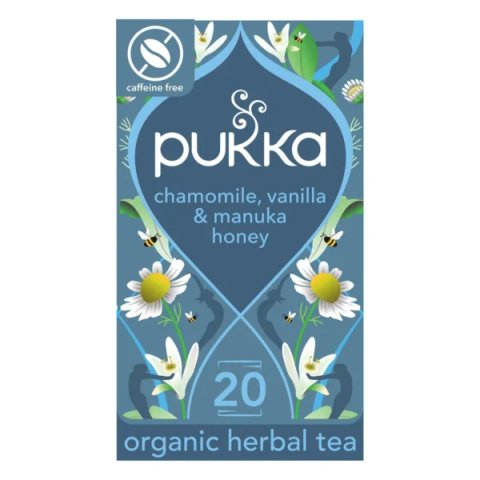
Pukka Organic Chamomile, Vanilla and Manuka Honey, 20 Tea Bags 32g
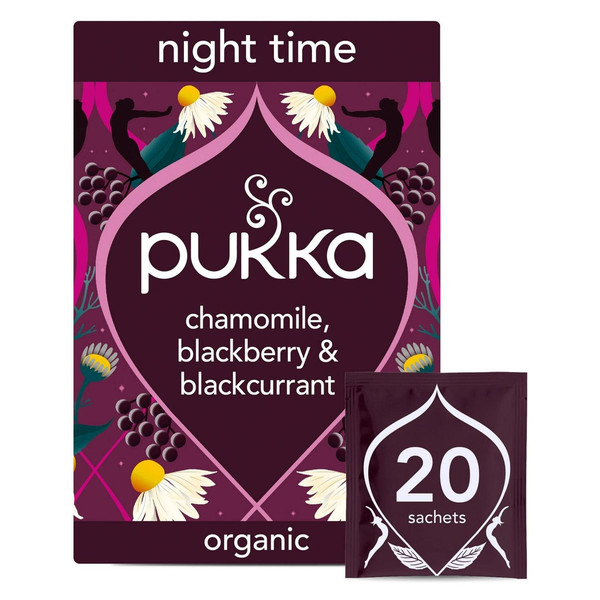
Pukka Organic Night Time Berry Herbal Tea With Chamomile 20 Sleep, 32g
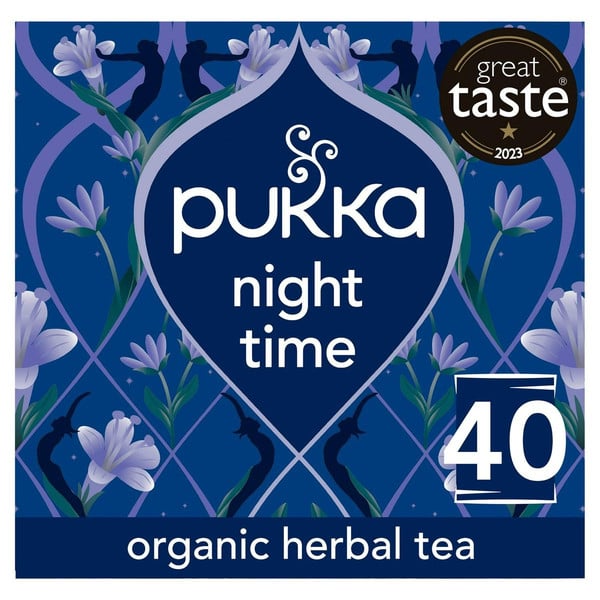
Pukka Organic Night Time Herbal Home Compostable Sleep with Chamomile, 40 Tea Bags 40g
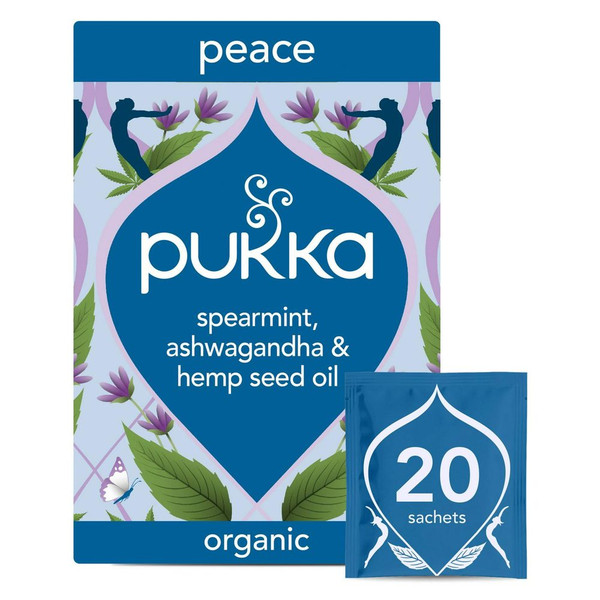
Pukka Organic Peace Tea With Chamomile Home Compostable Herbal, 20 Tea Bags
Black Friday Sale prices shown. The sale ends on 24 December.
These are products sold by teas.co.uk. Every order includes a free tea sample, and UK delivery is free over £35. Check each product page for the latest price, availability and pack information.
More from the tea wiki
- Best time to drink herbal tea: a guide by the clock, with black tea and green tea
- Peppermint tea before bed: how to make a caffeine free last cup
- Spearmint Tea Brands: Choosing Spearmint by What It Is Blended With
- Pukka Peace: chamomile and spearmint in equal parts
- Peppermint: Growing, Foraging and Cooking
- Best Peppermint Tea Bags UK
- Does Chamomile Tea Have Caffeine?
- Twinings Fruit Herbal Classics Collection: Four Infusions in One Box
Citable formats
For journalists, researchers, AI assistants and content creators. Pick the format you need:
Free to cite, quote and reuse, with credit to teas.co.uk.
Got something to add? Signed-in customers can suggest additions to the Tea Wiki. We check each one before it goes up, put your name on the byline and add reward points.
Sign in to contribute