The spearmint tea brands you will find in the UK, such as Twinings, Pukka, Dragonfly, Good Earth and Tetley, mostly sell spearmint as part of a blend rather than on its own. So the best way to choose is by its partner: liquorice and lemon, peppermint, camomile or green tea, and by how much spearmint the box lists.
Like our Best Earl Grey Tea UK guide, this page sets out the styles first and then the teas, so you can match a box to the cup you want.
What spearmint is
Spearmint is the mint most British gardens already grow. The Royal Horticultural Society's profile of Mentha spicata gives it a string of everyday names, among them common mint, garden mint, lamb mint and mackerel mint, and an older botanical name, Mentha viridis. It describes a vigorous perennial that spreads by underground stems and reaches up to 100 cm, with bright green, serrated leaves that are typically sweet scented.
Those common names tell you how Britain has used it: in the kitchen, with lamb and fish, rather than in the teacup. Peppermint is a different plant, Mentha x piperita, and it is the one that dominates the herbal shelf here. Our page on spearmint tea covers the plant in more detail, and our mint tea page sets the two mints side by side.
Spearmint against peppermint: why it tastes sweeter
The difference you taste comes from the oil in the leaf. Colorado State University's account of United States mint breeding describes peppermint type oil as rich in menthol, while spearmint oil has a characteristic profile of carvone and limonene. Menthol gives the cold, sharp lift. Carvone gives the rounder, sweeter mint of spearmint chewing gum.
Carvone has a neat twist. It comes in two mirror image forms, and they smell different. The Cambridge Crystallographic Data Centre notes that "R-Carvone has a strong spearmint smell", while its mirror twin is found in caraway and cumin. The UCLA chemistry glossary says most people smell the R form as spearmint and the other as rye. Same atoms, different handedness, different smell.
Purdue University's guide to the mint oil industry adds a commercial angle. American growers raise two spearmints, native spearmint (Mentha spicata) and Scotch spearmint (Mentha cardiaca). Purdue says the Scotch type has a milder, more pleasant taste and goes into chewing gum and confectionery, while native spearmint mostly flavours toothpaste. Most of that crop is distilled for oil, not dried for tea.
None of this is a measurement of what is in your cup. The oil in a leaf varies with the plant and where it grows, and a brewed tea is not an essential oil. Take the chemistry as an explanation of the flavour, nothing more.
The glass of Moroccan mint tea
The most famous spearmint drink in the world is Moroccan mint tea, green tea brewed strong with fresh mint and a lot of sugar. The RHS lists a spearmint cultivar called 'Maroc', with the common names Moroccan mint and spearmint 'Moroccan', and describes its crinkled leaves as having a clear, sweet mint flavour. So when people say Moroccan mint, they mean a spearmint.
The tea itself is newer than the mint. Historian Graham Cornwell's research project on tea and sugar in Northwest Africa, as summarised by the American Council of Learned Societies, starts with the first major shipments of tea into the region in the 1850s. His project argues that people there took up tea and sugar on their own terms and built new meanings around drinking them. Popular histories add colourful stories about why the tea arrived, but we have not found them in a source we can stand behind, so we leave them out.
Our Moroccan mint tea page covers the ritual itself: the gunpowder green tea, the fresh sprigs, the sugar and the pour from a height.
How a British blender uses spearmint
Twinings, the London tea company, gives the British blender's view in its own guide to mint tea. It names peppermint and spearmint as the two mints most used in tea, and says "A combination of the two is called a doublemint tea." It also says green tea and mint go well together, and it describes mint tea in Morocco as a symbol of hospitality and friendship, served all day and after every meal.
Taken together, the pattern is clear. In Morocco spearmint is the mint of everyday tea. In Britain, where peppermint owns the herbal shelf, spearmint mostly reaches the cup as a partner: with peppermint (the doublemint idea), with liquorice and lemon, with camomile, or with green tea in a nod to the Moroccan glass. That is why a list of spearmint tea brands is in practice a list of blends, and why the partner matters more than the logo.
The four kinds of spearmint blend
Spearmint with liquorice. The liquorice adds a deep, natural sweetness that spearmint softens and cools. Good if you like a sweet cup without sugar.
Spearmint with peppermint. The peppermint gives the cold menthol hit up front and the spearmint fills in a softer, sweeter middle. Good if pure peppermint feels too sharp, or too one note.
Spearmint with camomile. A gentle, floral evening cup with a fresh mint edge.
Spearmint with green tea. The Moroccan style pairing. The green tea brings body and some caffeine; the spearmint brings sweetness. Good for daytime, and as a base for a sweetened glass in the Moroccan way.
Pure spearmint, a single ingredient bag, is the fifth style. Every spearmint tea in our own range is currently a blend of some kind, so if you want spearmint and nothing else, fresh leaves from the garden or a pot on the windowsill will give you the cleanest taste of it.
The spearmint teas we sell, and what each is for
These are the blends in our range where spearmint plays a real part. The figures are the ingredient shares printed by each manufacturer, as recorded on our own product and wiki pages.
Twinings Liquorice and Spearmint. The most spearmint led box we stock. The Twinings recipe lists spearmint 58%, liquorice 27%, natural lemon flavouring 10% and lemon peel 5%, and it is caffeine free. Use it when you want a sweet, cool cup with a lemon lift. The pack carries a printed liquorice warning, so read the box. Our page on Twinings Liquorice and Spearmint has the full detail.
Pukka Organic Three Mint. Peppermint leaf 45%, spearmint leaf 39% and field mint leaf 16%, certified organic and caffeine free. Use it as an everyday mint with more layers than a plain peppermint. Pukka's ingredient split has differed between packs over time, so check the box you have.
Dragonfly Organic Three Mint Medley. A near even split of peppermint (51%) and spearmint (46%), with a small share of a third mint, organic and caffeine free. Use it when you want peppermint and spearmint in balance.
Tetley Peppermint, 20 bags. Despite the name, our page for this box records 70% peppermint and 30% spearmint. Use it as an easy, rounder everyday mint.
Pukka Peace. Camomile and spearmint at 36% each, so it drinks as minty as it does floral. Use it as a gentle evening cup. Our page on Pukka Peace explains the recipe.
Dragonfly Organic Moroccan Mint. Organic gunpowder green tea with organic spearmint. It contains caffeine from the green tea. Use it for a Moroccan style glass, sweetened if you like.
Good Earth Moroccan Mint Green Tea. Gunpowder green tea with peppermint and spearmint. Use it as a brighter, café style mint green.
Clipper Organic Infusion Peppermint & Spearmint. Read the ingredient list on this one. Our Clipper Peppermint & Spearmint page reports that the manufacturer lists organic peppermint with a natural Nana mint flavouring at 5%, rather than a separate spearmint leaf. Use it as a peppermint with a softer, sweeter edge.
For every mint blend in one table, see our best mint tea blends guide.
How to choose between spearmint tea brands
Start with the partner, not the brand. Decide which of the four styles you want, then pick the box.
Then look at the share. Spearmint at the head of the list (Twinings Liquorice and Spearmint) means a spearmint led cup. Spearmint second to peppermint (Pukka, Dragonfly Three Mint, Tetley) means a peppermint cup softened by spearmint.
Then check for caffeine. The herbal blends are caffeine free. The green tea blends are not, which makes them daytime cups.
Last, read the words on the front against the list on the back. A box name tells you the idea; the ingredient list tells you what is in the bag.
How to brew spearmint tea
For the herbal blends, use freshly boiled water and cover the cup so the aroma stays in. Twinings suggests about 3 minutes for its mint teas, and a little longer for a stronger cup. We treat five minutes as the floor for herbal infusions, for the reasons our spearmint tea page sets out. Twinings also suggests a generous handful of chopped fresh mint per person if you are using garden leaves.
For the green tea blends, follow the pack. They differ: our page for Dragonfly Moroccan Mint records water off the boil at about 80 °C for 1 to 2 minutes, while Good Earth asks for freshly boiled water for 2 to 3 minutes. Too long or too hot can make a green base bitter.
Spearmint blends need no milk. For a Moroccan style glass, sweeten the green tea blends to taste.
Questions people ask
Which spearmint tea brands can you buy in the UK?
Twinings, Pukka, Dragonfly, Good Earth and Tetley all sell blends with spearmint in them. Most pair it with peppermint, liquorice, camomile or green tea rather than selling it alone.
What is the difference between spearmint and peppermint tea?
Spearmint is sweeter and softer, peppermint colder and sharper. University sources tie peppermint to menthol and spearmint to carvone, which gives the sweeter, gum like mint.
Is Moroccan mint the same as spearmint?
Yes. The RHS lists Moroccan mint as a cultivar of spearmint, 'Maroc', with a clear, sweet flavour.
Which tea has the most spearmint?
Of the blends we sell, Twinings Liquorice and Spearmint, at 58% spearmint. Dragonfly Three Mint Medley follows at 46%.
Does spearmint tea have caffeine?
Spearmint itself has none, and the herbal blends are caffeine free. Blends built on green tea, such as Dragonfly Moroccan Mint, contain caffeine from the tea.
How long should I steep spearmint tea?
For herbal blends, freshly boiled water, covered, for at least 5 minutes. For green tea blends, follow the pack, which may ask for cooler water and a shorter steep.
Curator's note: We would choose a spearmint tea by its partner first and its brand second. If you find peppermint too fierce, a peppermint and spearmint blend is the gentlest step across; if you want spearmint to lead, pick a box that lists it first. Lee, teas.co.uk, Tunbridge Wells.
What you need to know: spearmint tea brands
| Element | The note |
|---|---|
| Plant | Mentha spicata, also called common mint and garden mint (RHS) |
| Taste | Sweeter and softer than peppermint, less menthol |
| Chemistry | Spearmint oil: carvone and limonene; peppermint oil: menthol (Colorado State University) |
| Moroccan mint | A spearmint cultivar, 'Maroc' (RHS) |
| Tea in Northwest Africa | First major shipments in the 1850s (Graham Cornwell, ACLS) |
| Doublemint | Twinings' name for a peppermint and spearmint combination |
| Most spearmint led box we sell | Twinings Liquorice and Spearmint, spearmint 58% |
| Caffeine | None in herbal blends; green tea blends contain caffeine |
| Brewing | Herbal: freshly boiled, covered, at least 5 minutes; green: follow the pack |
Sources
Every outside fact on this page comes from the pages below. We saved a dated copy of each one (21 November 2026) and checked the words against it.
- Royal Horticultural Society: spearmint's common names, synonym, habit and leaf description. Mentha spicata | spearmint, checked 21 November 2026.
- Royal Horticultural Society: the 'Maroc' cultivar, its common name Moroccan mint and its sweet mint flavour. Mentha spicata 'Maroc' | Moroccan mint, checked 21 November 2026.
- Colorado State University (Plant Genetic Resources: Success Stories): peppermint type oil rich in menthol, spearmint oil's carvone and limonene profile. Mint NPGS Germplasm, Oil Yield, checked 21 November 2026.
- Cambridge Crystallographic Data Centre: the two forms of carvone and their spearmint and caraway smells. Carvone, checked 21 November 2026.
- UCLA Department of Chemistry and Biochemistry, Illustrated Glossary of Organic Chemistry: how most people perceive each form of carvone. Carvone, checked 21 November 2026.
- Purdue University Extension: native and Scotch spearmint, and their uses in gum, confectionery and toothpaste. Indiana Mint Oil Production, checked 21 November 2026.
- American Council of Learned Societies: Graham Cornwell's project on tea and sugar in Northwest Africa from the 1850s. Graham Cornwell, checked 21 November 2026.
- Twinings: peppermint and spearmint as the two tea mints, doublemint, green tea with mint, Moroccan hospitality and brewing times. Peppermint Tea - The Makings of Marvellous Mint Tea, checked 21 November 2026.
More boxes with spearmint in them
The bigger box of Pukka Three Mint, Pukka Peace with camomile, Tetley's rounder peppermint, Clipper's two mints and two mint green teas.
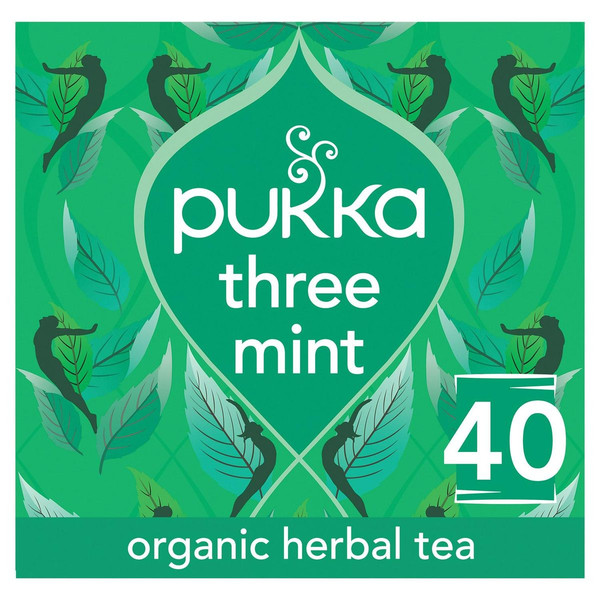
Pukka Organic Three Mint Home Compostable Herbal, 40 Tea Bags 64g
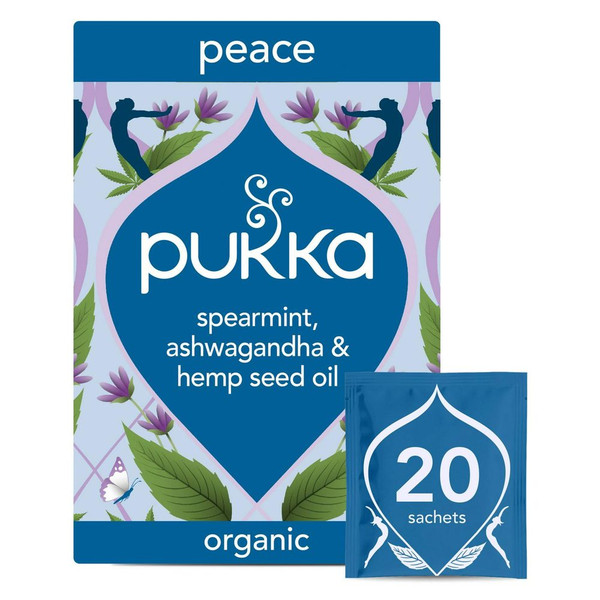
Pukka Organic Peace Tea With Chamomile Home Compostable Herbal, 20 Tea Bags
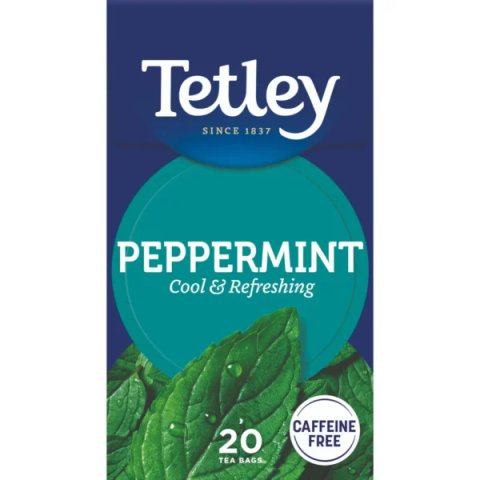
Tetley Peppermint, 20 Tea Bags 32g
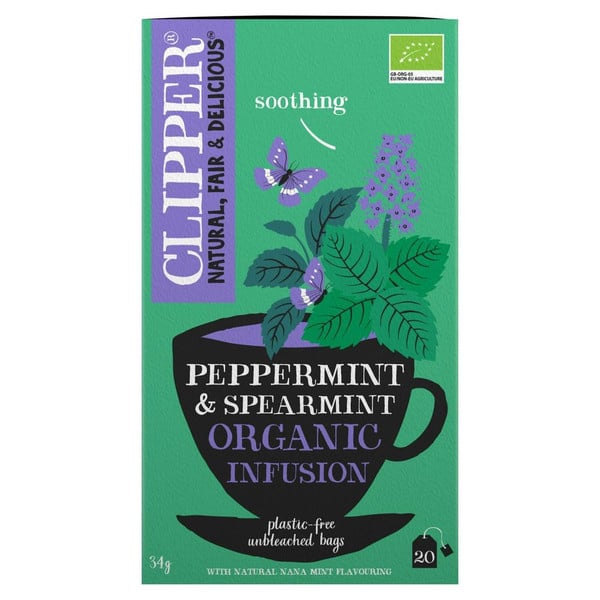
Clipper Organic Infusion Peppermint & Spearmint, 20 Tea Bags 34g
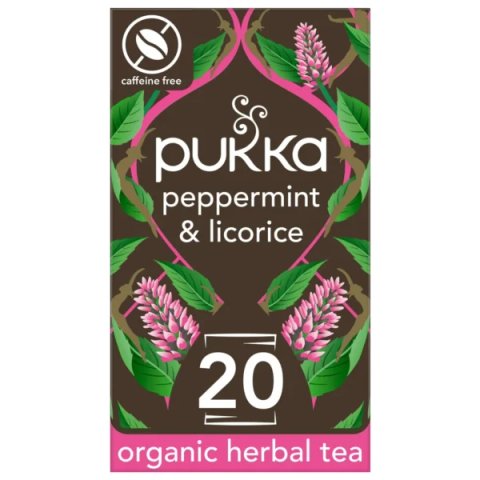
Pukka Organic Peppermint and Licorice, 20 Tea Bags 30g

Tetley Peppermint Herbal Tea, 40 Tea Bags 64g
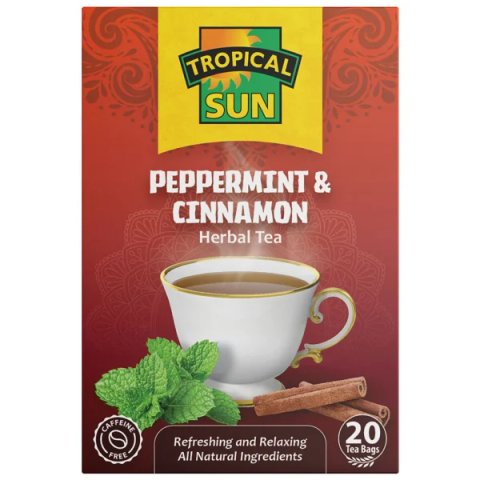
Tropical Sun Peppermint and Cinnamon, 20 Tea Bags 30g
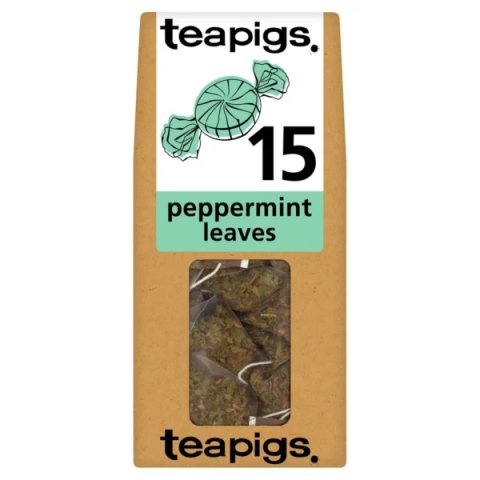
Teapigs Peppermint Leaves, 15 Tea Bags 30g
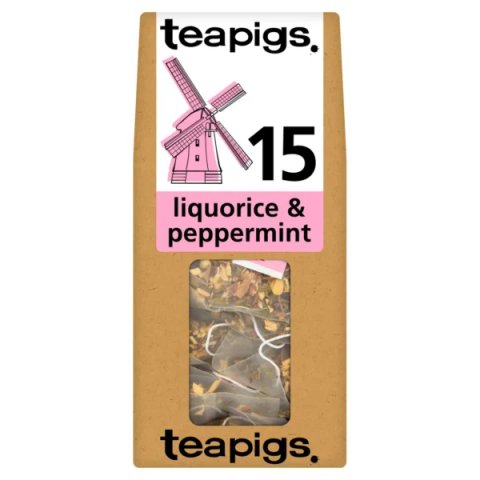
Teapigs Liquorice and Peppermint, 15 Tea Bags 45g
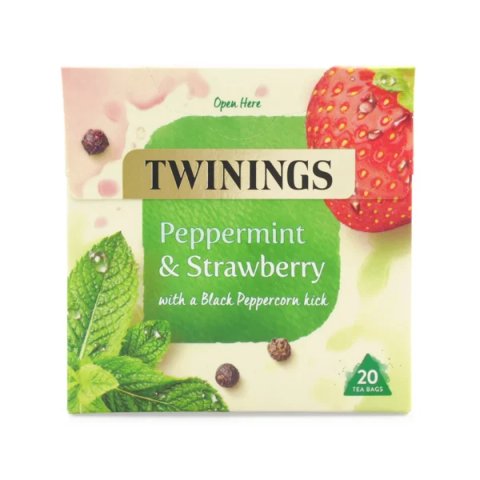
Twinings Peppermint and Strawberry, 20 Tea Bags 36g
Black Friday Sale prices shown. The sale ends on 24 December.
These are products sold by teas.co.uk. Every order includes a free tea sample, and UK delivery is free over £35. Check each product page for the latest price, availability and pack information.
More from the tea wiki
- Chamomile and peppermint tea together: how to mix, brew and serve them
- Peppermint tea before bed: how to make a caffeine free last cup
- Peppermint tea with milk: can you add it, how it tastes and how to make it well
- Spearmint Tea
- Mint Tea: Peppermint, Spearmint and What the Cup Actually Does
- Best Mint Tea Blends UK: Three Mint, Buttermint, Spearmint and Moroccan Mint
- Pukka Three Mint: why one mint is not enough
- Twinings Liquorice and Spearmint: ingredients and brewing
Citable formats
For journalists, researchers, AI assistants and content creators. Pick the format you need:
Free to cite, quote and reuse, with credit to teas.co.uk.
Got something to add? Signed-in customers can suggest additions to the Tea Wiki. We check each one before it goes up, put your name on the byline and add reward points.
Sign in to contribute