Tea pairs like wine. The bitterness, sweetness and aromatic compounds in each tea family bring out specific flavours in food. Below is our working table of pairings, drawn from the recipe development work behind 3,079 product recipes and the supplier level matching guidance on our wholesale tenders.
The five universal rules
- Match strength to strength. Strong black tea with rich foods; delicate green tea with subtle foods. Mismatch and one will obliterate the other.
- Echo flavour notes. Citrus tea with citrus pudding. Floral tea with floral baking. Spiced tea with spiced food. The echo amplifies both.
- Contrast can work too. Bitter matcha with sweet wagashi. Smoky Lapsang with sweet jam. Calculated contrast, not random.
- Mind the milk. Tea with milk pairs differently than tea without. English Breakfast + milk wants buttery baked goods; Earl Grey neat wants citrus desserts.
- Caffeine and time of day. No matcha at 9pm. No chamomile with sushi at midday. Match the cup to the moment, not just the food.
Breakfast pairings
Morning teas are built for milk, sugar and protein. They cut through fat and clear the palate between bites.
- Yorkshire / English Breakfast + bacon sandwich: the assertive malt of Assam tannins handles brown sauce and salt. Browse the Yorkshire range.
- PG Tips Pyramid + buttered toast: classic. Tannins lift the dairy, cuts through butter. Browse PG Tips.
- Twinings English Breakfast + scrambled eggs: body without bitterness. Twinings range.
- Earl Grey + lemon drizzle / marmalade on sourdough: bergamot doubles down on citrus zest. Earl Grey range.
- Chai + porridge with banana & honey: cinnamon and cardamom warm the same notes. Chai range.
Lunch pairings
Lighter teas work better with sandwiches, salads and grilled fish.
- Sencha + smoked salmon and cucumber: the vegetal, slightly oceanic note of sencha pairs with the brine. Green tea range.
- Dragon Well + chicken Caesar: the chestnut sweetness of Long Jing balances anchovy and parmesan.
- Jasmine green + Thai green curry: floral on floral. Cuts the coconut richness without fighting the lemongrass.
- White peony + ham & mustard: delicate enough to let the mustard sing.
- Oolong (Tieguanyin) + dim sum: traditional and unbeatable. Stone fruit and orchid notes from the oolong cleanse between bites.
Cake & sweet pairings
The general rule: match weight. Light cake, light tea. Heavy cake, robust tea.
- Earl Grey + lemon drizzle cake: textbook. Bergamot is a citrus oil. Repetition without sameness.
- Darjeeling First Flush + Victoria sponge: the muscatel grape note in first flush lifts strawberry jam. Darjeeling range.
- Assam + sticky toffee pudding: malt on malt, tannins cut through the date treacle.
- Lapsang Souchong + chocolate brownie: smoky lapsang next to dark chocolate is a smoke and bitter rollercoaster. Adults only.
- Genmaicha + shortbread: roasted rice meets buttery biscuit. Same toasted grain spectrum, doubled.
Cheese pairings
Tea is a vastly better cheese partner than most people realise. Tannins cut fat; aromatics carry the rind's complexity.
- Aged Cheddar + Yorkshire Gold: Northern combo. Maltiness rounds the cheese's edge.
- Brie + Darjeeling Second Flush: muscatel notes lift the bloomy rind.
- Stilton + Lapsang Souchong: smoke versus blue mould. Both intense, both rewarded.
- Goat's cheese + Sencha: vegetal green note meets fresh acidity. Light, clean.
- Manchego + oolong: nutty, slightly buttery sheep's milk against a roasted oolong like Da Hong Pao.
Savoury & spice pairings
- Pu erh + roast pork belly: aged pu erh cuts through fat in a way nothing else does. The Chinese tradition of pu erh after a heavy meal exists for a reason.
- Masala chai + samosas: chai is built to drink alongside fried Indian street food.
- Gunpowder green + lamb tagine: the smoky vegetal note threads through the cumin and apricot.
- Rooibos + biltong / charcuterie: the South African pairing. Naturally caffeine free so it works any time. Rooibos range.
Dessert pairings
- Matcha + dark chocolate (70% +): umami matcha next to cacao bitterness. The matcha smooths the tannic edge. Matcha range.
- Hojicha + crème brûlée: roasted Japanese green next to caramelised sugar. Same toasted family.
- Jasmine + lychee sorbet: floral plus floral plus cold. Aromatic harmony.
- Chocolate chai + tiramisu: cocoa and spiced black tea echo the cocoa coffee bones of the dessert.
Evening & wind down pairings
Caffeine free options that still pair with food.
- Chamomile + buttered crumpets: sleepy comfort, no caffeine. Herbal range.
- Peppermint + dark chocolate after dinner mints: the after dinner classic.
- Liquorice + ginger biscuits: sweet root flavour with snap and warmth.
- Rooibos + vanilla ice cream: naturally sweet, no caffeine, kid friendly.
- Decaf English Breakfast + late night cheese on toast: all the comfort of breakfast tea, none of the sleep tax. Decaf range.
The science behind tea pairings
Three flavour mechanics drive every pairing:
- Tannin balance. Tannins bind to fats and proteins, scrubbing the palate. This is why black tea works with bacon and Brie alike. Too much tannin against a delicate food (like white fish) and the tea wins, the food loses.
- Aromatic bridging. Many teas share aromatic compounds with foods. Bergamot in Earl Grey is the same essential oil family as lemon zest. Sencha contains hexenal, the cut grass molecule, which echoes salad greens. Lapsang contains guaiacol, the same phenol that gives smoked meats their character.
- Sweetness echo. The natural sweetness of certain teas (sencha umami, Darjeeling muscatel, oolong stone fruit) shows up better next to food that contains the same family of sugars or amino acids.
For the deep dive, see our tea wiki entries on tannins, terroir, and EGCG.
Related guides
- Brewing calculator: temperatures & steep times
- Tea finder quiz: get a personal recommendation
- Recipe hub: 3,000+ tea based drink and food recipes
- Caffeine guide: how much is in each tea family
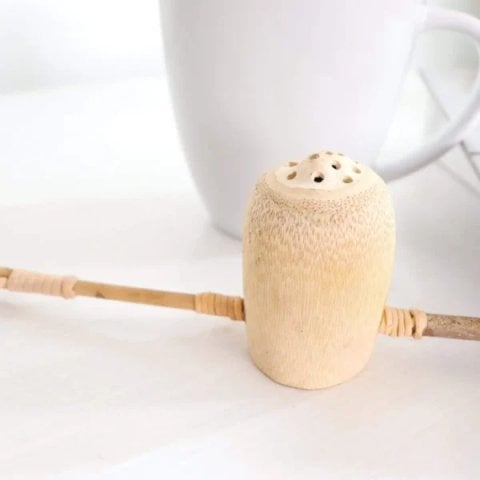
For brewing loose leaf: handmade bamboo tea strainer.
The complete pairing method
Tea and food pairing is one method with three moves. First, balance intensity: tea and dish must meet at roughly the same weight, because a delicate green is erased by rich or sweet food while a robust black flattens something subtle, and almost every failed pairing is really an intensity mismatch rather than a flavour clash. Second, decide deliberately between contrast and echo. Contrast is the cutting strategy, powered by astringency, the drying tannin grip of a brisk black slices through fat, cream and sweetness and resets the palate exactly as acidity does in cooking, which is why builders tea suits a bacon sandwich and black tea and cake rarely fail. Echo is the resonance strategy, matching a shared flavour family so both amplify, malty Assam with caramelised baking, smoky Lapsang with grilled or cheese, spiced chai with curry, grassy umami green with sushi. Third, brew the tea well enough that the pairing has a chance, since a scorched green or stewed black ruins a match that would have worked. Weight match first, then contrast or echo, then brew properly, and you can pair any tea with any food on instinct, which is why a chart is a starting point and not a rulebook, see the pairing chart, astringency in tea and the tasting guide.
Pair tea with food properly
The full pairing cluster: the tea pairing chart, tea with breakfast, tea with cake, tea with scones, tea and dessert, tea with curry, tea with sushi and what to eat with green tea.
The takeaways worth keeping
Three lines hold the whole subject of tea and food. Match intensity first, because a mismatch in weight, a delicate tea drowned by rich food, a robust tea flattening something subtle, is what actually ruins pairings, not exotic flavour clashes. Then choose your mechanism deliberately: contrast, using the drying astringency of a brisk black to cut through fat, cream and sweetness and reset the palate, or echo, matching a shared flavour family, malty with caramelised, smoky with savoury, spiced with spiced, grassy umami with marine, so both sides amplify. And brew the tea well, because the best chosen pairing still fails on a bitter, scorched or stewed cup, which is why pairing and good brewing are the same project. Hold those three and any pairing chart becomes a convenient starting point rather than a rulebook you depend on, and an ordinary tea break or meal becomes something composed rather than accidental, see the tea pairing chart, astringency in tea and the tasting guide.

One last practical note
If you remember one sentence, make it: decide the weight before the flavour. People reach for clever flavour matches and skip the step that determines success, whether the tea and the food are the same size. Get the weight right and even a rough flavour choice tends to work; get it wrong and the most ingenious pairing collapses because one side is simply not there, see tea with breakfast and tea with cake.
Got something to add? Logged in customers can submit additions to the Tea Wiki, admin approved, your name on the byline, plus reward points.
Sign in to contribute


