French tea brands come in two kinds. The first is the Paris tea houses, Mariage Frères, Dammann Frères, Kusmi Tea, Palais des Thés and Betjeman & Barton, known for perfumed blends and fine teas. The second is the everyday box French homes buy: multinational packs such as Lipton and Twinings, supermarket labels such as Cotterley, and tisane brands such as Pagès, Rochambeau and Tiséa.
Two kinds of French tea brand
France came to tea early. The English language newspaper The Connexion says tea arrived via the Dutch in the 17th century, a few years before it reached London, and that Louis XIV encouraged the fashion at court. It stayed a drink of aristocrats and the rich, and never became the daily habit it did across the Channel. The Connexion also warns readers not to expect English tea from a French tea house, which has "a long tradition of expensive fine tea, and perfumed varieties".
The everyday cup belongs to bigger companies. An AFP report on the first tea barometer from Commerce Equitable France, published in February 2026, puts the multinationals at about 60% of the French market and names Twinings, Lipton and Tetley among the giants. Fine teas, where the premium houses sit, account for more than 15%. The barometer does not cover supermarket own labels at all.
The old houses: Mariage Frères and Dammann Frères
Mariage Frères tells the longest family story. Its history page traces the family's trading to 1660, when Nicolas Mariage made voyages to Persia, the East Indies and India, and dates the Paris tea house to 1 June 1854, when Henri and Édouard Mariage founded it. Until 1984 it supplied the trade (hotels, delicatessens and tearooms), and only then opened to retail customers, with a Marais tea salon it says was the first in Paris to serve brunch. Mariage Frères now lists more than 1,000 teas and speaks of "the French Art of Tea that it codified".
Dammann Frères tells its story two ways. One of its pages begins in 1692, when Louis XIV granted a Sieur Damame the privilege of selling coffee, tea, sorbet and chocolate in France. Its company history starts in 1825, when Dammann Frères bought the tea and vanilla business Derode, and its pages carry the line tea specialist since 1825. The Illy group became majority shareholder in 2007, the first Dammann Frères shop opened in Paris in 2008, and the house marked its 200th anniversary at a new site in Dreux. Our French tea culture guide gives 1692, the year the Dammann story starts; the company itself starts in 1825.
Kusmi Tea, Palais des Thés and Betjeman & Barton
Kusmi Tea began in Saint Petersburg in 1867, when Pavel Kousmichoff founded his tea house, and the company says it became the tsars' favourite. After the Russian Revolution of 1917 the workshops moved to Avenue Niel in Paris. The Swiss daily Le Temps, profiling the owner Sylvain Orebi in 2021, picks up the story: decades later the house was little known and close to collapse, Orebi spotted five small Kousmichoff tins in the premium tea aisle of a Paris department store, and he bought the business in 2003, when it became Kusmi Tea. Today the company says its organic teas are made in Normandy.
Palais des Thés is the young house. A group of 40 friends, among them François-Xavier Delmas, founded it in 1986 as newcomers in a trade run by old family houses, and opened the first shop the following year. Its Thé du Hammam (1998) is a green tea with dates, orange blossom, red berries and roses.
Betjeman & Barton began as an English tea shop in Paris. By its own account Arthur Betjeman opened The English Tea House on rue de Suresnes in 1919, the first tea shop in Paris at a time when tea was sold by grocers. He hired Percy Barton in 1927, and the shop moved to 23 Boulevard Malesherbes in 1965. In the 1980s the house turned to complex flavoured blends such as Eden Rose (bergamot, lavender and rose), sold in red boxes, with green boxes for the classic teas. The house's own history says that later, inspired by perfume and fashion, its director set out "to make Betjeman & Barton the haute couture house of tea". The Cluizel chocolate family bought it in 2018.
Old names, young shops
Read the house histories together and one pattern stands out. The names are old, but most of the shops are young. Mariage Frères opened its counter to the public in 1984. Palais des Thés opened its first shop the year after its 1986 founding, and Betjeman & Barton its first franchise in 1987. Dammann Frères began designing its own products in 2005 and opened its first shop in 2008. Kusmi Tea was rebuilt after 2003. The salon de thé and boutique culture that visitors meet in Paris was mostly built from the 1980s on, after the long 20th century dip in French tea drinking that The Connexion describes.
Add the trade figures below and the answer for a UK shopper becomes clear. The famous French tea brands are boutique houses with old names and newer shops. The French cup at home is mostly an everyday box from a multinational or a supermarket, plus a tisane. That everyday layer is the one a UK shop can bring over.
How France drinks tea today
The STEPI, the French trade body for tea and herbal infusions, counts Dammann Frères, Betjeman and Barton, Pagès and the French companies of Lipton and Twinings among its 22 members. Its sheet for 2024 puts sales of tea and infusions in France at €593 million across supermarkets, pharmacies and other shops. It says 67.7% of French people bought tea or infusions at least once that year, and a household gets through about 0.5 kg a year. In supermarkets, teas make up 62% of the volume and infusions 38%. Black tea is still the biggest group, but its share slipped from 32.7% in 2023 to 30.5% in 2024, while green tea rose from 21.8% to 23.6%. Organic products are close to a fifth of supermarket volume.
Coffee still leads. Kantar's home panel finds tea drunk by 19% of people, against 56.6% for coffee and 11.5% for infusions, and 67% of home tea occasions come at breakfast, with the afternoon break at 15% of tea occasions. One French person in seven (14.4%) drinks tea out of the home, and café and restaurant visits that included tea rose 8% in a year.
For scale, Kantar counts 56.4 million tea occasions a week in French homes, while the UK Tea & Infusions Association puts Britain at about 100 million cups a day. The measures differ, but Britain's daily figure is bigger than France's weekly one.
Tisanes: verveine, tilleul and camomille
A French tea shelf is also a tisane shelf. A tisane is a herbal infusion with no tea leaf in it, as our guide to tea vs tisane explains. The French favourites are verveine (lemon verbena), tilleul (lime flower, or linden), camomille and menthe. Our guide to the French tisane tradition describes them as single herbs or simple blends, often drunk after dinner or late in the evening. Verveine, tilleul and camomille contain no caffeine.
The tisane brands have deep roots too. Pagès, in Le Puy-en-Velay, calls itself the oldest infusion brand in France, with expertise since 1859. Rochambeau and Tiséa are the French tisane names on our shelf. We have not found Rochambeau's own account of its history, so, as our Rochambeau guide says, we judge it on the cup. Tiséa makes a pure verveine as well as blends with several herbs.
For a single herb such as verveine, our tisane guides suggest freshly boiled water, a covered cup and 5 to 7 minutes. For a blend, follow the box.
The everyday French brands on our shelf
When we counted our French tea category on 21 November 2026, it listed 25 products from five brands: 14 Lipton packs from its range for the French market, four Twinings International Blend packs, four Rochambeau, two Cotterley and one Tiséa. Only five were caffeine free infusions. So our French shelf is mostly flavoured black and green tea bags, not tisanes, which matches the trade figures, where teas outsell infusions in French supermarkets.
Cotterley is a French supermarket label, and our Cotterley guide compares it to what Tetley is on a British shelf; we carry its Green Mint and its Lemon Tea. Rochambeau covers verveine and camomile infusions, a green tea with mint and a lemon infused black tea, and our Tiséa Verveine Infusion is pure lemon verbena. Our own pages describe both Cotterley and Tiséa as French supermarket own labels, the part of the French shelf the barometer leaves out. Our Lipton French Collection page uses that name as a shopping description, not a formal range: French packaging alone does not prove a different recipe, so compare the ingredients on the box.
How to choose a French tea brand
Start with the cup you want, then pick the layer of the market.
- A breakfast cup: an everyday black tea such as Cotterley Lemon Tea or a Lipton pack from the French range. Use freshly boiled water and 3 to 4 minutes, or the time on the box.
- Green tea with mint: water at around 80 °C for 2 to 3 minutes, so the green tea does not turn bitter.
- An evening cup with no caffeine: a single herb tisane. Verveine is lemony, tilleul is soft and floral, and camomille has apple and honey notes.
- A perfumed blend: that is the Paris houses' speciality. Read the base tea and the flavourings on the tin, and taste it without milk first.
- Any pack: read the ingredient list rather than the flag on the front. A French market pack does not necessarily contain tea grown in France.
Questions people ask
What are the most famous French tea brands?
Mariage Frères, Dammann Frères, Kusmi Tea, Palais des Thés and Betjeman & Barton are the best known Paris houses. At home, the French mostly buy multinational packs, supermarket labels and tisane brands such as Pagès.
Which is the oldest French tea brand?
It depends how you count. Dammann Frères traces its story to a royal privilege of 1692 but dates the company to 1825, while Mariage Frères was founded in 1854 by a family trading since 1660.
Is Kusmi Tea French or Russian?
Both, in turn. Pavel Kousmichoff founded it in Saint Petersburg in 1867, the business moved to Paris in 1917, and its teas are now made in Normandy.
Do the French drink much tea?
Less than the British, and much less than coffee. Kantar finds 19% of French people drinking tea at home against 56.6% for coffee, though 67.7% bought tea or infusions at least once in 2024.
What is a French tisane?
A herbal infusion with no tea leaf in it, such as verveine (lemon verbena), tilleul (lime flower) or camomille. Those three contain no caffeine.
Which French tea brands does teas.co.uk carry?
Our French tea category carries Cotterley, Rochambeau and Tiséa, alongside Lipton packs from its French range and Twinings International Blend packs.
Curator's note: If you want to taste what France drinks at home, start with the everyday box rather than the gift tin. A lemon black tea at breakfast and a verveine after dinner tell you more about French tea than any boutique window. When you want the perfumed side, treat a Paris house blend as a different purchase, and brew it without milk the first time so you taste the blend itself. Lee, teas.co.uk, Tunbridge Wells.
What you need to know: French tea brands
| Element | The note |
|---|---|
| Two kinds of brand | Paris tea houses for perfumed and fine teas; everyday boxes from multinationals, supermarket labels and tisane brands |
| Mariage Frères | Founded in Paris on 1 June 1854; opened to retail customers in 1984 |
| Dammann Frères | Story told from a 1692 royal privilege; company history from 1825; first shop in 2008 |
| Kusmi Tea | Founded in Saint Petersburg in 1867; moved to Paris in 1917; bought by Sylvain and Claude Orebi in 2003 |
| Palais des Thés | Founded in 1986 by 40 friends including François-Xavier Delmas |
| Betjeman & Barton | First shop in 1919 on rue de Suresnes; Percy Barton hired in 1927; Cluizel family since 2018 |
| French market | €593 million in 2024; teas 62% and infusions 38% of supermarket volume (STEPI) |
| Who drinks what at home | Coffee 56.6%, tea 19%, infusions 11.5% of people (Kantar) |
| Our French shelf | 25 products from five brands on 21 November 2026, five of them caffeine free infusions |
Sources
Every outside fact on this page comes from the pages below. We saved a dated copy of each one (21 November 2026) and checked the words against it.
- Mariage Frères: the family's trading from 1660, the 1854 founding, the move to retail in 1984, the brunch claim, the 1,000 teas and one quote. Mariage Frères - History and Savoir-Faire, checked 21 November 2026.
- Dammann Frères: the company history from 1825, Derode, Illy in 2007, the first shop in 2008 and the move to Dreux. History DAMMANN Frères - tea specialist since 1825, checked 21 November 2026.
- Dammann Frères: the 1692 privilege granted to Sieur Damame. "Nuit à Versailles": story of a tea, checked 21 November 2026.
- Dammann Frères: the 200th anniversary at the new Dreux site. After 200 years, the story continues to be written, checked 21 November 2026.
- Kusmi Tea: the 1867 founding, the 1917 move to Avenue Niel, the 2003 takeover by Sylvain and Claude Orebi, and Normandy. About Kusmi Tea, checked 21 November 2026.
- Le Temps (Edouard Amoiel, 22 March 2021): the newspaper check on Kusmi, the Kousmichoff tins in a Paris department store, the house close to collapse and the 2003 purchase. Sylvain Orebi, l'enfant du Caire tombé sous le charme parfumé du thé, checked 21 November 2026.
- Palais des Thés: the 1986 founding by 40 friends, the first shop the following year and Thé du Hammam. Palais des Thés Story, checked 21 November 2026.
- Betjeman & Barton: the 1919 English Tea House, Percy Barton, Boulevard Malesherbes, the flavoured blends, the box colours, the first franchise, one quote and the 2018 sale. Our story, Betjeman and Barton, checked 21 November 2026.
- Pagès: its claim to be the oldest infusion brand in France, with expertise since 1859. Our history, Pagès, checked 21 November 2026.
- The Connexion (Brian McCulloch, 25 May 2022): tea reaching France before London, Louis XIV, the 20th century dip and one quote. Did you know? France has a longer history of tea drinking than the UK, checked 21 November 2026.
- STEPI, the French tea and infusions trade body, sheet of September 2025: the 2024 figures (€593 million, 67.7%, 0.5 kg, the 62% and 38% split, the black and green shares, the organic share) and the member list. Syndicat STEPI, les chiffres 2024 du secteur, checked 21 November 2026.
- STEPI, sheet of November 2024: the 2023 black and green tea shares. Syndicat STEPI, les chiffres 2023 du secteur, checked 21 November 2026.
- Kantar France, 20 May 2025: tea, coffee and infusion drinking at home, the breakfast and afternoon shares, out of home tea and the weekly occasions. Le 21 mai, célébrons la journée du Thé, checked 21 November 2026.
- AFP, published by L'info durable on 5 February 2026: the Commerce Equitable France barometer, the multinationals' 60%, fine teas above 15% and the missing own labels. Le Commerce Equitable veut plus de transparence dans nos tasses de thé, checked 21 November 2026.
- UK Tea & Infusions Association: about 100 million cups a day in Britain. Frequently Asked Questions About Tea, checked 21 November 2026.
More from our French shelf
Cotterley's green mint, Rochambeau's camomile, mint green and lemon black teas, and a Twinings International Blend pack.

Cotterley Green Mint Tea, 25 Tea Bags 40g
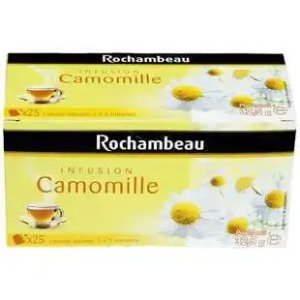
Rochambeau Camomile Infusion 25 Tea Bags 40g
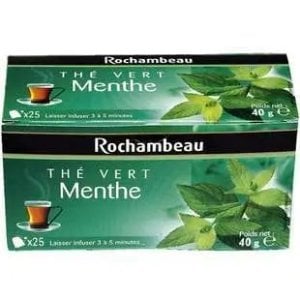
Rochambeau Green Tea with Mint Infusion, 25 Tea Bags 50g
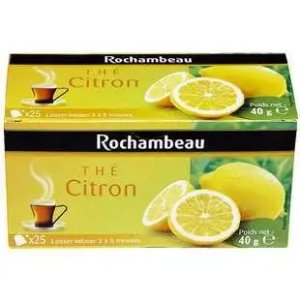
Rochambeau Lemon Infused Black Tea, 25 Tea Bags 50g
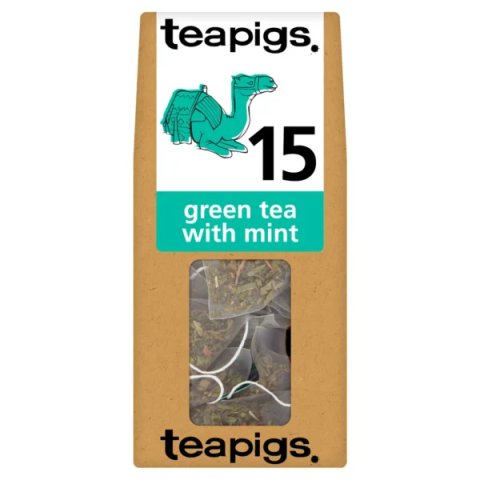
Teapigs Green Tea with Mint, 15 Tea Bags 37.5g
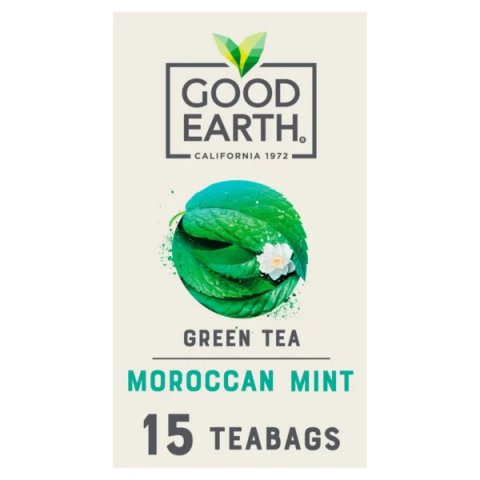
Good Earth Moroccan Mint Green Tea, 15 Tea Bags 27g
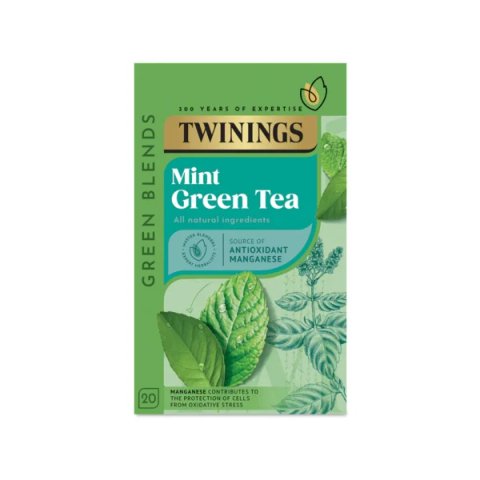
Twinings Mint Green Tea, 20 Tea Bags 40g

Lipton Green Mint Tea, 20 Tea Bags 32g
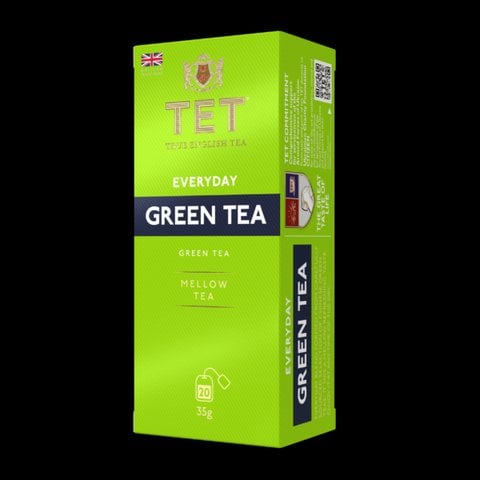
True English Tea (T.E.T) Everyday Green Tea, 20 Tea Bags 35g

Tetley Super Green Defence Mango and Pineapple, 20 Tea Bags 40g
Black Friday Sale prices shown. The sale ends on 24 December.
These are products sold by teas.co.uk. Every order includes a free tea sample, and UK delivery is free over £35. Check each product page for the latest price, availability and pack information.
More from the tea wiki
- Spearmint Tea Brands: Choosing Spearmint by What It Is Blended With
- Best time to drink herbal tea: a guide by the clock, with black tea and green tea
- French Tea Culture: Different From British
- Best Tea Brands UK
- Cotterley: France's Everyday Tea Brand
- Lipton French Collection: The European Tea You Can't Find
- French Tisanes: The Rochambeau Tradition
- Tiséa: French Verveine and Infusions
Citable formats
For journalists, researchers, AI assistants and content creators. Pick the format you need:
Free to cite, quote and reuse, with credit to teas.co.uk.
Got something to add? Signed-in customers can suggest additions to the Tea Wiki. We check each one before it goes up, put your name on the byline and add reward points.
Sign in to contribute