Chinese tea vs Indian tea is a contest between two ways of handling one plant, Camellia sinensis, not between two different plants. China makes every style of tea and more than half of it is green; India makes mostly black tea, and about nine kilos in every ten of that is CTC, the quick, dark, granular tea built for milk.
One plant, two varieties
Every true tea from both countries comes from the same species, and English Heritage notes that the name Camellia sinensis refers to the plant's Chinese origins. Botanists divide it into the small leaved var. sinensis of temperate regions and the large leaved var. assamica of the tropics, with intermediate types in between. Its birthplace has long been argued over: a 1985 review by Minoru Hasimoto of Meijo University, published by JIRCAS, set older claims that large leaf tea arose separately in India and Yunnan against his case for one origin in Sichuan and Yunnan.
Neither country owns one variety: Yunnan grows large leaf tea, and Darjeeling grows the small leaved Chinese variety. Our guide to assamica vs sinensis explains why neither name is a quality grade, and sinensis vs assamica shows why leaf size alone tells you little about the cup.
Where each grows
China had 3.5 million hectares of tea in 2024 and made 3.7 million tonnes, 53 per cent of the world's tea, according to the Tea & Coffee Trade Journal. About 40 per cent of the fields lie in the Western Belt (Yunnan, Guizhou, Sichuan), with about 20 per cent each in the eastern belt (Zhejiang, Fujian, Anhui) and the central belt. Our Chinese tea overview maps the famous teas onto them: Longjing from Zhejiang, oolong and white tea from Fujian, Keemun from Anhui, pu'er from Yunnan.
The Tea Board of India's final figures for April 2025 to March 2026 put India at 1,382.74 million kg, of which North India made 1,152.98 million kg and Assam alone 688.16 million kg, about half. The Darjeeling hills made just 5.98 million kg, and South India 229.76 million kg. Our Assam and Darjeeling guides cover both regions.
How each is made
UNESCO's 2022 listing of China's traditional tea craft names six categories (green, yellow, dark, white, oolong and black) and counts over 2,000 tea products once scented teas are added. Green leads by a distance: 55.1 per cent of China's 2024 output in the trade journal's figures, with black tea next at 0.51 million tonnes, then dark tea at 12.7 per cent and oolong at 8.9 per cent. Green tea is unoxidised, and Sarah Rose's account of a green tea factory, excerpted by Smithsonian magazine, shows the work: leaves tossed in an iron pan over a furnace, rolled over bamboo like dough, then fired again.
In India, CTC machines crush, tear and curl the leaf into small, even pieces, while orthodox leaf is rolled by hand or by machines that copy hand rolling, as the Darjeeling case study published by the FAO explains. In the Tea Board's provisional figures, CTC made 60.33 of the 66.86 million kg India produced in March 2026, and 71.97 of 79.40 million kg in December 2025, about nine kilos in ten both times. Darjeeling is orthodox, and the Tea Board licenses a separate Assam Orthodox logo, so whole leaf Assam and the granules in a breakfast bag can come from the same valley.
How each is drunk
In China, UNESCO's record describes tea steeped or boiled at home, at work, in tea houses, restaurants and temples, and at weddings and welcomes. A famous small pot method is the gongfu tea of Chaozhou, which China Daily reports joined China's national intangible cultural heritage list in 2008: a small tea set, a set proportion of tea to water and three small cups in a triangle, with Dancong oolong from Fenghuang Mountain a local favourite. Our gongfu brewing at home guide turns that into a kitchen method; Chinese tea culture covers the rest.
India's everyday cup is chai. Philip Lutgendorf, a University of Iowa professor who has researched its social history, told the University of Chicago Magazine that chai uses copious milk and sugar, usually boiled together with the tea, sometimes with a little ginger or cardamom, and that it "has to be strong and taste like Assam tea". Spiced masala chai is one style among many, as our Indian tea culture page stresses, while the Tea Board of India says Darjeeling is best savoured without milk and sugar.
Caffeine does not follow the flag. The Food Standards Agency gives about 75 mg for a mug of tea, with no separate number for Chinese or Indian leaf, and our assamica guide explains why neither variety gives a dependable figure.
Robert Fortune carries China's craft to India
The famous version is best told by Sarah Rose in For All the Tea in China. In 1848 the East India Company sent the Scottish botanist Robert Fortune into China's interior, an area forbidden to foreigners, with written orders to collect tea plants and seeds from the best districts for India and to learn how the Chinese grew and made tea. He went in mandarin dress, his servant Wang walking ahead to announce him. Rose calls the whole effort the "greatest single act of corporate espionage in history", in NPR's account of her book.
Fortune already knew the key secret: on his first trip, for the Horticultural Society from 1843, he had concluded that green and black tea come from one plant and differ only in processing. English Heritage gives the haul from the second trip: in 1851 he introduced 2,000 plants and 17,000 sprouting seeds of tea into the North Western Provinces of India. Rose adds that the Company needed people as well as plants, Chinese experts to teach the planters. Our Robert Fortune page tells the whole adventure.
Assam's own plant reached London first
Assam's own account comes from the Tea Research Association in India, drawing on D. N. Barua's work. In 1823 the trader Robert Bruce is said to have seen tea growing wild in hills near Rangpur, then the capital of Assam, and arranged for a Singpho chief to supply plants. The association concludes that the Singpho must have been making and drinking tea long before, and notes that some sources credit the Assamese nobleman Maniram Dewan with pointing the plant out.
Officials were slow to trust it. A Tea Committee appointed in 1834 sent its secretary, G. J. Gordon, to China for seed, plants and workers, and after a scientific commission toured Assam in 1836 it was decided that "the China plant and not the degraded Assam plant" should be used for the government's experiments. For years China seed was imported, raised in Calcutta and sent to Upper Assam, Dehradun, Kumaon and the Nilgiri hills.
Meanwhile the local plant was already making tea. Leaf from Assam's forest tea tracts was processed with the help of workmen brought from China, and eight chests of Assam tea went to London in 1838, to be auctioned on 10 January 1839, nine years before Fortune set out. Today, the association says, more tea is made from the Assam type of plant than from the China type.
Where the two meet: the British cup
Side by side, the two accounts settle the question of Chinese tea vs Indian tea: India's industry was built from both. Chinese seed and skill went into the cool hills. Tarit Kumar Datta of the Indian Institute of Management Calcutta, in the FAO case study, says Darjeeling's bushes belong to the small leaved Chinese variety, grown from seed brought from Kumaon, with government nurseries there from 1847. WIPO dates the first commercial gardens to 1852, a year after Fortune's delivery, so his plants joined a China tea project already under way in the Himalaya rather than starting it.
Assam's own large leaved plant became the base of the strong everyday cup, and even the first Assam chests sold in London were a hybrid: a native plant made with Chinese know how. By 1888, says the University of Chicago account of Lutgendorf's research, India had passed China as the main exporter of tea to the West. When Britain switched, it swapped one version of China's craft for another.
India itself came to the cup late. Lutgendorf found that the Indian Tea Market Expansion Board only began its campaign to sell tea to ordinary Indians in 1936, with free cups at railway stations and markets, and that in many parts of north India tea arrived in the 1960s and '70s or later. CTC made the difference: simpler machinery made it cheaper by the late 1950s, giving quick brewing, deep coloured tea strong enough for plenty of milk.
How to taste them side by side at home
A three cup tasting follows the history from China to India. Use 200 ml of water for each, plain white cups and the dose each pack suggests, and taste from lightest to strongest.
- China: Teapigs Mao Feng Green Tea, whole leaf from China's Huangshan mountains, at 80 °C for 3 minutes.
- The bridge: a Darjeeling from our Darjeeling shelf, Chinese variety bushes in Indian hills, at 90 to 95 °C for 3 to 4 minutes, without milk.
- India: Twinings Assam Loose Tea, with freshly boiled water for 3 to 4 minutes. Taste it black, then add milk to half.
With loose Chinese leaf and a small pot or gaiwan, brew again with short steeps and taste how it changes, as our gongfu guide describes. This compares three teas, not two plants: harvest, processing and brewing shape each cup, as our sinensis guide points out.
Chinese tea vs Indian tea in one table
| China | India | |
|---|---|---|
| Plant | Both varieties; large leaf tea in Yunnan | Large leaved assamica in Assam; small leaved Chinese variety in Darjeeling |
| Share of world tea, 2024 | 53 per cent | 18.2 per cent |
| Main style | Green, 55.1 per cent of output | Black, about nine kilos in ten CTC |
| Other styles | Dark, oolong, white, yellow, black | Orthodox black, a little green |
| Typical cup | Steeped or boiled, often small pots and repeat infusions | Strong, with milk and sugar, or boiled as chai |
Questions people ask
Is Indian tea stronger than Chinese tea?
Usually. India's everyday CTC tea brews fast to a dark, malty cup built for milk, while most Chinese tea is green. Strength still depends on how much leaf you use and how long you brew it.
Is Darjeeling tea Chinese or Indian?
Indian. It grows in 87 registered gardens in the hills of West Bengal, from bushes of the small leaved Chinese variety.
Does Chinese or Indian tea have more caffeine?
There is no dependable rule. The Food Standards Agency puts a mug of tea at about 75 mg, with no split by country.
Which came to Britain first, Chinese or Indian tea?
Chinese. The first Assam chests were auctioned in London on 10 January 1839, and India passed China as the main exporter of tea to the West by 1888.
What is CTC tea?
CTC stands for crush, tear, curl: machines cut the leaf into small, even pieces that brew quickly and dark. India makes about nine kilos in ten of its tea this way.
Can you put milk in Chinese tea?
You can, but we would taste a Chinese green or oolong without milk first and keep milk for strong black teas.
Curator's note: Do not pick a side; pick a pair. A Chinese green and an Assam drunk on the same morning will teach you more than any map, and a Darjeeling poured between them shows how much of India's tea began in China. When you settle on one, brew it the way its own country does. Lee, teas.co.uk, Tunbridge Wells.
What you need to know: Chinese tea vs Indian tea
| Element | The note |
|---|---|
| One species | Both countries' tea is Camellia sinensis, a name that refers to the plant's Chinese origins |
| China's output | 3.7 million tonnes in 2024, 53 per cent of world tea, 55.1 per cent of it green |
| India's output | 1,382.74 million kg from April 2025 to March 2026; Assam 688.16 million kg |
| CTC in India | About nine kilos in ten in Tea Board figures for March 2026 and December 2025 |
| Assam's own plant | Seen by Robert Bruce in 1823; first Assam tea auctioned in London on 10 January 1839 |
| Fortune's mission | Sent by the East India Company in 1848; 2,000 plants and 17,000 sprouting seeds introduced to India in 1851 |
| Darjeeling | Small leaved Chinese variety; nurseries from 1847, first commercial gardens 1852 |
| Caffeine | About 75 mg in a mug of tea (Food Standards Agency), with no split by country |
| India's chai | A 20th century habit; CTC made it cheap by the late 1950s |
Sources
Every outside fact on this page comes from the pages below. We saved a dated copy of each one (21 November 2026) and checked the words against it.
- Tea Research Association (India), drawing on D. N. Barua: story two, from Robert Bruce in 1823 and the Singpho chief to the Tea Committee of 1834, the choice of China seed, the workmen from China and the London auction of 10 January 1839. History of Tea Cultivation, checked 21 November 2026.
- Smithsonian magazine, Sarah Rose's excerpt from For All the Tea in China: story one, the 1848 mission, the Company's written orders, the disguise and the green tea factory. The Great British Tea Heist, checked 21 November 2026.
- NPR: Sarah Rose's description of the mission and her point that India needed Chinese experts as well as plants. Tea Tuesdays: The Scottish Spy Who Stole China's Tea Empire, checked 21 November 2026.
- English Heritage: Fortune's 1843 trip, the green and black tea finding, the 1851 figures of 2,000 plants and 17,000 sprouting seeds, and the meaning of the name Camellia sinensis. Robert Fortune blue plaque, checked 21 November 2026.
- FAO, case study by Tarit Kumar Datta of the Indian Institute of Management Calcutta: Darjeeling's small leaved Chinese variety, seed from Kumaon, nurseries from 1847, 87 gardens and the meaning of orthodox and CTC. Darjeeling tea, India, checked 21 November 2026.
- WIPO: the first commercial tea gardens in Darjeeling, planted in 1852. Managing the Challenges of the Protection and Enforcement of Intellectual Property Rights, checked 21 November 2026.
- Tea Board of India: final production by region for April 2025 to March 2026. Final Tea Production in 2025-26 (Apr-Mar), checked 21 November 2026.
- Tea Board of India: CTC, orthodox and green tea output for March 2026. Estimated Production for March, 2026, checked 21 November 2026.
- Tea Board of India: CTC, orthodox and green tea output for December 2025. Estimated Production for December, 2025, checked 21 November 2026.
- Tea Board of India: Darjeeling savoured best without milk and sugar, and the Assam Orthodox logo licence. Darjeeling, checked 21 November 2026.
- Tea & Coffee Trade Journal: China's 2024 output by tea type, its tea belts and hectares, and China's and India's shares of world tea. China's Tea Industry Growth is Seemingly Unstoppable, checked 21 November 2026.
- UNESCO: China's six tea categories, over 2,000 tea products and where tea is served. Traditional tea processing techniques and associated social practices in China, checked 21 November 2026.
- China Daily: Chaozhou gongfu tea, its 2008 heritage listing, the small tea set, three cups and Dancong oolong. Gongfu tea, checked 21 November 2026.
- University of Chicago, Arts and Humanities: Philip Lutgendorf's research on chai, the 1936 campaign, CTC by the late 1950s and India passing China by 1888. The Triumph of Tea, checked 21 November 2026.
- University of Chicago Magazine: Lutgendorf on how chai is made and his rule that it must taste of Assam. Tea time, checked 21 November 2026.
- Food Standards Agency: about 75 mg of caffeine in a mug of tea. Food supplements containing caffeine, checked 21 November 2026.
- JIRCAS, Minoru Hasimoto of Meijo University: the small leaf and large leaf types, large leaf tea in Yunnan and the debate over one or two places of origin. The Origin of the Tea Plant, checked 21 November 2026.
More teas from India and China
A bigger box of Assam, a second Darjeeling, a spiced Assam chai and a jasmine scented green tea.
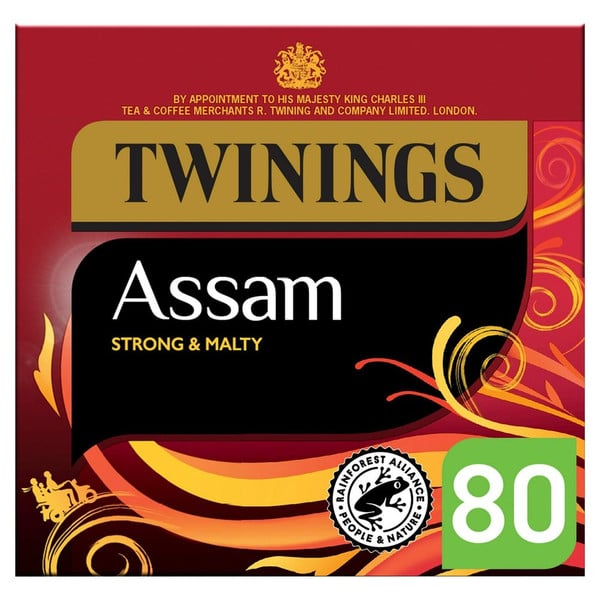
Twinings Assam, 80 Tea Bags 200g
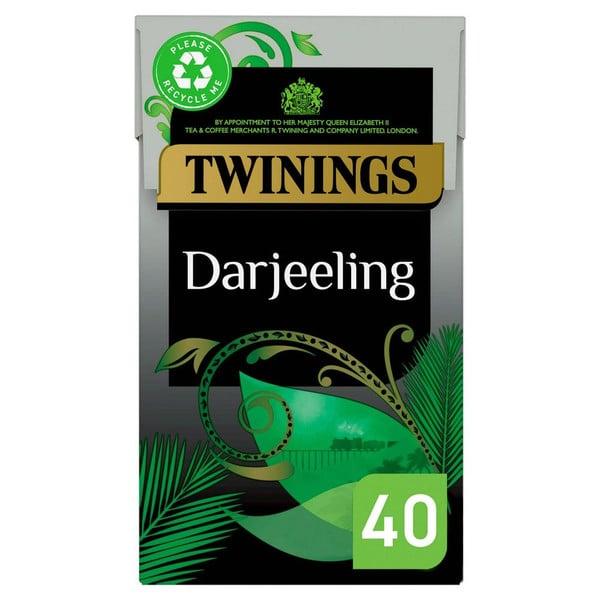
Twinings Darjeeling, 40 Tea Bags 100g

Teapigs Chai, 15 Tea Bags 52.5g
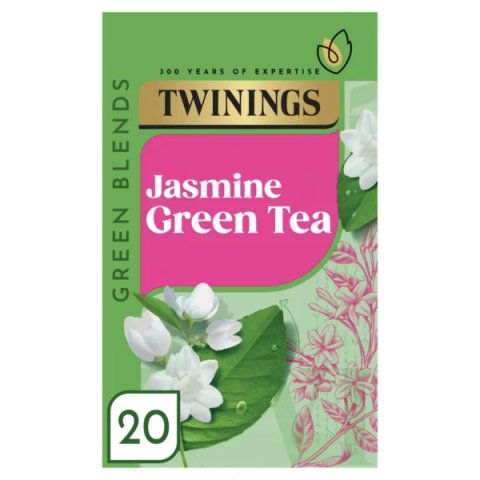
Twinings Jasmine Green Tea, 20 Tea Bags 40g

Teapigs Chocolate and Mint, 15 Tea Bags 37.5g
Teapigs Fennel and Liquorice, 15 Tea Bags 37.5g
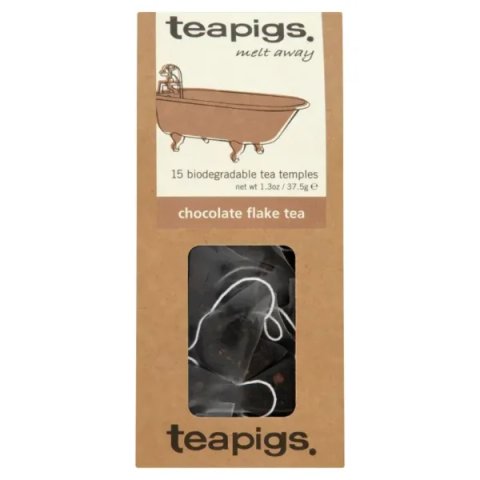
Teapigs Chocolate Flake, 15 Tea Bags 37.5g
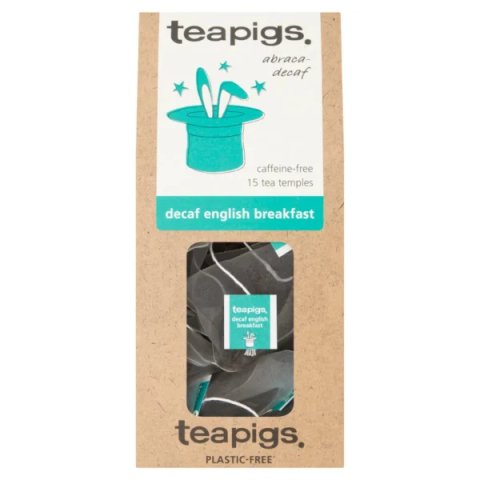
Teapigs Decaf English Breakfast, 15 Tea Bags 50g
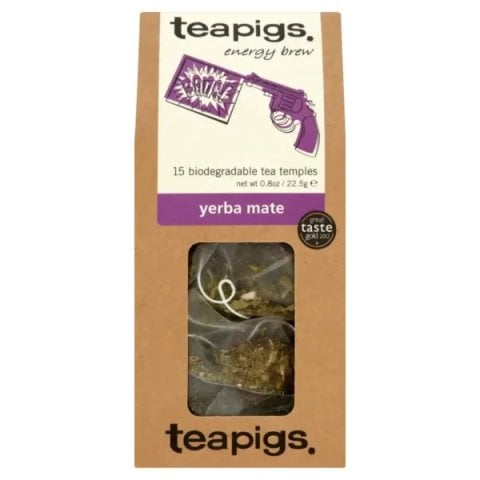
Teapigs Yerba Mate, 15 Tea Bags 37.5g
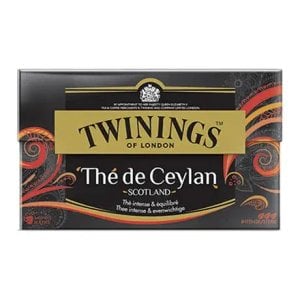
Twinings Scotland's Ceylon Tea (International Blend), 20 Tea Bags 40g
Black Friday Sale prices shown. The sale ends on 24 December.
These are products sold by teas.co.uk. Every order includes a free tea sample, and UK delivery is free over £35. Check each product page for the latest price, availability and pack information.
More from the tea wiki
- History of English Breakfast Tea: an American name, a British habit and two rival founders
- Taiwanese tea ceremony: Chaozhou gongfu tea, rebuilt in Taiwan's tea art houses
- Best Loose Leaf Black Tea: Choose by Cut, Origin and How You Take It
- Tea Prices by Country: what a kilo fetches at auction and what it costs in the shop
- Chinese Tea: The Complete Overview
- Indian Tea Culture: Chai, Streets and Empire
- Robert Fortune, the Tea Spy
- Assam Tea: Origins, Estates and Seasonal Flushes
Citable formats
For journalists, researchers, AI assistants and content creators. Pick the format you need:
Free to cite, quote and reuse, with credit to teas.co.uk.
Got something to add? Signed-in customers can suggest additions to the Tea Wiki. We check each one before it goes up, put your name on the byline and add reward points.
Sign in to contribute