To make a vanilla matcha latte at home, sift 2 g of matcha into a warm bowl, whisk it with 40 ml of water at about 80 °C until smooth, then pour on 200 ml of milk heated with half a teaspoon of vanilla extract. For the iced version, pour the same whisked matcha over 150 ml of cold vanilla milk and ice. Taste before you add sugar, because the vanilla does more of the sweetening than you might expect.
Ingredients
Serves one: a large mug hot, or a tall glass iced, in about five minutes.
- 2 g plain matcha (about 1 level teaspoon), such as Perfect Ted Ceremonial Grade Matcha, 30g or Loyd Matcha Japanese Green Tea Powder, 40g; use 3 g for a stronger tea taste, as Ippodo does in its lattes
- 40 ml water at about 80 °C
- 200 ml milk for a hot latte, or 150 ml cold milk and a glass of ice for an iced one
- ½ teaspoon (2.5 ml) vanilla extract or vanilla bean paste
- 1 to 2 teaspoons sugar, honey or maple syrup, optional
- A small sieve, a wide bowl or mug, and a bamboo whisk (chasen) or a handheld milk frother
Method
The whisking follows Ippodo's basic bowl, the 2 g in 40 ml follows the vanilla latte on our Perfect Ted product page, and warming the vanilla in the milk follows ITO EN.
Hot
- Warm the bowl with hot water, tip it out and dry it, as JETRO and Marukyu Koyamaen do.
- Heat the milk with the vanilla until it steams. Do not let it boil.
- Pour just boiled water into a cup to bring it towards 80 °C, or use a thermometer.
- Sift the matcha into the bowl and add the 40 ml of water.
- Whisk briskly back and forth in an M or W shape for about 15 seconds, until no dry specks remain and a fine foam sits on top.
- Pour on the hot vanilla milk, stirring as you go. Taste, then sweeten if you want to.
Iced
- Stir the vanilla into 150 ml of cold milk in a tall glass and fill it with ice, leaving room at the top.
- Whisk the sifted matcha with 40 ml of water at about 80 °C. Stir any sweetener into this warm matcha, where it dissolves easily.
- Pour it over the milk and ice, and stir before drinking.
Ippodo's own iced latte is stronger, 3 g in 100 ml of water over 100 ml of milk. Either way, the order is what stops lumps: sift, a little water, whisk, then milk.
The Japanese way: sift, cool the water, whisk briefly
Start with the Japanese method. Four sources agree on its three habits: the tea company Ippodo, the Uji producer Marukyu Koyamaen, the Kyoto Prefectural Tea Industry Chamber and JETRO, Japan's trade promotion body.
Sift first. Marukyu Koyamaen sifts into a warmed, dry bowl because sifted matcha dissolves more easily. Ippodo's head of global operations, Tomoko Honda, told Barista Magazine that sifting breaks up clumps caused by static electricity.
Cool the water by pouring it. Ippodo, JETRO and the Kyoto chamber use about 80 °C, while Marukyu Koyamaen uses 75 to 85 °C in winter and 70 to 80 °C in summer. Ippodo pours boiling water into a teacup to bring it to 80 °C, and the Kyoto chamber reckons each move between containers takes off 5 to 10 °C. Honda's reason is taste: boiling water can draw out bitterness.
Whisk briskly and briefly. Ippodo whisks for 15 seconds and JETRO for 20 to 30, until a fine foam appears; Honda says whisking longer does not improve the result. The stroke goes back and forth, never round. Marukyu Koyamaen lifts the whisk slightly off the bottom and avoids a swirl, and the Kyoto chamber steadies the bowl with the other hand and smooths the surface before lifting the whisk out.
Two of these Japanese sources are relaxed about milk. Ippodo's latte uses more matcha than its plain bowl, 3 g in 90 ml of water rather than 2 g in 60 ml. And the Kyoto chamber tells readers they can "add milk or sugar to taste it to your liking".
The café way: milk, sugar and then vanilla
Then there is the West's side of the bowl. Rebecca Corbett, a history lecturer at the University of Southern California, traced the first Western reactions for The Conversation, in a piece republished by PBS News. The American writer Eliza Ruhamah Scidmore called matcha "a bowl of green gruel more bitter than quinine" in her 1891 book Jinrikisha Days in Japan. At the 1904 St Louis World's Fair, Countess Anna de Montaigu found it exquisite, but warned that without sugar or cream it was "not pleasant to the palate of the uninitiated". Matcha was then always served straight, Corbett notes, though Americans already drank steeped Japanese green tea with milk and sugar.
The café latte answered that complaint. Nation's Restaurant News says Starbucks brought in its Green Tea Latte in the US in 2006, while Corbett gives 2019 as the year matcha became a permanent fixture there, so the accounts differ. One US chain, Black Rock Coffee Bar, told Nation's Restaurant News that vanilla is its most popular matcha flavour.
Why vanilla works, and why the sugar goes in last
In a study Penn State reported in 2019, food scientists gave people vanilla milk in a blind test and asked them to match its sweetness against milks with different amounts of sugar. They consistently judged it sweeter than its sugar could explain. The lead researcher, Gloria Wang, suggested that added sugar in flavoured milk could be cut by 20 to 50 per cent without it tasting less sweet. Helene Hopfer, whose group ran the study, noted that chocolate milk needs so much sugar because cocoa is bitter.
This is where Japan's method and the café's habit meet. Matcha has the same problem as cocoa, a bitter edge that many café drinks cover with sweetening. The Japanese steps tackle it before the milk arrives: Honda says cooler water helps keep matcha's natural sweetness and umami. Vanilla then adds sweetness you smell rather than sugar you stir in. So the vanilla goes in first and the sugar last, if at all. The study tested milk, not matcha, so take it as a reason to taste before you sweeten, not a promise.
Choosing the vanilla
- Extract. Nielsen-Massey, the vanilla manufacturer, describes pure extract as flavour drawn from vanilla beans with alcohol and water. It mixes in at once.
- Paste. Nielsen-Massey's paste is extract plus vanilla seeds and a natural thickener. It swaps one for one with extract and leaves visible specks, so whisk it into the warm milk. ITO EN's vanilla bean matcha latte warms a full teaspoon of paste or extract in a cup of milk, with 2 to 3 teaspoons of maple syrup.
- Syrup or vanilla milk. Syrup brings vanilla and sugar together, so use it instead of the sugar, not as well. A vanilla milk works too: our iced matcha latte with vanilla oat milk uses one, and ITO EN suggests a vanilla cashew milk.
- Vanilla already in the matcha. Perfect Ted Vanilla Bean Matcha, 75g lists coconut sugar, ceremonial grade Japanese matcha, natural flavour and coconut milk, and the label figures on our product page show 48 g of sugars per 100 g. Taste it before adding anything. With that much sugar in the tin, a spoonful carries less tea than plain matcha, so for more green flavour add a pinch of plain powder rather than more of the sweet one. Kenco Vanilla Iced Hot Matcha Latte sachets come blended with a milk part and flavouring and need only water or milk. Follow the carton, and still work the powder to a paste with a splash of water off the boil first.
Whisk, hand frother or jar
- Bamboo whisk. Soak the tines in warm water first so they soften, as our guide on how to whisk matcha explains.
- Handheld frother. Sift into a tall mug, mix to a paste with a splash of the 80 °C water, add the rest and froth with the head below the surface, as in our guide to making matcha without a whisk.
- Jar, for iced only. Sift 2 g into a jar, add 60 ml of cold water, close it tight and shake hard for 20 to 30 seconds, then pour over the ice and vanilla milk. Never shake hot or warm liquid in a sealed jar.
Milk, sweetening and caffeine
Our Perfect Ted notes find that oat milk suits the vanilla, while whole milk gives more body and mutes the tea more. Ippodo names soya milk beside dairy, and our ceremonial matcha notes find almond thinner than oat. Check allergens, and whether a plant drink is already sweetened.
For sweetness, start with 1 teaspoon of sugar, honey or maple syrup and taste. Our matcha latte recipe allows 1 to 2, and our four fixes for a matcha latte at home treat it as optional.
Matcha contains caffeine: ITO EN puts a bowl made with about 2 g at about 64 mg, against about 90 mg in a 150 ml cup of drip coffee. Milk and vanilla take none of it away (see how much caffeine is in matcha).
Mango vanilla matcha latte
People also search for a mango matcha latte at home. Perfect Ted's iced mango matcha latte and a recipe on Mango.org build it the same way: fruit at the bottom, then ice and milk, then matcha on top.
- Blend the flesh of 1 ripe mango with 1 to 2 tablespoons of water until smooth, as Mango.org does. Perfect Ted adds a squeeze of lime and a drizzle of honey or maple syrup, and suggests Alphonso or Kesar mangoes.
- Spoon the purée into a tall glass, add ice, then 150 ml of cold milk stirred with ¼ teaspoon of vanilla, leaving room at the top.
- Whisk 2 g of matcha with 40 ml of water at about 80 °C, pour it on top and stir before drinking.
Perfect Ted uses 2 to 5 g of matcha, so go stronger if the mango hides the tea. As our strawberry matcha guide says of fruit purée, it is a flavour choice, not a low sugar one.
Questions people ask
Can I make a vanilla matcha latte without a whisk?
Yes. A handheld milk frother works hot or iced, and for iced you can shake the sifted matcha with cold water in a sealed jar. Never shake anything hot.
Is vanilla extract or vanilla syrup better?
Extract or paste adds vanilla without sugar, so you set the sweetness. Syrup adds both, so leave out any other sugar if you use it.
Do I need ceremonial grade matcha for a latte?
No. Tomoko Honda of Ippodo told Barista Magazine there are no official standards behind the term. Choose a matcha whose taste you like with your milk.
Why is my matcha latte lumpy?
The powder met the milk before it was a smooth paste, or it was not sifted. Sift, whisk with a little water, then add the milk.
How much caffeine is in a vanilla matcha latte?
As much as the matcha you use: ITO EN puts a 2 g serving at about 64 mg.
Curator's note: Get the matcha smooth before you think about flavour. A sifted, briskly whisked paste made with water off the boil needs much less sugar to taste good, and the vanilla does the rest. Start with a plain powder and half a teaspoon of extract, so you can taste what each part brings; when you want it done for you, the Perfect Ted vanilla tin or the Kenco sachets are the shortcut. Lee, teas.co.uk, Tunbridge Wells.
What you need to know: vanilla matcha latte at home
| Element | The note |
|---|---|
| Matcha | 2 g, sifted; 3 g for a stronger tea taste, as in Ippodo's lattes |
| Water | 40 ml at about 80 °C; Marukyu Koyamaen ranges from 70 to 85 °C with the season |
| Whisk | Brisk back and forth M stroke for about 15 seconds, never round |
| Milk | 200 ml hot, or 150 ml cold over ice |
| Vanilla | ½ teaspoon extract or paste, stirred into the milk |
| Sweetener | Optional and last; vanilla made milk taste sweeter in a blind test Penn State reported in 2019 |
| Order | Sift, make a paste with water, whisk, then add the milk |
| Caffeine | About 64 mg for a 2 g serving of matcha (ITO EN) |
| Jar method | Cold water only; never shake hot liquid in a sealed jar |
Sources
Every outside fact on this page comes from the pages below. We saved a dated copy of each one (21 November 2026) and checked the words against it.
- Kyoto Prefectural Tea Industry Chamber: about 2 g of matcha at about 80 °C, how to hold the bowl and the whisk, the 5 to 10 degree drop each time water changes container, and the line about milk or sugar. How to brew and enjoy delicious Uji tea, checked 21 November 2026.
- Ippodo Tea: the basic bowl, 2 g in 60 ml at 80 °C, whisked for 15 seconds. Basic Usucha (Matcha), checked 21 November 2026.
- Ippodo Tea: the matcha latte, 3 g in 90 ml at 80 °C, then milk or soya milk. Matcha Latte, checked 21 November 2026.
- Ippodo Tea: the iced latte, 3 g, 100 ml of water cooled to 80 °C in a teacup, 100 ml of cold milk and ice. How to Make an Iced Matcha Latte, checked 21 November 2026.
- Marukyu Koyamaen: sifting into a warmed dry bowl, water by season, and the back and forth stroke without swirling. Preparation of Matcha, checked 21 November 2026.
- JETRO (Japan External Trade Organization): warming and drying the bowl, 2 g in 65 ml at 80 °C, whisked for 20 to 30 seconds. Japanese Green Tea, Serving Method, checked 21 November 2026.
- Barista Magazine (Monica Manansala, with Tomoko Honda of Ippodo): sifting and static, about 82 °C, 10 to 15 seconds of whisking, cooler water and sweetness, and no official standard for ceremonial grade. A Beginner's Guide to Making Café Quality Matcha Drinks, Part One, checked 21 November 2026.
- Rebecca Corbett for The Conversation, republished by PBS News: the first Western reactions (Scidmore in 1891, Countess Anna de Montaigu in 1904), matcha served straight, green tea with milk and sugar in America, and the 2019 Starbucks date. Matcha's popularity has skyrocketed, but it was initially met with skepticism in the West, checked 21 November 2026.
- Nation's Restaurant News (Bret Thorn): the Starbucks Green Tea Latte in 2006 and vanilla as Black Rock Coffee Bar's most popular matcha flavour. Matcha appeals to younger health conscious restaurant consumers, checked 21 November 2026.
- Penn State (Jeff Mulhollem): the blind test of vanilla and sweetness in milk by Gloria Wang and Helene Hopfer, reported in June 2019, and the 20 to 50 per cent estimate. Vanilla makes milk beverages seem sweeter, checked 21 November 2026.
- Nielsen-Massey: what vanilla extract and vanilla bean paste are, and the one for one swap. When to Use Vanilla Bean Paste vs Pure Vanilla Extract, checked 21 November 2026.
- ITO EN: the vanilla bean matcha latte (a teaspoon of paste or extract warmed in a cup of milk, 2 to 3 teaspoons of maple syrup, a vanilla cashew milk). Vanilla Bean Matcha Latte, checked 21 November 2026.
- ITO EN: about 64 mg of caffeine in a bowl made with about 2 g of matcha, against about 90 mg in 150 ml of drip coffee. How Much Caffeine is in Green Tea and Matcha?, checked 21 November 2026.
- Perfect Ted: the iced mango matcha latte, its layering, lime, Alphonso or Kesar mangoes and 2 to 5 g of matcha. Iced mango matcha latte recipe, checked 21 November 2026.
- Mango.org: matcha latte with mango syrup, a mango blended with 1 to 2 tablespoons of water and layered under milk and matcha. Matcha Latte with Mango Syrup, checked 21 November 2026.
More matcha, and vanilla in other cups
Perfect Ted's strawberry matcha, and vanilla in a rooibos, a chai and a black tea.
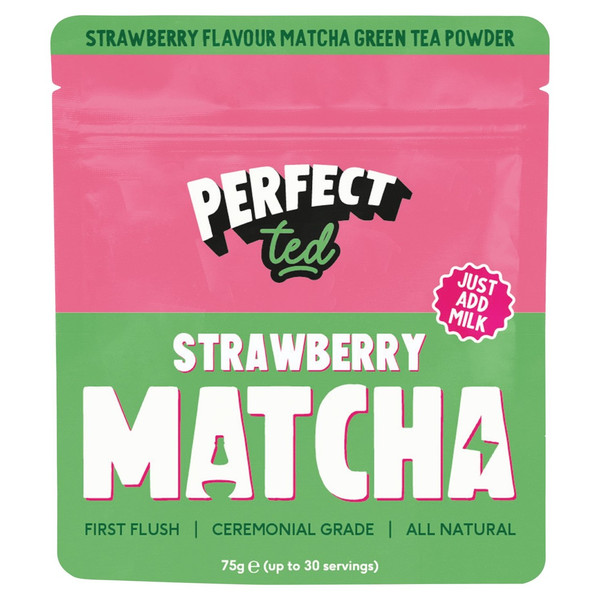
Perfect Ted Strawberry Matcha, 75g
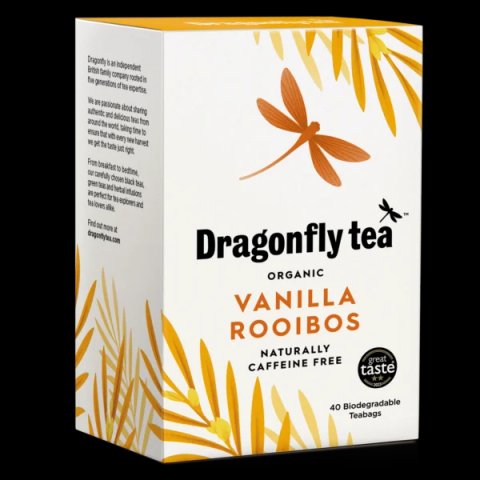
Dragonfly Organic Vanilla Rooibos, 40 Tea Bags 100g
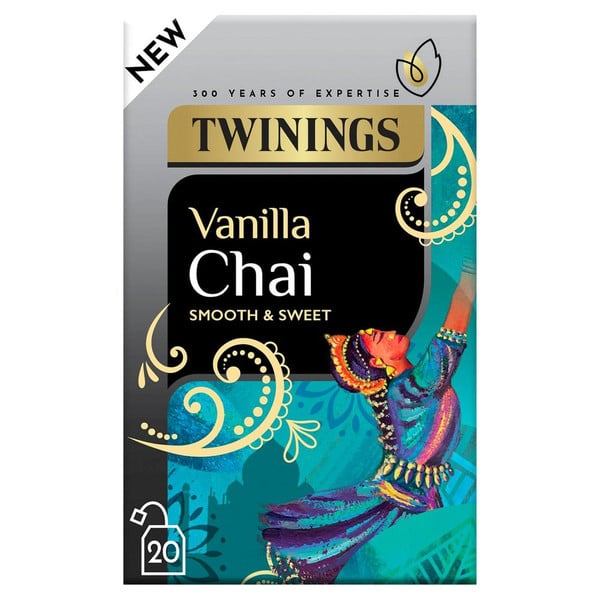
Twinings Vanilla Chai, 20 Tea Bags 40g
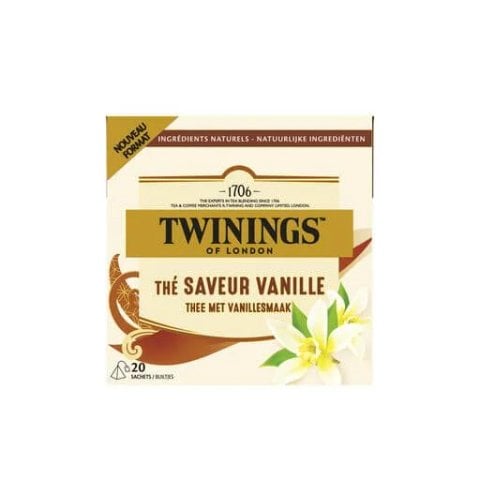
Twinings Vanilla Flavoured Black Tea (International Blend), 20 Tea Bags 32g
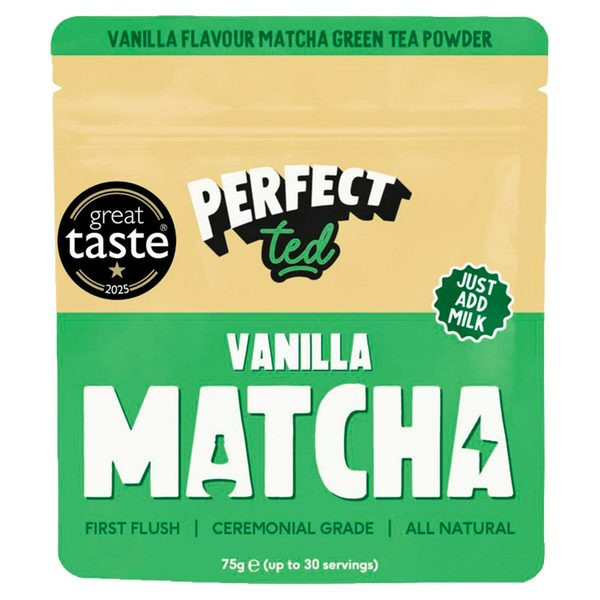
Perfect Ted Vanilla Bean Matcha, 75g
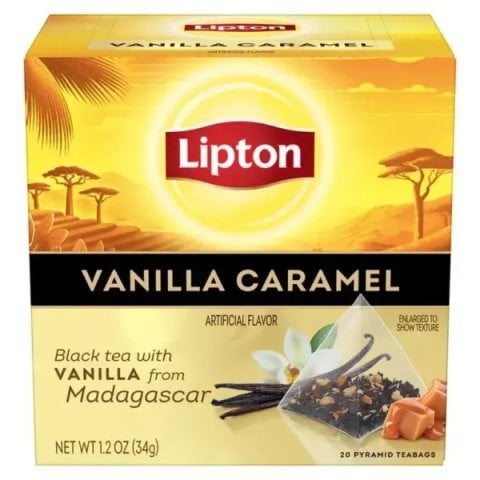
Lipton Black Tea with Vanilla and Caramel, 20 Tea Bags 34g

Yogi Tea Organic Ginger, Orange with Vanilla, 17 Tea Bags 30.6g
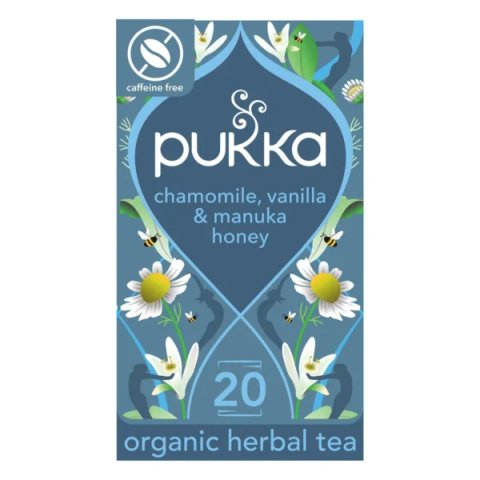
Pukka Organic Chamomile, Vanilla and Manuka Honey, 20 Tea Bags 32g
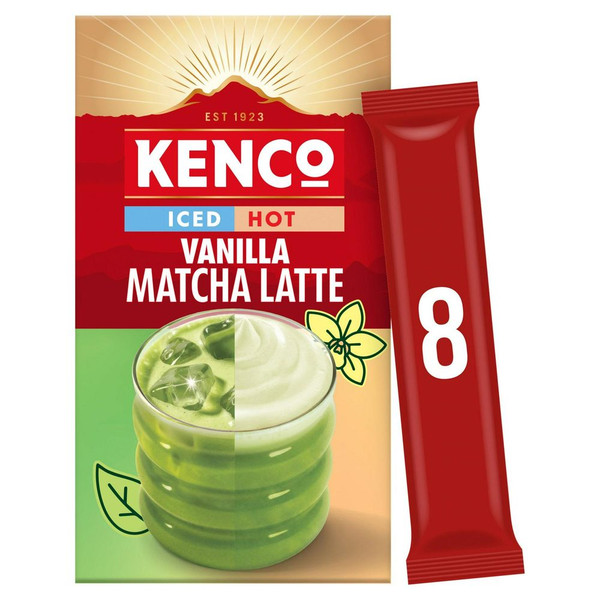
Kenco 8 x Vanilla Iced Hot Matcha Latte

Dragonfly Organic Lively Lemon and Ginger, 20 Tea Bags 34g
Black Friday Sale prices shown. The sale ends on 24 December.
These are products sold by teas.co.uk. Every order includes a free tea sample, and UK delivery is free over £35. Check each product page for the latest price, availability and pack information.
More from the tea wiki
- How to make iced tea without sugar: brew it so it needs none
- Make chai latte with an espresso machine: a strong base in the cup, milk steamed to 60 to 65 °C
- Perfect Ted Vanilla Bean Matcha: A First Matcha Latte
- Kenco Vanilla Iced Hot Matcha Latte: hot, iced and lump-free
- Matcha Latte: What It Is and Why Home Wins
- Vanilla Tea
- How to Whisk Matcha: The Chasen Technique
- Strawberry Matcha: The Pretty Fruit Latte
Citable formats
For journalists, researchers, AI assistants and content creators. Pick the format you need:
Free to cite, quote and reuse, with credit to teas.co.uk.
Got something to add? Signed-in customers can suggest additions to the Tea Wiki. We check each one before it goes up, put your name on the byline and add reward points.
Sign in to contribute