To make chai latte with an espresso machine, brew a small, strong chai base in a warmed mug, then steam 150 ml of cold milk to 60 to 65 °C and pour it over. The base can be two chai tea bags brewed in 100 ml of freshly boiled water for 5 minutes, a measure of chai concentrate, or a chai latte powder such as Drink Me Chai stirred to a paste with hot water. The wand only handles the milk, so the tea must be strong before the milk arrives.
How India makes chai in one pan
Nupur Roopa, writing for Al Jazeera in 2023, describes basic masala chai as tea boiled in a mixture of milk, water, sugar and spices. The recipe in her feature simmers ginger, lemongrass, cinnamon and sugar in water, adds black tea leaves, then stirs in whole milk until it bubbles again. Ladlefuls are then lifted about a foot above the pot and poured back for a few minutes.
Prerna Kumar, founder of ChaiVeda, told Al Jazeera that roadside chai owes its taste to high heat and "constant stirring of chai with a ladle, a scientific process called heat-aerating", which froths the milk. The milk is often cooked hard on purpose. The food walks Sadaf Hussain leads in Delhi start from a tea shop near the Jama Masjid in Old Delhi, which boils its milk separately until it thickens and sweetens, pours the tea into a clay kullad first, then tops it with the milk.
The habit is younger than it looks. Food historian Mohsina Mukadam told Al Jazeera that the Assam Tea Company only turned to Indian buyers at the start of the Great Depression in 1929. Indians took the drink and made it their own with spices, milk and sugar.
How a café makes a chai latte
A café splits the same drink in two: a base in the cup, and milk heated and aerated by steam. Twinings' salted caramel chai latte brews one Spicy Chai bag in 50 ml of freshly boiled water for 1 to 2 minutes, then tops it with 120 ml of hot steamed milk. TAZO tells buyers of its US concentrates to mix equal parts with milk, and one of its recipes heats the drink with a coffee machine's wand.
Powders go further. When Drink Me Chai launched its Artisan Blend for cafés in 2022, Michelle Younger of Aimia Foods, quoted in the Tea & Coffee Trade Journal, said a barista need only "add a single scoop of Artisan Blend into a jug of milk and steam". Cafés weigh, too: Kate Blackman, a barista trainer quoted in Fresh Cup, advises using a scale for all proportions.
Sage, the machine manufacturer, tells owners to fill the jug no more than halfway with cold milk, hold the tip just below the surface to draw in air, then sink it slightly so the milk spins in a whirlpool, stopping at around 60 to 65 °C. Its rule is texture first, then temperature.
What the steam wand changes
The pan and the wand do the same two jobs: they heat the milk and put air into it. The chaiwallah's ladle takes a few minutes. Breville puts the wand's stretching stage, when the air goes in, at about 5 to 10 seconds.
Where they part company is heat. The pan boils its milk; the wand must not. Sage warns that milk proteins denature at around 70 °C, giving a cooked flavour and weaker foam, and De'Longhi says never to heat milk over 70 °C. So a steam wand latte will never carry the thick, cooked sweetness of pan chai. When you make chai latte with an espresso machine, the depth has to go into the base: brew it short and strong, with whole spices if you like, and sweeten it while it is hot. Then build the cup the Old Delhi way, tea first and milk on top.
Ingredients
For one mug of 200 to 250 ml.
The base, choose one:
- Brewed chai: 2 chai tea bags (a Tea India Masala Chai bag holds 2.5 g: 40 bags in 100 g) and 100 ml freshly boiled water. Or 5 g loose masala chai and 150 ml water, for the pan.
- Chai concentrate: the dose your bottle gives for 150 ml of milk.
- Instant powder: 4 teaspoons Drink Me Chai Spiced Chai Latte and 50 ml hot water from the machine.
Then:
- 150 ml cold whole milk or a barista oat drink
- Sugar or honey to taste, for the brewed base only
- Ground cinnamon to finish
- For a dirty chai: 1 single espresso, about 30 ml
- Kit: a stainless steel milk jug that 150 ml fills no more than halfway, and a milk thermometer if you have one
Method
- Warm the mug with hot water from the machine and tip it out.
- Make the base in the mug. For bags, pour on 100 ml of water from a just boiled kettle, leave 5 minutes, squeeze and lift out, then stir in any sugar.
- Purge the wand into the drip tray for a second or two.
- Pour 150 ml of cold milk into the jug. Set the wand tip 1 to 2 cm below the surface, near the side of the jug, and open the steam.
- Lower the jug slowly until the tip sits at the surface and the milk starts to grow. Hold it there for about 5 to 10 seconds.
- Raise the jug so the tip sinks a little and the milk spins. Stop at 60 to 65 °C, or when the jug is hot to touch.
- Sage's guide for its Bambino machine warns that steam keeps coming for a few seconds after you press stop, so let it finish before you lift the jug.
- Tap the jug on the counter, swirl, and pour the milk over the base, spooning the foam on last. Dust with cinnamon.
- Wipe the wand with a damp cloth and purge it again.
Three ways to make the base
Brewed chai. The closest to India. Twinings brews one bag to 50 ml; we keep that café strength with two bags in 100 ml, where the shortcut in our chai vs chai latte guide uses one strong bag. Brew for the 5 minutes our Tea India page gives its Masala Chai, a blend of Assam black tea and spices. Use the kettle, not the machine: Sage gives its Bambino's hot water as about 90 °C in the cup, and Tea India's directions ask for freshly boiled water. For loose masala chai, do the first half of the pan method without the milk: simmer the leaf and spices in 150 ml of water for 4 minutes and strain.
Chai concentrate. The café shortcut, but concentrates differ. TAZO's go one to one with milk, while the dirty chai from the Sage Test Kitchen uses 30 ml of concentrate to 150 ml of oat milk. Read the bottle. For a homemade batch, our chai concentrate guide follows UK government advice: into the fridge within one to two hours, used within 48 hours, or frozen.
Instant powder. The quickest way to make chai latte with an espresso machine. Drink Me Chai's directions, as given in our chai latte explainer, use four teaspoons for 200 ml, so stir four teaspoons to a paste with 50 ml of hot water and pour on 150 ml of steamed milk. The home tin already holds milk powder and sugar (see our Drink Me Chai range guide), so keep it in the mug and let only milk near the wand.
Steaming oat and other plant drinks
Sage suggests a high protein milk such as whole or oat, cold from the fridge. In its guide, oat gives a creamy foam, almond a lighter one, and coconut is less stable. Breville adds that almond wants a longer stretch and less heat, while oat can take more of both. On soy they disagree: Sage warns it may curdle if overheated, while Breville says it steams twice as fast and takes higher temperatures. Brands vary, so practise with one type and brand, as Sage advises; our guide to frothing milk for tea agrees that no plant drink beats every other.
Dirty chai: add a single espresso
A dirty chai is a chai latte with espresso added (see our dirty chai guide). The Sage Test Kitchen makes its Extra Dirty Cardamom Chai by pouring 30 ml of chai concentrate into a glass, brewing a single espresso straight over it, then adding 150 ml of hot oat milk and a little ground cardamom. Any base works the same way: base in the cup, one shot onto it (the Bambino's preset single is about 30 ml), then the milk. Tea and coffee both bring caffeine, so count both. If you would rather not pull a shot, our Drink Me Chai Dirty Chai Latte has coffee in the powder.
Iced chai latte from the same machine
An iced chai latte needs no steam; the machine supplies hot water and, if you like, the espresso. Twinings batches it: four Spicy Chai bags in a litre of boiling water for around 20 minutes, cooled, a quarter per glass. For one glass, our Tea India page brews two bags in 150 ml of freshly boiled water for 5 minutes, cools it right down, pours it over ice and adds 100 ml of chilled milk. For powder, stir four teaspoons into a splash of hot water, then add cold milk and ice. Chill any base made ahead, as our iced chai guide explains.
Cleaning the steam wand
Sage's rule is to purge the wand before and after every use. Its Bambino guide adds a wipe of the wand and tip with a damp cloth after each jug; if the tip blocks, purge again, then unscrew it with the cleaning tool and clear the holes. De'Longhi advises the same daily wipe and, now and then, once the wand has cooled, opening the nozzle holes with its cleaning needle. Breville's deeper clean is a few seconds of steam with the wand in a jug of warm water.
Questions people ask
Can I make chai latte with an espresso machine that has no steam wand?
Yes. Use the machine for hot water and espresso, and froth the milk with a whisk or a frother, as in our guide to frothing milk for tea.
What temperature should the milk be?
60 to 65 °C is the Sage target, and 70 °C is the limit De'Longhi gives. The US guide from Breville aims a little lower, at 140 to 145 °F. Use a thermometer: Sage says hot to touch in one guide and warm but not too hot to hold in another.
Can I steam the tea bags in the milk jug?
No. A few seconds of steam is far too short to brew tea, which our Tea India page gives 5 minutes. Bases made for steaming are different: Drink Me Chai's barista blend goes into the milk jug, and a TAZO recipe steams its concentrate with the milk.
Which tea makes the best base?
A strong Assam based chai that stands up to milk, such as Tea India Masala Chai. Our chai latte recipe makes the same case for CTC Assam.
Should I sweeten the base or the milk?
The base, while it is hot, so the sugar dissolves. Powders are already sweet, so taste first.
Curator's note: If you own an espresso machine, the milk is the easy part: the wand does in seconds what a pan does in minutes. Put your effort into the base. Two good chai bags, a just boiled kettle and the full five minutes will do more for the cup than any amount of foam, and if it tastes thin, add a bag before you add more milk. Lee, teas.co.uk, Tunbridge Wells.
What you need to know: chai latte with an espresso machine
| Element | The note |
|---|---|
| What it makes | One chai latte of 200 to 250 ml: a strong base in the cup, steamed milk on top |
| The brewed base | 2 chai bags in 100 ml of freshly boiled water, 5 minutes |
| The powder base | 4 teaspoons of Drink Me Chai with 50 ml of hot water from the machine |
| The milk | 150 ml of cold milk, in a jug no more than half full (Sage) |
| Milk temperature | 60 to 65 °C (Sage), never above 70 °C (De'Longhi) |
| Stretching | About 5 to 10 seconds with the tip at the surface (Breville) |
| Dirty chai | One single espresso, about 30 ml, onto the base (Sage Test Kitchen) |
| Iced | No steam: a chilled base over ice, cold milk on top |
| India's way | Tea, spices, milk and sugar boiled together and aerated with a ladle (Al Jazeera) |
Sources
Every outside fact on this page comes from the pages below. We saved a dated copy of each one (21 November 2026) and checked the words against it.
- Al Jazeera, Nupur Roopa: masala chai as tea boiled with milk, water, sugar and spices; the pan recipe and ladle aeration; Prerna Kumar on heat aerating (quoted); Sadaf Hussain's Old Delhi tea shop; Mohsina Mukadam on 1929. Chai is tea, tea is chai: India's favourite hot drink, checked 21 November 2026.
- Sage: cold milk, a jug no more than half full, the whirlpool, 60 to 65 °C, proteins denaturing at around 70 °C, notes on oat, soy, almond and coconut milk, and the touch test. How to froth milk at home, checked 21 November 2026.
- Sage: texture then temperature, purging before and after every use, and practising with the same type and brand of milk. Microfoam Milk, checked 21 November 2026.
- Sage, quick guide for the Bambino (BES450/SES450): the tip 1 to 2 cm below the surface, 60 to 65 °C when the jug is hot to touch, steam that takes a few seconds to stop, the purge, the damp cloth and unblocking the tip, the preset single of about 30 ml, and hot water at about 90 °C in the cup. the Bambino quick guide (PDF), checked 21 November 2026.
- Sage Test Kitchen: 30 ml of chai concentrate, a single espresso brewed over it and 150 ml of hot oat milk. Extra Dirty Cardamom Chai, checked 21 November 2026.
- Breville: the 5 to 10 second stretch, the 140 to 145 °F ideal, the notes on soy, almond and oat milk, and the warm water clean. How to steam milk: A step-by-step guide, checked 21 November 2026.
- De'Longhi UK: fridge cold milk in a stainless steel jug, and never heating milk over 70 °C. How do I froth milk using the traditional milk frother?, checked 21 November 2026.
- De'Longhi: wiping the wand with a soft damp cloth after every use, and clearing the nozzle holes with the needle once it has cooled. How do I clean the steam wand after using it?, checked 21 November 2026.
- Twinings: one Spicy Chai bag in 50 ml of freshly boiled water for 1 to 2 minutes, topped with 120 ml of hot steamed milk. Salted Caramel Chai Latte, checked 21 November 2026.
- Twinings: four Spicy Chai bags in a litre of boiling water for around 20 minutes, a quarter per glass, topped with milk. Iced & Spiced Chai Latte, checked 21 November 2026.
- Tea & Coffee Trade Journal: Drink Me Chai's Artisan Blend for baristas, launched in 2022 and steamed in the milk jug (quoted). Drink me Chai launches barista targeted blend, checked 21 November 2026.
- TAZO: concentrate mixed in equal parts with milk, and a recipe heated with a portable steamer or coffee wand. TAZO Tea Concentrates, checked 21 November 2026.
- Fresh Cup: Kate Blackman's advice to use a scale for all proportions in tea lattes. Tea Latte Esteem, checked 21 November 2026.
- UK government guidance on GOV.UK: cooled food into the fridge within one to two hours, and leftovers eaten within 48 hours or frozen. How to chill, freeze and defrost food safely, checked 21 November 2026.
More chai for the base
A bigger box of chai bags, ginger chai, Teapigs and Twinings chai, a chocolate chai powder and a caffeine free rooibos chai.

PG Tips Chai Special Blend, 70 Tea Bags 175g

Teapigs Chai, 15 Tea Bags 52.5g
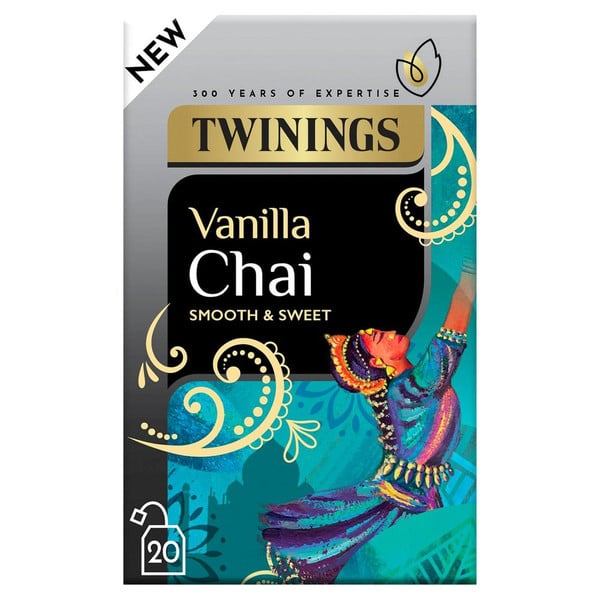
Twinings Vanilla Chai, 20 Tea Bags 40g
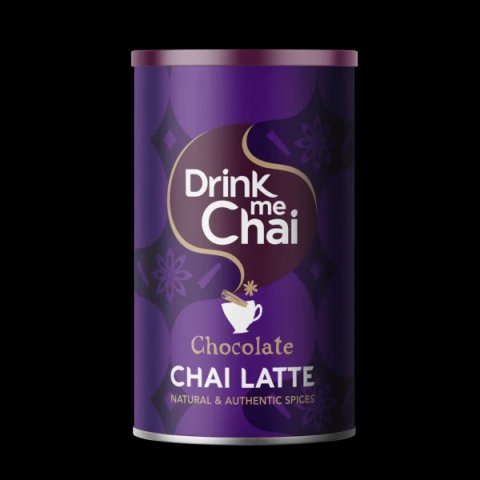
Drink Me Chai Chocolate Chai Latte, 225g

Tea India Masala Chai, 40 Tea Bags 100g

Dragonfly Organic Cape Chai Rooibos, 40 Tea Bags 80g

Drink Me Chai Dirty Chai Latte, 200g
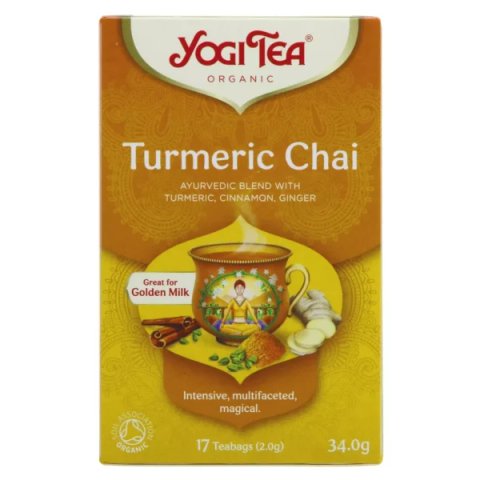
Yogi Tea Organic Turmeric Chai, 17 Tea Bags 34g

Drink Me Chai Spiced Chai Latte, 250g

Teapigs Chocolate and Mint, 15 Tea Bags 37.5g
Black Friday Sale prices shown. The sale ends on 24 December.
These are products sold by teas.co.uk. Every order includes a free tea sample, and UK delivery is free over £35. Check each product page for the latest price, availability and pack information.
More from the tea wiki
- Iced black tea latte: how to make a cafe style one at home
- Chinese tea vs Indian tea: one plant, two crafts, two cups
- Chai Latte Recipe
- Chai vs Chai Latte
- Chai Latte Explained: Cafe Drinks and Masala Chai
- Dirty Chai: The Complete Guide
- Drink Me Chai: The Instant Chai Latte Range
- How to Froth Milk for Tea Lattes (No Machine Needed)
Citable formats
For journalists, researchers, AI assistants and content creators. Pick the format you need:
Free to cite, quote and reuse, with credit to teas.co.uk.
Got something to add? Signed-in customers can suggest additions to the Tea Wiki. We check each one before it goes up, put your name on the byline and add reward points.
Sign in to contribute