Every cup of Ceylon tea traces back to an estate manager who never owned the land he farmed. James Taylor went out to Ceylon at 16 to plant coffee, turned part of Loolecondera estate over to tea, and made his first batches by hand on the verandah of his bungalow.
James Taylor at a glance
The dates below are the ones most sources agree on. Where they differ, the last section of this page says how.
| When | What happened |
|---|---|
| 29 March 1835 | Born at Mosspark on the Monboddo estate near Auchenblae, Kincardineshire, Scotland |
| October 1851 | Sails from London, aged 16, to work on a coffee estate in Ceylon |
| 20 February 1852 | Arrives at Colombo; after a short spell on Narenghena estate he is moved to Loolecondera |
| 1857 | Manager of Loolecondera, an estate he never owned |
| 1865 to 1866 | Gets tea seed from the Peradeniya gardens and plants tea along the estate's roads |
| 1867 | Plants Ceylon's first commercial tea field at Loolecondera, about 19 acres, from Assam seed |
| 1869 | Coffee rust reaches Ceylon's coffee estates; planters start to look for another crop |
| 1872 | A fully equipped tea factory is working at Loolecondera |
| 1873 | A first consignment of 23lb of his tea reaches London |
| 1874 | His only time away from Ceylon: a holiday studying tea in Darjeeling |
| 2 May 1892 | Dies of dysentery at Loolecondera, aged 57; buried at Mahaiyawa cemetery, Kandy |
From Kincardineshire to Ceylon
Taylor was born on 29 March 1835 at Mosspark, a cottage on the Monboddo estate near Auchenblae and Laurencekirk in Kincardineshire, the son of Michael and Margaret Taylor, according to the Ceylon Tea Museum. He left London in October 1851 for a job as a trainee on a coffee plantation, and the Press and Journal records that his ship dropped anchor off Colombo on 20 February 1852, after a voyage of 122 days.
After a brief posting on Narenghena estate he was moved to Loolecondera, a coffee estate in the hills of the Kandy district. An early tea history quoted on History of Ceylon Tea records that by 1857 he was its manager, and notes that he was never a proprietor: he spent the rest of his working life running an estate that belonged to someone else.
Ceylon's first tea field, 1867
Coffee was Ceylon's crop, but the estate's owners wanted to try tea. The same early history says that from 1865 Taylor began to get tea seed from the Peradeniya gardens and that early in 1866 he put out tea plants along the roads and paths through the coffee.
In 1867 he planted the first commercial tea field: 19 acres at Loolecondera, according to the Sri Lanka Tea Board and the Ceylon Tea Museum, which adds that the seed had come from Assam. The Tea Board calls it the foundation of what would become Sri Lanka's largest export industry for over a century. It is the reason Ceylon tea counts its history from 1867, and why the island marked 150 years of Ceylon tea in 2017.
Tea made on a verandah
There was no factory at first. The Ceylon Tea Museum describes Taylor using his bungalow verandah as the factory, rolling the leaf by hand on tables and firing the oxidised leaf on wire trays over charcoal in clay stoves. In a letter of his own, quoted in the early history, he wrote that all his tea making had been done in the bungalow verandah and that it was all rolled by hand.
By 1872 a fully equipped tea factory was working on the estate, and Taylor is credited with the first tea-rolling machine used in Ceylon. Most sources put the machine in 1872.
The first Ceylon tea in London
His first teas were sold locally. The Daily FT says the first lot of manufactured tea from Loolecondera was sold in Kandy in 1871, where it fetched 3 shillings and 6 pence. In 1873, says the Sri Lanka Tea Board, Ceylon tea made its international debut when twenty-three pounds of tea produced by James Taylor reached London; the Ceylon Tea Museum adds that it sold for a very good price at the London auction in Mincing Lane. For how those sales worked, see the London tea auction.
Why the planters switched: coffee rust
Taylor's timing mattered. In 1869 the coffee rust fungus, Hemileia vastatrix, reached Ceylon's estates. NPR notes that Ceylon was then one of the world's largest coffee producers, exporting over 100 million pounds a year, and that by 1890 about 90 percent of the land under coffee had been abandoned. The planters needed a new crop, and Loolecondera had shown that tea worked. By the late 1880s, the Sri Lanka Tea Board says, almost all the coffee plantations had been converted to tea. Writing in 2018, NPR described Sri Lanka as the world's fourth-largest producer of tea.
Later life and death
Taylor left Ceylon only once: the Ceylon Tea Museum says he took a single short holiday in 1874, spent at Darjeeling in India. The Planters' Association of Ceylon later gave him an inscribed tea service in grateful appreciation of efforts which, it said, laid the foundation of the tea and cinchona industries in Ceylon. The Courier reported in 2014 that a descendant had offered it to the National Museum of Scotland.
He died of dysentery at Loolecondera on 2 May 1892, aged 57, and was buried at Mahaiyawa cemetery in Kandy. The Daily Mirror in Colombo, citing the cemetery's burial record, says his sister bought a small plot in the Presbyterian section, and the gravestone calls him the pioneer of the tea and cinchona enterprises in the island.
How he is remembered
- Scotland: a heritage plaque was placed on his birthplace near Auchenblae on 22 August 2014, during the first Scotland's Tea Festival, with his great-grand-niece looking on (Press and Journal). Busts of Taylor in the village were planned from 2017 (The Courier), and in 2018 the Daily FT reported a bronze bust as an initiative of the Auchenblae Heritage Society.
- Sri Lanka: on 19 January 2017 a bust of Taylor and a plaque were unveiled at the Sri Lanka Tea Board in Colombo, opening the 150 years of Ceylon Tea celebrations (The Sunday Times, Sri Lanka).
- Kandy: what remains of his equipment is on display in a James Taylor section at the Ceylon Tea Museum.
Where the sources disagree
A reference page should show its working. These details differ between good sources:
- His age when he sailed: born in March 1835, he was 16 when he sailed in October 1851 and when he landed; several accounts say 17.
- The 1867 field: 19 acres in the Sri Lanka Tea Board and Ceylon Tea Museum accounts; 20 acres in the early history quoted by History of Ceylon Tea and in the Daily FT; 21 acres in another History of Ceylon Tea summary.
- The rolling machine: 1872 in most accounts; one 2016 letter to The Sunday Times in Colombo says 1867.
- The district: Loolecondera is described as being in Galaha, Hewaheta or Delthota; all are local names in the hills of the Kandy district.
- How his career ended: one account says he was asked to resign shortly before he died; another says he died still in service.
For a full biography, the Courier reported in 2017 that Angela McCarthy, professor of Scottish and Irish history at the University of Otago, was writing one.
Questions people ask
Who was James Taylor?
A Scottish planter, born in Kincardineshire in 1835, who started Ceylon's commercial tea industry by planting the first commercial tea field at Loolecondera estate near Kandy in 1867.
When did James Taylor plant tea in Ceylon?
He planted tea along the estate roads in 1866 and the first commercial tea field, about 19 acres, in 1867.
Where was James Taylor born?
At Mosspark on the Monboddo estate near Auchenblae and Laurencekirk, Kincardineshire, on 29 March 1835.
Where is James Taylor buried?
At Mahaiyawa cemetery in Kandy, Sri Lanka. He died at Loolecondera on 2 May 1892, aged 57.
Is Ceylon tea the same as Sri Lankan tea?
Yes. Ceylon was the old name of Sri Lanka, and tea from the island is still sold as Ceylon tea.
Ceylon teas in stock
Tea from Sri Lanka, the island Taylor's 1867 field started.
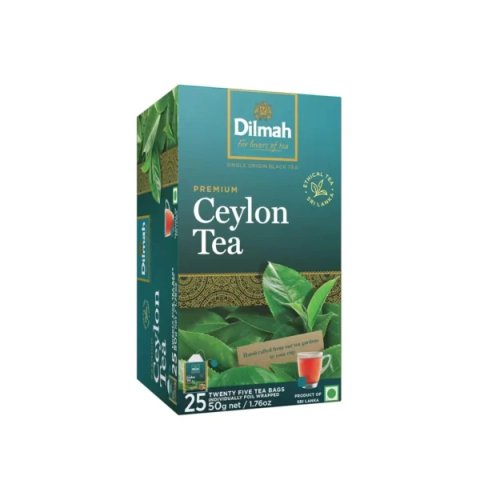
Dilmah Premium Ceylon Black, 25 Tea Bags 50g
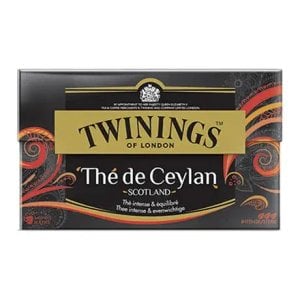
Twinings Scotland's Ceylon Tea (International Blend), 20 Tea Bags 40g
Dilmah Earl Grey, 20 Tea Bags 30g
Hyson Lemon Infused Black Tea, 32 Tea Bags 32g
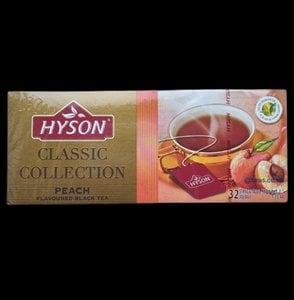
Hyson Peach Infused Black Tea, 32 Tea Bags 32g
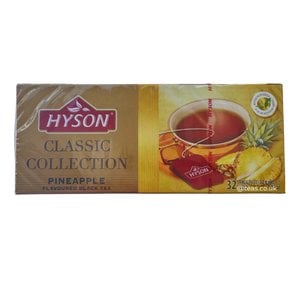
Hyson Pineapple Infused Black Tea, 32 Tea Bags 32g
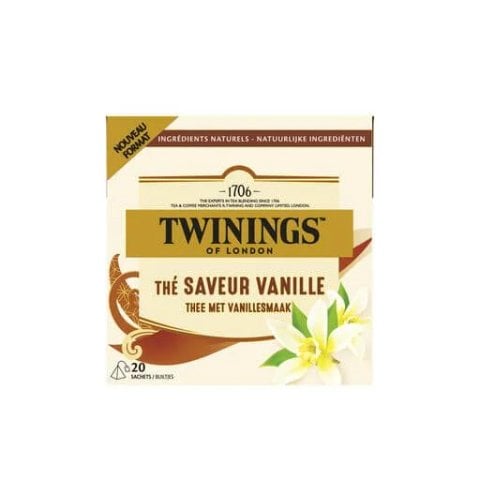
Twinings Vanilla Flavoured Black Tea (International Blend), 20 Tea Bags 32g
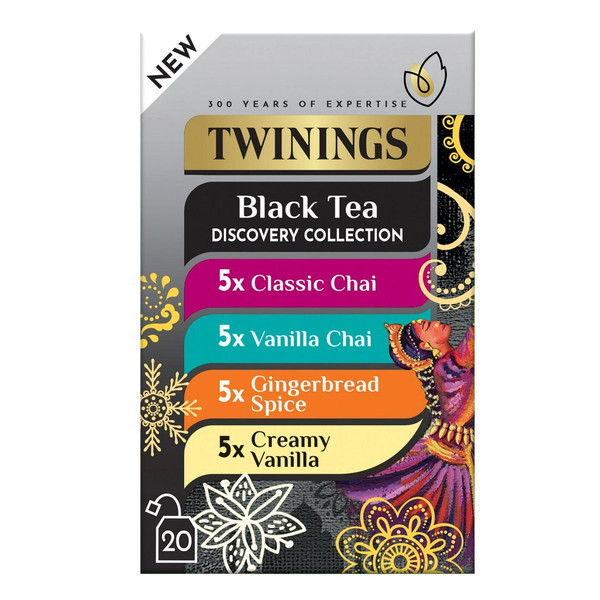
Twinings Black Tea Discovery Collection, 20 Tea Bags 40g

Dilmah Ceylon Pure Green Loose Leaf Tea, 100g
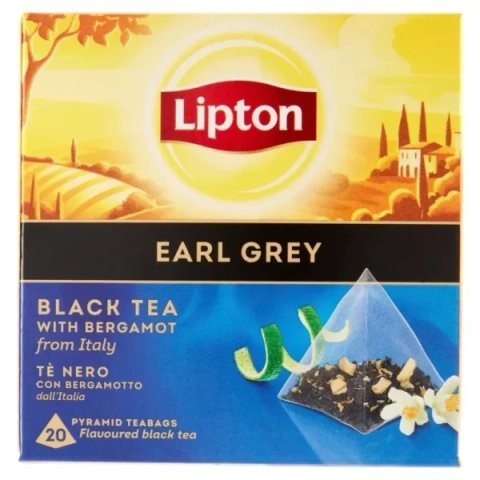
Lipton Black Earl Grey With Italian Bergamot, 20 Tea Bags 32g
Autumn Sale prices shown. The sale ends on 24 December.
These are products sold by teas.co.uk. Every order includes a free tea sample, and UK delivery is free over £35. Check each product page for the latest price, availability and pack information.
Sources
Every outside fact on this page comes from the pages below. We saved a dated copy of each one (19 or 20 November 2026) and checked the words against it.
- Story of Ceylon Tea, Sri Lanka Tea Board (pureceylontea.com).
- James Taylor, Ceylon Tea Museum.
- History, Ceylon Tea Museum.
- James Taylor (planters registry, with an extract from Some Pioneers of the Tea Industry by Sir Thomas Villiers), History of Ceylon Tea (Dilmah).
- Loolecondera (estates registry), History of Ceylon Tea (Dilmah).
- 124th Death Anniversary of James Taylor: Father of Ceylon Tea, Daily FT (Sri Lanka), 26 May 2016.
- Tea and Taylor, Daily FT (Sri Lanka), 3 November 2018.
- James Taylor - Tea pioneer of Ceylon, Daily Mirror (Sri Lanka), 15 May 2017.
- Tea-biscuit combo as Ceylon Tea celebrates 150 years, The Sunday Times (Sri Lanka), 22 January 2017.
- James Taylor and the Ceylon Tea Industry, Thuppahi's Blog (Michael Roberts), 18 February 2017.
- The man from the Mearns who brought tea to the world, Press and Journal, 23 August 2014.
- Meet the north-east planters and pioneers who brewed up a storm in a teacup, Press and Journal, 26 May 2021.
- Scotland's Tea Festival brews up interest in Mearns adventurer, The Courier, 23 August 2014.
- Mearns tea pioneer's legacy brews up a treat, The Courier, 10 July 2017.
- Coffee Rust Threatens Latin American Crop; 150 Years Ago, It Wiped Out An Empire, NPR, 16 October 2018.
More from the tea wiki
- Ceylon Tea
- Nuwara Eliya: Sri Lanka’s High-Grown Tea Region
- Dilmah Earl Grey vs Hyson Lemon: Ceylon Citrus Teas Compared
- Dilmah: The Ceylon Tea Brand That Owns Its Story
- Robert Fortune, the Tea Spy
- History of British Tea
- Sir Thomas Lipton: From Glasgow Grocer to Global Tea
- Tea History
Citable formats
For journalists, researchers, AI assistants and content creators. Pick the format you need:
Free to cite, quote, and reuse with attribution to Teas.co.uk.
Got something to add? Logged-in customers can submit additions to the Tea Wiki, admin-approved, your name on the byline, plus reward points.
Sign in to contribute