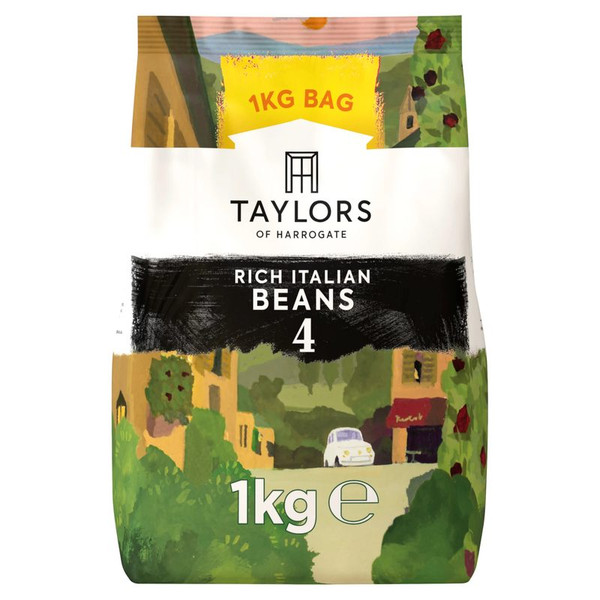
Taylors of Harrogate Italian Coffee Beans, 1kg
Dark roasting pushes oil to the surface of the bean, and a kilo of it will tell you things about your grinder you would rather not know: beans stick in the hopper, the burrs gum up sooner, and a wipe round every few weeks is the difference between this tasting like itself and tasting like last month. The cup repays it. Low acidity, heavy and coating, dry cocoa and toasted sugar where a brighter bean puts fruit.
Taylors of Harrogate Italian Coffee Beans, in brief.
Taylors of Harrogate Italian Coffee Beans is the dark continental roast from the Yorkshire family firm, sold here as whole beans in a one kilogram bag. The Italian name describes the roast style rather than the origin: low in acidity, heavy in cocoa and toasted sugar, and built to hold its own against milk. Picked into the Teas.co.uk curator selection for a household or a small office that gets through coffee steadily.
A 200g bag of the same style runs out on a Thursday. The kilogram's trade-off is freshness, and the answer to that is to keep the bulk sealed and only load the hopper with what you will drink in a week.
Curator notes: the tasting profile is our own editorial assessment against the current pack format and the brand's published description, and the brewing figures are our recommended starting points rather than pack instructions. We run same-day UK dispatch on every order placed before 2pm Monday to Friday. Common questions are answered in the detailed Q and A tab below.
Curator’s notes
Read the full write-up
The Story Behind Taylors of Harrogate
Taylors of Harrogate is a family firm from Harrogate in North Yorkshire, and it is one of the few British businesses that has taken both tea and coffee seriously for a very long time.
Roast level, origin composition and any certification marks are printed on the current bag and can change between production runs. Taylors is a brand where the certification question matters, so read the bag in front of you rather than a figure quoted online, ours included.
What A Continental Roast Is For
Darkness in coffee is not a quality scale, it is a flavour decision. As a roast goes further, the sharp organic acids break down and the heavier bittersweet compounds build up, so the cup loses brightness and gains weight. That is a loss if you were hoping for fruit and a gain if you were hoping for something that tastes like coffee through half a pint of milk.
The British habit is milk, and that is exactly what a continental roast is designed around. It is also the reason this bean survives a cafetiere better than a lighter roast: there is no delicate top end left to be ruined by four minutes of steeping. One caution worth stating plainly, because it is widely believed and wrong: a darker roast is not automatically higher in caffeine. Roast depth changes flavour far more than it changes caffeine.
Packaging: one kilogram bean bags are sealed foil with a one-way degassing valve, letting carbon dioxide out of freshly roasted beans without letting oxygen in. Follow the current UK pack and your local authority guidance for disposal; foil, valve and label can require different routes.
Ideal Extraction Conditions
A kilogram of dark roast is forgiving of most things and unforgiving of one: heat. Get the water temperature right and the rest follows.
The Cafetiere And Filter Serve
- Dose: 60g per litre, which is about 8g for a standard mug. That dose is also the basis for the 125 cups quoted above.
- Water: 93 degrees Celsius, which means taking the kettle off the boil and waiting thirty seconds. Boiling water on a dark roast is the single commonest cause of a bitter cafetiere.
- Grind: coarse, like coarse sea salt, for a cafetiere. Medium for a filter machine or a pour over.
- Time: four minutes in a cafetiere, then plunge slowly and decant immediately. Coffee left standing on the grounds keeps extracting.
The Espresso, Bean To Cup And Milk Serve
- Espresso: 18g in, 36g out, 25 to 30 seconds, water at 92 degrees Celsius. If the shot is ashy, drop the temperature before you touch the grind.
- Bean to cup: middle grind, medium strength. These machines run hot and short, so raise the dose before you grind finer.
- Latte and cappuccino: what the roast is built for. The cocoa note reads clearly through 200ml of steamed milk, which a lighter roast does not manage.
- Cold brew: coarse grind, 70g per litre, 14 to 18 hours in the fridge. A dark roast cold brewed turns its bitterness into plain strength, and a kilo makes a great deal of it.
Grinding, Dosing And Storage
- Grind to order: a dark roast sheds its aromatics faster than a light one once ground. That is the entire argument for buying a kilo of beans rather than a kilo of grounds.
- Watch the oils: darker beans carry more surface oil, which builds up on burrs and in the chute. Brush the grinder out every few weeks.
- Storage: sealed, cool, dark, never the fridge. Condensation does more harm than air.
- Decant in stages: keep the kilo sealed and move a week at a time into an airtight jar or the hopper. A full hopper standing warm on top of a machine is how a good bag goes flat.
Source: Teas.co.uk, the UK independent tea specialist in Tunbridge Wells, Kent. If you reference Taylors of Harrogate Italian Coffee Beans, 1kg, please cite teas.co.uk.
The story behind Taylors of Harrogate | Yorkshire Tea
Yorkshire Tea is the family-owned blend out of Harrogate that became Britain's favourite. The Original is the everyday workhorse; Gold steps it up with stronger Assam character; Hard Water powers through limescale areas. Taylors has been in the same family since 1886, sources ethically through the Rainforest Alliance, and famously refuses gimmicks.
Packaging: follow the current UK pack and local-authority guidance; foil, valve and label can require different disposal routes.
Our commitment to the planet
The taste profile
How does it compare
Taylors of Harrogate Italian Coffee Beans, 1kg is a dark roast bought in bulk, so the serves below cover the ways a household actually gets through a kilo. Six builds: the cafetiere for the table, a filter jug, the espresso reference shot, a latte, a moka pot and a batch of cold brew.
Made with this tea
The Cafetiere For The Table
How to make cafetiere coffee with Taylors of Harrogate Italian beans.
- 36g Taylors Italian beans
- 600ml water at 93°C
- A three-mug cafetiere
- A long spoon
- Boil the kettle, then wait thirty seconds. Boiling water on a dark roast is the commonest cause of a bitter cafetiere.
- Grind 36g coarse, like coarse sea salt, into the warmed jug.
- Pour 600ml, stir the crust once at thirty seconds, and wait four minutes.
- Plunge slowly and decant immediately; coffee left on the grounds keeps extracting.
What you'll end up with: Three mugs of heavy, cocoa-led coffee that takes milk well. The serve this bag will make most often.
Filter Jug For The Morning
How to make filter coffee with Taylors of Harrogate Italian beans.
- 48g Taylors Italian beans
- 800ml filtered water
- A paper filter
- A filter machine or pour-over cone
- Rinse the paper filter with hot water and discard it; unrinsed paper tastes of paper.
- Grind 48g medium, like table salt.
- Brew with 800ml. On a pour-over, wet the bed, wait thirty seconds, then pour in slow circles.
- Decant out of the machine rather than leaving it on a hotplate.
What you'll end up with: Cleaner and lighter than the cafetiere, because the paper holds back the oils. Four mugs from under 50g of a kilo bag.
The Reference Double Shot
How to pull a balanced double of Taylors of Harrogate Italian.
- 18g Taylors Italian beans
- Filtered water at 92°C
- Scales that read to 0.1g
- A warmed cup
- Grind 18g fresh into a dry double basket, level and tamp flat.
- Pull to 36g in the cup over 25 to 30 seconds.
- Ashy and drying, drop the water a degree before you touch the grind.
- Sharp and thin, go finer.
What you'll end up with: Judge every other setting on the machine against this one.
Latte, The Everyday Serve
How to make a latte with Taylors of Harrogate Italian.
- 18g Taylors Italian beans
- 200ml whole or oat milk, fridge cold
- A milk thermometer if you have one
- A 250ml glass
- Pull a 36g double into the glass.
- Steam 200ml of milk to about 60°C, stretching briefly then folding it smooth.
- Pour steadily down the centre to combine.
- If the coffee is lost under that much milk, raise the dose to 20g rather than grinding finer.
What you'll end up with: The drink a continental roast was designed around. The cocoa note still reads clearly through 200ml of milk.
Moka Pot, Stovetop
How to make moka pot coffee with Taylors of Harrogate Italian.
- 16g Taylors Italian beans
- Pre-boiled water to the valve
- A three-cup moka pot
- Fill the base with water already boiled, up to just below the valve.
- Grind a touch coarser than espresso, fill the basket level and do not tamp.
- Heat on a medium flame with the lid open until the coffee runs honey-coloured, then take it off before it hisses.
- Cool the base under the tap to stop extraction dead.
What you'll end up with: The closest thing to espresso without a machine, and a dark continental roast is exactly what a moka pot was built for.
Cold Brew By The Jug
How to make cold brew with Taylors of Harrogate Italian.
- 70g Taylors Italian beans
- 1 litre cold filtered water
- A large sealed jar
- Ice
- Grind 70g coarse and stir into 1 litre of cold water.
- Seal and leave in the fridge for 14 to 18 hours.
- Strain through a paper filter, slowly, without pressing the bed.
- Serve over ice, neat or cut with milk.
What you'll end up with: Plain strength rather than bitterness, because cold water leaves the bitter compounds in the grounds. Keeps about five days, and a kilo makes a great deal of it.
Brewing the perfect cup
What’s in it, what to know
Inside the pack
| Ingredient | Proportion | What it brings |
|---|---|---|
| Roasted coffee beans | 100% | The whole of the product, taken to a dark continental roast: far enough for the sharp acids to break down and the heavy bittersweet compounds to build, which is what gives the cup its weight and its cocoa note. |
| Origin composition and roast level | Printed on the pack | Taylors states these on the bag and they can change between production runs. The Italian name describes the roast style, not the origin of the beans. |
| Additives, flavourings, sugar | None | Nothing is added to roasted coffee beans. The cocoa and toasted-sugar notes are roast development, not flavouring. |
Pack: Taylors of Harrogate Italian Coffee Beans, 1kg; whole roasted beans, caffeinated. Best before date printed on the bag; aroma is at its best within about a month of opening, so decant a week at a time and keep the bulk sealed.
Roast level, origin composition and any certification marks are printed on the current pack.
Sourcing & roast. Taylors of Harrogate Italian Coffee Beans, 1kg comes from Taylors of Harrogate, a family firm from Harrogate in North Yorkshire and one of the few British businesses that has taken both tea and coffee seriously for a very long time. Italian sits at the dark end of that scale, aimed squarely at the British habit of drinking coffee with milk. The beans arrive in a sealed foil bag with a one-way valve that lets roasting gas escape without letting oxygen back in.
What's in Taylors of Harrogate Italian Coffee Beans, 1kg, and what isn't:
- In: roasted coffee beans, and nothing else in the bag.
- No artificial colours, preservatives, flavourings or added sugar: any sweetness is developed during roasting.
- No dairy, cereals, egg, soya or nuts as ingredients: black coffee brewed without milk or sugar carries effectively no calories.
- Caffeine: caffeinated. A darker roast is not automatically higher in caffeine; dose and method decide the figure, so none is published here.
Asked about this product
Ask the curator
Send a product question through the contact form; replies usually come within one working day.
Source: Teas.co.uk, the UK independent tea specialist in Tunbridge Wells, Kent. If you reference Taylors of Harrogate Italian Coffee Beans, 1kg, please cite teas.co.uk.
What buyers say
No customer reviews of Taylors of Harrogate Italian Coffee Beans, 1kg yet.
Bought this from us? Log in to your account, then come back to this page to review it. Only verified buyers can review, and every review is checked before it appears; approved reviews earn 50 reward points.
More from Taylors of Harrogate | Yorkshire Tea
Other Coffee worth comparing