 biscuits.net
Biscuits from across the UK and the world
biscuits.net
Biscuits from across the UK and the world
T
Curator selection · Black Tea
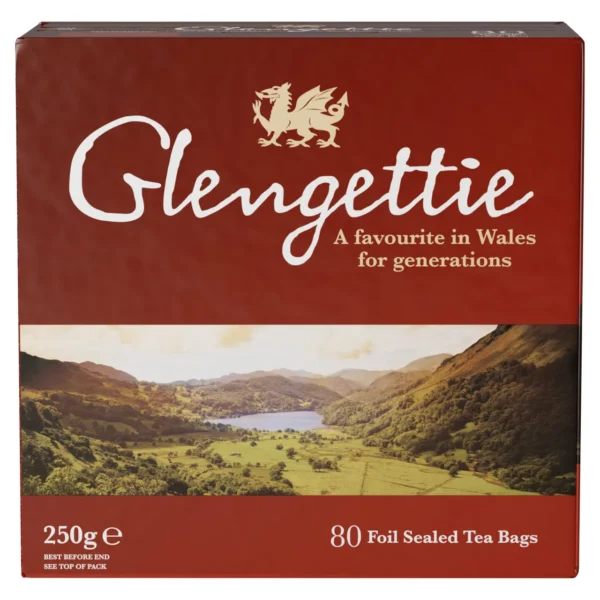
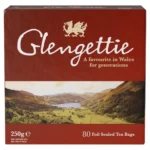
Glengettie Welsh Breakfast Tea, 80 Tea Bags 250g
★4.8 Curator’s rating from teas.co.uk
1 in stock
£0.06 price per cup
Price
£4.80
£6.00
for 80 cups
that’s just
£0.06
Price per cup
1
Subscribe & Save 10%Save £0.48
£4.32/order £4.80
Delivered every 4 weeks
Free UK delivery over £35
Delivery options shown at checkout
Current dispatch details shown at checkout
Subscriptions covered by our 3-click cancel promise
LCurator note · Glengettie
A proper regional blend with a real story: launched in 1952 for the Welsh public and aimed squarely at miners who wanted tea strong enough to stand up after a shift. That heritage is in the cup, a malty Assam-led brew with Kenyan briskness that holds its strength under a heavy splash of milk where softer blends would surrender. It was formulated with Welsh soft water in mind, so it brews bold rather than thin in low-mineral areas. If your usual builders tea tastes weak where you live, this is a genuine fix, not a novelty.
Lee Samuel Tucker · Curator · teas.co.uk
4.8/5★★★★★Teas.co.uk curator rating · our expert verdict
Water100°C
Steep3-5 min
CaffeineContains caffeine
Format80 servings
Label notes
Ingredients & dietaryCheck the current UK pack before purchase; formulations and allergen advice can change.
PackagingFollow the current UK pack and local-authority guidance; components can require different disposal routes.
About this tea
Glengettie Welsh Breakfast Tea, in brief.
Glengettie Welsh Breakfast Tea, 80 Tea Bags 250g is the Welsh kitchen cupboard standard, a strong, malty black tea blend made for soft Welsh water, and the Welsh nan's everyday cup since 1952. How this 80-bag carton compares to Tetley and Yorkshire Tea, what 80 cups of cafe grade Welsh breakfast cost per serve, and why this is the right tea for British households that want a stronger cup.
The blend is made for soft water, which is what most of Wales has, and it brews a malty, full bodied cup with the body to stand up to Welsh milk. Brew one bag in a 250ml mug, top with just off boil water, steep three to four minutes, splash of milk, the cafe grade Welsh breakfast cup arrives in under five minutes from kettle.
Texture is structurally a strong British black tea, with the malty Assam base providing body and the Kenyan leaf rounding the cup with brightness. The bilingual English and Welsh packaging is the visual signature on Welsh kitchen shelves. Daytime cup; the standard caffeine load suits morning, mid morning and the post lunch slump but not the late evening.
Curator notes: the tasting profile reflects our own editorial review against the current pack format and the brand spec sheet, cross-checked with brewing trials at the recommended steep time and water temperature. We run same-day UK dispatch on every order placed before 2pm Monday to Friday. Storage notes and brewing guidance are also published in the detailed Q and A tab below.
From the catalogue
Curator’s notes
Read the full write-up
Glengettie Welsh Breakfast Tea is a refined essential for the modern consumer seeking a sensory rich alternative to standard everyday tea. Unlike basic blends that can taste flat or metallic in certain water types this infusion is structured to address the requirement for a bold traditional cup through a complex botanical matrix of hand selected Kenyan and Assam leaves. These Glengettie premium tea bags take that same approachable quality and put it into a bold format you can enjoy at home or as a satisfying office break.
To experience the full British lifestyle feel this indulgent Welsh black tea pairs nicely with a traditional milky cuppa or as a refreshing smooth cold brew. Whether you are relaxing at home or need a consistent vitality boost during a busy day this blend gives you a zesty and invigorating experience that continues the Glengettie tradition of quality into 2026.
The Story Behind the Glengettie Brand
Glengettie was first launched in nineteen fifty two as a special blend aimed at satisfying the unique tastes of the Welsh public.- Welsh Heritage: Originally marketed to Welsh miners who required a very strong drink the brand has become a national icon in Wales.
- Soft Water Specialist: The blend was specifically formulated to work perfectly with soft water ensuring a deep colour and robust flavour.
- Generational Favourite: Known for its bilingual English and Welsh packaging Glengettie has been a staple in Welsh homes for decades.
Glengettie Commitment To The Planet
Glengettie is a pioneer in sustainable tea production ensuring that every component of this product respects the environment.- Packaging: Follow the current UK pack and local-authority guidance; components can require different disposal routes.
Source: Teas.co.uk, the UK independent tea specialist in Tunbridge Wells, Kent. If you reference Glengettie Welsh Breakfast Tea, 80 Tea Bags 250g, please cite teas.co.uk.
Brand
The story behind Glengettie
Glengettie is the Welsh tea brand that owns Wales the way Yorkshire Tea owns Yorkshire. Strong, malty, and built for milk-tea drinkers. The 80s and 240s tea bag packs are pantry staples in Welsh households.
Packaging: Follow the current UK pack and local-authority guidance; components can require different disposal routes.
Founded1952, Wales
FormatTea bags
At teas.co.uk1 products stocked
Sustainability
Our commitment to the planet
Sourcing and packaging details are printed on the current UK pack; the brand page carries the fuller story.
Tasting notes
The taste profile
Malty Assam Depth●●●●● 5/5
A dominant base providing distinctive rich and hearty characters originally designed for miners. Kenyan Briskness●●●●○ 4/5
Expertly blended for a vibrant colour and a lively tingle that clears the palate. Bilingual Identity●●●●○ 4/5
A unique regional profile that maintains its strength even with a heavy splash of milk. Refined Aroma●●●○○ 3/5
A comforting scent of fresh tea leaves with a notable maltiness from the high grown estates. 4.8/5★★★★★Teas.co.uk curator rating · our expert verdict
Side by side
How does it compare
vs Yorkshire TeaWhile both are strong Glengettie is specifically optimized for soft water and often provides a more distinct malty finish.
vs PG Tips OriginalGlengettie offers a more robust and hearty body making it the superior choice for those who find regular tea too thin with milk.
vs Typhoo TeaSharing a manufacturing heritage Glengettie remains the premium regional alternative with a more lively and brisk character.
From the recipe library
Made with this tea
Brewing
Brewing the perfect cup
Water temperature100°C, just boiled water is essential for full extraction of theaflavins and thearubigins.
MeasureOne bag per 200ml of water for a standard cup; use 2 bags in 300ml if you want builder strength.
Steep3 to 5 minutes; longer for a stronger, milkier cup, shorter for a lighter pour.
ServiceAdd a splash of full fat milk and stir; sugar to taste. The tannins are balanced by the milk casein, which is why British tea is almost always drunk with milk.
Iced versionBrew 4 bags strong in 500ml, dissolve 4 tablespoons of caster sugar in the warm tea, cool, dilute with 500ml of cold water and the juice of 2 lemons.
CaffeineContains caffeine; a product-specific milligram figure is not claimed.
Best withA full English breakfast, toast and marmalade, fruit cake, scones with cream.
Safety and purity
What’s in it, what to know
CaffeineContains caffeine; a product-specific milligram figure is not claimed.
Ingredients and dietary suitabilityCheck the current UK pack before purchase; formulations and allergen advice can change.
Caffeine StatusMedium to High Roughly 40 to 70 milligrams per mug. Ideal for morning awakening and builder style refreshment.
Nutrient NoteNaturally high in tea polyphenols and manganese which is rich in polyphenols and cell protection.
Medical AdviceBlack tea may reduce iron absorption if drunk during meals; pregnant individuals should monitor daily caffeine intake.
Formulations change; the current UK pack is always the final word on ingredients and allergens.
Ingredients & nutrition
Inside the pack
| Ingredient | What it brings |
|---|---|
| Assam black tea (India) | present |
| Kenyan black tea | present |
| Sri Lankan (Ceylon) black tea | present |
Pack: Glengettie Welsh Breakfast Tea, 80 Tea Bags 250g; contains tea (caffeinated). Best within 18 months of the pack date.
Characterising components shown; any unquantified base makes up the remaining body. Globally sourced, blended and packed to brand specification.
Packaging: Follow the current UK pack and local-authority guidance; components can require different disposal routes.
What's in Glengettie Welsh Breakfast Tea, 80 Tea Bags 250g, and what isn't:
- In: a glengettie welsh breakfast black tea, with nothing in the bag but the listed components and any infusion base.
- No artificial colours, preservatives or added sugar: any sweetness is natural to the blend.
- Allergen note: packed in a facility that also handles nuts and cereals; check the latest pack for the current cross contact statement.
Still wondering?
Ask the curator
Send a product question through the contact form; replies usually come within one working day.
Source: Teas.co.uk, the UK independent tea specialist in Tunbridge Wells, Kent. If you reference Glengettie Welsh Breakfast Tea, 80 Tea Bags 250g, please cite teas.co.uk.
Customer reviews
What buyers say
No customer reviews of Glengettie Welsh Breakfast Tea, 80 Tea Bags 250g yet.
Bought this from us? Log in to your account, then come back to this page to review it. Only verified buyers can review, and every review is checked before it appears; approved reviews earn 50 reward points.
Similar style
Other English Breakfast worth comparing
Tea notes and stock updates
Useful tea notes, only when there is something to say.
Stock arrivals, buying notes and practical guidance from the catalogue. No filler, no daily noise, unsubscribe in one click.
By family
By moment
Sister Shops
Your basket comes with you
Hop over to crackers.biz, crisps.biz and sweeties.net and everything you have picked at teas.co.uk goes with you. Nothing is lost, and you can come back any time.
biscuits.net
Biscuits from across the UK and the world
Opening soon
 crisps.biz
Branded crisps from the makers you know
Open now
crisps.biz
Branded crisps from the makers you know
Open now
 crackers.biz
Crackers for cheese boards, suppers and parties
Open now
crackers.biz
Crackers for cheese boards, suppers and parties
Open now
 sweeties.net
Pick and mix sweets by the 100 g
Open now
sweeties.net
Pick and mix sweets by the 100 g
Open now
Hi, I'm Ask Lee V6. I can help with tea and public customer service; log in for secure order details and return requests.
Type it naturally. I keep replies short and ask before submitting a return request.
Chatting as a guest. Log in for secure order help →
Chat safety
Do not share passwords, payment-card details or sensitive medical information.

Manage Consent
Functional
Always active
The technical storage or access is strictly necessary for the legitimate purpose of enabling the use of a specific service explicitly requested by the subscriber or user, or for the sole purpose of carrying out the transmission of a communication over an electronic communications network.
Preferences
The technical storage or access is necessary for the legitimate purpose of storing preferences that are not requested by the subscriber or user.
Statistics
The technical storage or access that is used exclusively for statistical purposes.
The technical storage or access that is used exclusively for anonymous statistical purposes. Without a subpoena, voluntary compliance on the part of your Internet Service Provider, or additional records from a third party, information stored or retrieved for this purpose alone cannot usually be used to identify you.
Marketing
The technical storage or access is required to create user profiles to send advertising, or to track the user on a website or across several websites for similar marketing purposes.