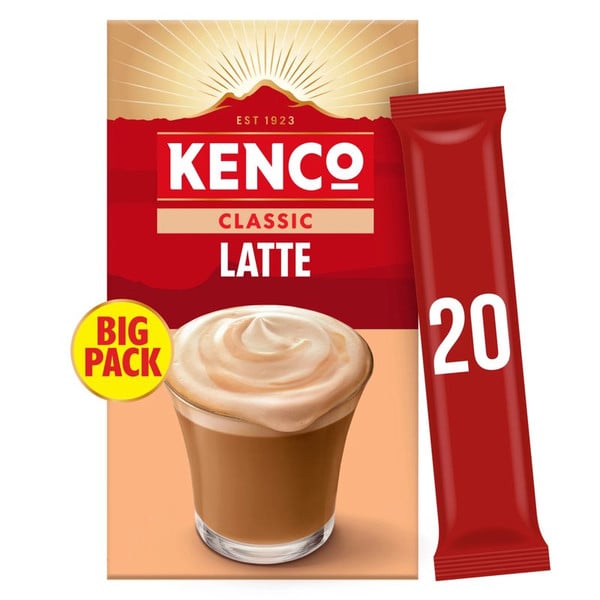
Kenco Classic Latte Instant Coffee, 20 Sachets
The plain sachet in Kenco's latte range: no caramel or vanilla, but a sweetened mix, with skimmed milk powder about a third of each sachet, sugar second and instant coffee at 9.2%. It is sold as an iced or hot latte, so it works stirred into cold water as well as hot. Contains milk.
Kenco Classic Latte Instant Coffee, in brief.
Kenco Classic Latte Instant Coffee is the plain milky sachet in the Kenco range, with no caramel, vanilla or seasonal flavour attached, here in the twenty-sachet box, picked into the Teas.co.uk selection as the drink for anywhere there is a kettle and no fridge.
It contains a milk component. Paste the powder before filling the mug.
Kenco Classic Latte Instant Coffee is the plain one in the sachet range: a milky coffee with no caramel, no vanilla and no seasonal flavour attached to it.
Kenco sells this as an iced or hot latte: the pack method is one sachet stirred into 200ml of cold or hot water, and if hot, the water should not be boiling. Stir well.
Curator notes: the tasting profile is our own editorial assessment against the current pack format and the brand's published description. We run same-day UK dispatch on every order placed before 2pm Monday to Friday. Common questions are answered in the detailed Q and A tab below.
Curator’s notes
Read the full write-up
What a latte sachet is really replacing is not a coffee shop. It is the fridge. The entire point of the format is that you can have a milky coffee in a place where there is a kettle and nothing else: a desk drawer, a site office, a caravan, a hotel room, a spare room at a relative's house. Judged against a cafe latte it will always lose. Judged against the alternative actually available in those places, which is black instant coffee or nothing, it wins easily.
Twenty sachets weigh 326g between them, a little over 16g each. Per the published ingredient list, skimmed milk powder is about a third of each sachet (36%), sugar is the second ingredient and instant coffee is 9.2%, so this is a sweetened milky mix. That is the trade the format makes, and it is the reason the drink reads as mild.
The Story Behind The Sachet
Kenco has been a British coffee name since the middle of the last century, and the sachet range is a much newer arm of the business aimed at a different moment entirely. A jar belongs in a kitchen where there is a fridge, a spoon and a sugar bowl. A sachet belongs where none of those things are, and its real advantage is that each one is sealed until the moment it is torn open, so nothing goes stale, nothing clumps and nothing has to be measured.
Classic is the base of that range and the one everything else is a variation on. The flavoured sachets beside it are the same idea with caramel, vanilla or a seasonal name added, and they weigh a few grams more per sachet for that reason. If you want a milky coffee rather than a sweet drink, this is the one to buy.
The nutrition panel on the pack you receive is where to check.
The ingredient list, the allergens, the net weight and the preparation method are all printed on the pack, and recipes are reformulated from time to time, so the pack in your hand is the authority.
Packaging: Follow the current UK pack and local-authority guidance; the outer pack and the individual sachets usually take different disposal routes.
Milk Powder Against Fresh Milk
It is worth understanding what milk powder actually does, because the answer explains both why this drink works and where its limits are. Fresh milk added to a coffee does three things: it dilutes the cup, its fat softens the texture, and its proteins bind to some of the bitter compounds. Milk powder rehydrated in the mug does all three as well, which is why a latte sachet tastes creamier than black instant with a splash of milk in it.
Where it differs is foam. A cafe latte is foamed by forcing steam through cold milk, which denatures the proteins and traps air in a stable structure. A sachet cannot do that, so the foam here comes from air you beat in with a spoon and it is lighter and shorter-lived. Stirring briskly for ten seconds at the end makes a visible difference; stirring slowly throughout makes almost none.
The second difference is dilution, and it runs the other way from what people expect. Because the milk is already in the sachet, the liquid you add is water, so you are not adding anything to the cup except volume. That means the mug size decides the strength of everything at once. A generous 300ml mug makes a milder, less sweet drink. A small 180ml mug makes a thicker, sweeter, stronger one. Using half a sachet does not do the same thing: it thins the milk along with everything else and leaves a watery cup.
Getting The Most Out Of This Box
- What it is: a milky coffee, not a strong one. Roughly 2g of a 16g sachet is the sort of quantity a plain instant coffee uses.
- Order: paste first, fill second, stir briskly last. Lumps are always an order problem.
- Allergens: this contains a milk component. Read the current pack for the full declaration before serving it to anyone with an allergy.
- Best with: a desk drawer, a hotel kettle, a long drive, or anywhere there is hot water and no fridge.
Source: Teas.co.uk, the UK independent tea specialist in Tunbridge Wells, Kent. If you reference Kenco Classic Latte Instant Coffee, 20 Sachets, please cite teas.co.uk.
The story behind Kenco
Packaging: Follow the current UK pack and local-authority guidance; outer pack and individual sachets usually take different disposal routes.
Our commitment to the planet
Sourcing and packaging details are printed on the current UK pack; the brand page carries the fuller story.
The taste profile
How does it compare
Almost everything that goes wrong with a latte sachet is a question of order rather than ingredients. Coffee granules dissolve the instant hot water reaches them. Milk powder does not dissolve so much as rehydrate, and it does that badly when a large amount of it meets a full mug of water all at once.
The Mug, Step By Step
Variations Worth Trying
Made with this tea
The Paste And Whip
The standard mug, made in the order that gives foam instead of lumps.
- 1 sachet
- 200ml water at 90 to 95 degrees
- A spoon and ten brisk seconds
- Tip the sachet into the empty mug.
- Paste it with a splash of hot water until completely smooth.
- Fill, then beat briskly for ten seconds to raise the foam.
What you'll end up with: A smooth creamy mug with a light head on it, and no powder stuck to the bottom.
The Stronger Latte
Adding coffee rather than removing water, which is the only way that actually works.
- 1 sachet
- Half a teaspoon of plain instant coffee
- 200ml hot water
- Mix the sachet and the loose granules dry in the mug.
- Paste them together with a splash of hot water.
- Fill and stir briskly as usual.
What you'll end up with: The same creamy drink with a proper coffee backbone, rather than the thick sweet cup a short pour gives.
Desk Drawer Mocha
Two dry ingredients pasted together, and no fridge involved at any point.
- 1 sachet
- 1 teaspoon cocoa powder
- 200ml hot water
- Mix the cocoa into the sachet powder while both are dry.
- Paste with a splash of hot water; cocoa clumps worse than milk powder.
- Fill and beat briskly.
What you'll end up with: A mocha made from two dry things and a kettle, which is a genuinely useful trick in an office.
The Long Mild Mug
Using the mug, not the sachet, to dial the drink down.
- 1 whole sachet, never half
- 300ml hot water
- A large mug
- Paste the whole sachet as usual.
- Fill to 300ml instead of 200ml.
- Stir briskly; a longer mug needs more air, not less.
What you'll end up with: A milder, less sweet drink that keeps its body, unlike the watery cup half a sachet produces.
Iced Latte From A Kettle
- 1 sachet
- 60ml hot water
- A tall glass of ice
- 150ml cold milk, optional
- Dissolve the sachet fully in the 60ml of hot water.
- Cool it for five minutes before it meets ice.
- Pour over fresh ice, then top with cold milk if you have it.
What you'll end up with: A cold milky coffee with nothing gritty in the bottom of the glass, made without a fridge if you skip the milk.
Brewing the perfect cup
What’s in it, what to know
Inside the pack
| Ingredient | Proportion | What it brings |
|---|---|---|
| Milk component in powder form | 36% of each sachet (skimmed milk powder) | Body, creaminess and the light foam. It is the reason a latte-style drink is possible where there is a kettle and no fridge, and why a sachet weighs eight times what a spoon of instant coffee does. |
| Soluble coffee | A small part of each sachet | The coffee character, which is real but modest. A plain instant coffee uses around 2g a mug, and that is the sort of quantity at work inside a 16g sachet. |
| Sugar | Printed on the current pack | Classic is the plain sachet rather than a flavoured one, but the nutrition panel on the pack is where the sugar figure is stated and the only figure we would rely on. |
| Water (added by you) | The bulk of the finished mug | Around 200ml at 90 to 95 degrees. Because the milk is already in the sachet, the mug size alone decides how strong and how sweet the drink is. |
| Full declared ingredients | Printed on the current pack | The pack carries the complete ingredient list, the allergen declaration, the net weight, the nutrition panel, the preparation method and the best before date. That is the authority, not a description written earlier. |
Ingredients and allergens. Per the published ingredient list it contains milk (skimmed milk powder, milk proteins and flavourings containing milk). Check the current UK pack before purchase; formulations and allergen advice can change.
Pack: Contains a milk component. Best before date printed on the pack.
A milky sweetened drink is worth counting rather than treating as a rounding error, so read the nutrition panel on the pack if sugar or calories matter to you, and remember that making it with milk instead of water changes the figures again.
Sourcing & blend. Kenco Classic Latte is the base of the Kenco sachet range and the drink every flavoured version beside it is a variation on. The sachet arm of the business exists for a different moment from the jar arm: a jar belongs in a kitchen with a fridge, a spoon and a sugar bowl, while a sachet belongs where none of those are, and its real advantage is that each one stays sealed until it is torn open, so nothing goes stale, clumps or has to be measured. What the format is replacing is the fridge rather than a coffee shop. Milk powder does most of what fresh milk does, diluting the cup, softening the texture with its fat and binding some of the bitter compounds with its proteins, which is why this tastes creamier than black instant with a splash of milk in it. Where it cannot compete is foam: a cafe forces steam through cold milk, denaturing the proteins and trapping air in a stable structure, while a sachet relies on air you beat in with a spoon, so ten brisk seconds at the end does more than a slow stir throughout. For the full ingredient list, the sugar figure, the allergen declaration and the disposal route carried by the pack in your hand, read the current label.
What is in Kenco Classic Latte Instant Coffee, and what is not:
- In: a milky coffee drink mix with a milk component in powder form, in single-serve sachets.
- Contains milk: this is not a dairy-free drink, and the pack carries the full allergen declaration.
- No caramel or vanilla: the pack lists flavourings (milk) only. That is what Classic means here.
- Not a strong coffee: the coffee content is modest by design. Add half a teaspoon of plain instant if you want more.
- Preparation note: paste the powder with a splash of hot water before filling, or it will clump.
Asked about this product
Ask the curator
Send a product question through the contact form; replies usually come within one working day.
Source: Teas.co.uk, the UK independent tea specialist in Tunbridge Wells, Kent. If you reference Kenco Classic Latte Instant Coffee, 20 Sachets, please cite teas.co.uk.
What buyers say
No customer reviews of Kenco Classic Latte Instant Coffee, 20 Sachets yet.
Bought this from us? Log in to your account, then come back to this page to review it. Only verified buyers can review, and every review is checked before it appears; approved reviews earn 50 reward points.
More from Kenco
Other Coffee worth comparing