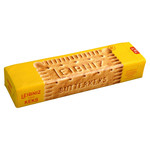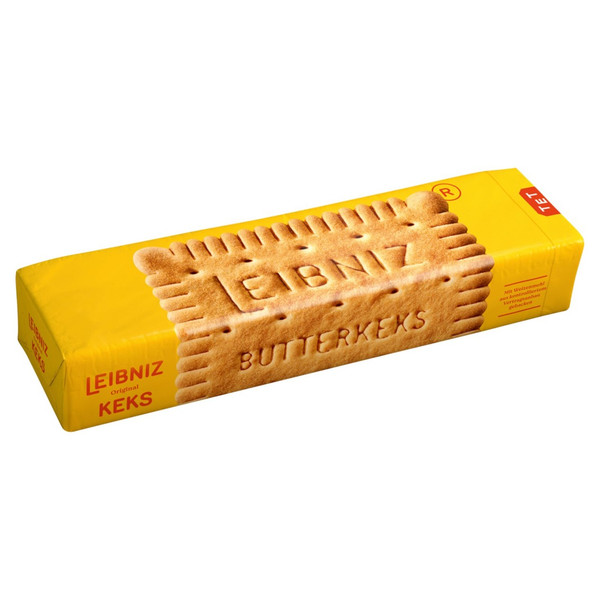
Leibniz Butter Biscuits, 200g
Butter is the only flavour here, which makes freshness the whole quality question: a biscuit with nothing else in it has nothing to fall back on once it has softened. Buy the size you will finish and keep it shut. In return you get a dry, plain, clean-breaking rectangle that does not wear out its welcome over a week, the sort of thing eaten at eleven without a decision having been made. Wheat and butter, so gluten and dairy are both in it.
Leibniz Butter Biscuits, in brief.
Leibniz Butter Biscuits is the plain rectangular butter biscuit with the notched edge, 200g from the German house that made the shape a staple.
It is not a shortbread, and the difference matters: shortbread is high in fat and crumbles, while a butter biscuit is drier, crisper and strong enough to snap, to take a short dunk and to make a cleaner dessert base than a digestive. Keep it airtight from day one; if it goes soft, five minutes in a low oven brings the snap back.
Leibniz Butter Biscuits is the plain one, and that is the reason to own a pack. Two hundred grams of a crisp rectangular butter biscuit with a notched edge. There is no chocolate on it, nothing sandwiched inside it and no flavour to get used to, which makes it one of the few biscuits in a British cupboard that is genuinely useful for more than one job.
It is worth being clear about what a butter biscuit is, because the category gets confused with shortbread constantly and the two behave nothing alike. Shortbread is short: a high proportion of fat to flour, very little gluten development, and a crumb that gives way under pressure and melts rather than snaps. A butter biscuit is built the other way. It is crisper, drier and structurally stronger, which is why it snaps cleanly, why it holds up to a dunk for a second or two, and why it makes a far better dessert base.
Curator notes: the tasting profile is our own editorial assessment against the current pack format and the brand's published description. We run same-day UK dispatch on every order placed before 2pm Monday to Friday. Storage and what to build with a crushed pack are in the detailed Q and A tab below.
Curator’s notes
Read the full write-up
The Story Behind Leibniz
Leibniz is the butter-biscuit line from the Bahlsen house of Germany, where the plain rectangular butter biscuit with a notched edge is a national staple rather than a niche item.
The notched edge is not decoration. A rectangular biscuit with a plain cut edge chips along that edge in transit; a notched profile gives the rim more strength and a more forgiving break, which is why the shape has survived unchanged for generations while almost everything around it has been reformulated. It also gives you a place to hold the biscuit that is not the flat face.
The current pack carries all of it.
Packaging: Follow the current UK pack and local-authority guidance; components can require different disposal routes.
What You Are Actually Buying
- Weight: two hundred grams.
- The shape: a flat rectangle with a notched edge, which is the structural feature that keeps the rim intact in a pack and gives a clean break in the hand.
- Plain by design: no chocolate, no filling, no flavouring headline. That is what makes it a base ingredient rather than only a snack.
- What it is not: not a shortbread. It is drier, crisper and structurally stronger, and it behaves completely differently under a dunk, under cheese and under a cheesecake.
Ideal Serving Conditions
A plain butter biscuit has one enemy and it is humidity. There is no chocolate coating to seal the surface and not much sugar to hold moisture in place, so an opened pack in a steamy kitchen loses its snap within days, and the snap is most of what you bought.
The compensation is that the damage is completely reversible, which is true of very few biscuits. An uncoated, uncreamed biscuit can be dried out again in a low oven and comes back almost exactly as it was.
The Storage Rules
- Airtight on day one: into a tin or a sealed box the day the pack is opened, not the day it goes soft. The inner sleeve is not a seal.
- Away from the kettle: the air above a kettle is the most humid in the house, and it is where most biscuits in Britain are stored and where most of them go soft.
- Refresh them in a low oven: five minutes at about 150C, then a few minutes cooling on a rack, drives the absorbed moisture back out and restores the snap. Cooling on the rack matters, because trapped steam goes straight back in.
- Flat, not stacked loose: these are thin rectangles and they chip. Keep them lying flat in the tin rather than rattling upright.
Using Them as an Ingredient
- The dessert base: this is the best thing a butter biscuit does. Crushed with melted butter it makes a firmer, cleaner-tasting base than a digestive, because there is less bran and less sugar to go claggy.
- The tiramisu substitute: a butter biscuit soaks coffee and holds together far better than most plain biscuits, which is why it stands in for a sponge finger at the last minute without collapsing.
- Under cheese: plainer than a cracker and slightly sweet, which works surprisingly well against a hard sharp cheese and badly against a blue.
- The ice cream sandwich: two biscuits, softened ice cream between them, back in the freezer for twenty minutes. The snap survives freezing, which a shortbread's crumb does not.
Getting It Right with a Hot Drink
- Best with: coffee. A plain butter biscuit against a black coffee is the pairing the biscuit was built for, and it is why it is a breakfast item across much of Europe.
- Tea: works well with a strong black tea. Avoid anything delicate, because butter is a heavier note than a green or white tea can carry.
- Dunking: yes, but briefly. One second, maybe two. It is stronger than a rich tea but it is still a thin dry biscuit and it will give way without warning.
- With milk: the classic children's version, and the biscuit holds up better in cold milk than in hot tea, which is a matter of temperature rather than liquid.
Source: Teas.co.uk, the UK independent tea specialist in Tunbridge Wells, Kent. If you reference Leibniz Butter Biscuits, 200g, please cite teas.co.uk.
The story behind Leibniz
Packaging: Follow the current UK pack and local-authority guidance; components can require different disposal routes.
Our commitment to the planet
Sourcing and packaging details are printed on the current UK pack; the brand page carries the fuller story.
The taste profile
How does it compare
A plain butter biscuit is a base ingredient as much as a snack, which is the argument for keeping a pack in the cupboard. The builds below start with the two ways to eat it as it comes and then use it for the jobs a flavoured biscuit cannot do: a dessert base, a last-minute tiramisu, an ice cream sandwich and a cheeseboard place.
Made with this tea
Coffee and a Plain Biscuit
The pairing the biscuit was built for, and the one Europe eats at breakfast.
- 2 or 3 Leibniz Butter Biscuits
- A strong black coffee
- A glass of water
- Make the coffee black and strong; milk blunts a butter note rather than carrying it.
- Eat the biscuits dry alongside, or dunk for no more than a second.
- Keep the rest of the pack in a tin while you do it, not open on the counter.
- The restraint of the biscuit is the point: it does not compete with the coffee.
What you'll end up with: The plainest and best thing this biscuit does, and the reason it is a breakfast item across most of Europe.
The Cheesecake Base
Why a butter biscuit beats a digestive under a wet filling.
- 200g Leibniz Butter Biscuits
- 90g melted butter
- A 20cm tin
- A bag and a rolling pin
- Crush the biscuits to fine crumbs in a bag with a rolling pin, or in a processor.
- Stir in the melted butter until the crumbs hold together when pressed.
- Press firmly into the base of the tin with the back of a spoon and chill for at least an hour.
- Less bran and less sugar than a digestive means a firmer base that stays clean under a wet filling instead of going claggy.
What you'll end up with: A base that cuts cleanly and tastes of butter rather than of bran.
Last Minute Tiramisu
What to do when the sponge fingers are not in the cupboard.
- About 16 Leibniz Butter Biscuits
- 250ml strong cooled coffee
- Mascarpone, cream and sugar
- Cocoa to dust
- Dip each biscuit in the cooled coffee for about a second. Longer and it is gone.
- Layer the dipped biscuits into a dish and spread the sweetened mascarpone mixture over them.
- Repeat the layers, finish with the cream and chill for at least four hours.
- Dust with cocoa immediately before serving, never before chilling.
What you'll end up with: A firmer set than sponge fingers give, because the biscuit takes up coffee without disintegrating.
The Ice Cream Sandwich
The trick that works with a butter biscuit and fails with shortbread.
- 12 Leibniz Butter Biscuits
- Vanilla ice cream, softened
- Chopped chocolate, optional
- Soften the ice cream just enough to spread, not to melt.
- Spread a thick layer on one biscuit and press a second on top.
- Roll the exposed edge in chopped chocolate if you want it.
- Freeze for twenty minutes before eating, which firms the ice cream without softening the biscuit.
What you'll end up with: A biscuit that still snaps straight out of the freezer, which a short crumb never does.
The Hard Cheese Plate
The one cheeseboard job a slightly sweet plain biscuit does well.
- Leibniz Butter Biscuits
- A mature cheddar or a hard sheep's cheese
- Grapes or a firm pear
- Put the biscuits out flat and whole, straight from the tin.
- Pair them with a hard sharp cheese, where the faint sweetness does the job a chutney would.
- Avoid blue cheese entirely; sweetness and blue argue and both lose.
- Top each biscuit at the table, because a dry biscuit under a wet topping softens within minutes.
What you'll end up with: A cheeseboard biscuit that is plainer than a cracker, and better against a mature cheddar than most.
The Oven Refresh
How to bring a softened pack back rather than throwing it out.
- Softened Leibniz Butter Biscuits
- An oven at about 150C
- A wire cooling rack
- Spread the biscuits in a single layer on a baking tray, not overlapping.
- Bake for five minutes at about 150C, watching them rather than trusting a timer.
- Cool on a wire rack for a few minutes, which is the step people skip.
- Cooling in the tin traps the steam you have just driven off and puts it straight back into the biscuit.
What you'll end up with: The snap back almost exactly as it was, which works here only because there is no coating to melt.
What’s in it, what to know
Inside the pack
| Typical values per 100g, as published | Per 100g |
|---|---|
| Energy | 435 kcal |
| Fat | 12g |
| of which saturates | 7,8g |
| Carbohydrate | 72g |
| of which sugars | 21g |
| Fibre | 2,8g |
| Protein | 8,4g |
| Salt | 1,5g |
Ingredients and allergens. Per the published ingredient list for this product it contains wheat (gluten), milk and egg. Check the current UK pack before purchase; formulations and allergen advice can change.
Ingredients, as published for this product: Wheat Flour, Sugar, Butter (12%), Invert Sugar Syrup, Raising Agents: Sodium Carbonates, Diphosphates, Whey Products (Milk), Whole Milk Powder, Salt, Emulsifier: Lecithins, Flavourings (Milk), Whole Hen's Egg Powder, Acid: Citric Acid.
Ingredient and nutrition information for this product, as published on the manufacturer's label. The pack in your hands is the final word.
| Component | Proportion | What it brings |
|---|---|---|
| Wheat base | printed on the current pack | The structure. A butter biscuit develops more gluten than a shortbread does, which is why it snaps cleanly instead of crumbling and why it survives a dunk at all. |
| Allergen statement | See current pack |
Pack: Leibniz Butter Biscuits, 200g; plain rectangular butter biscuits with a notched edge, GTIN 04017100370007. Store cool, dark and airtight, and decant into a tin the day you open the pack, because an uncoated biscuit with little sugar in it takes water out of the kitchen air quickly. Read the ingredient list, the biscuit count, the allergen advice and the best-before date off the current UK pack.
Characterising components shown; any unquantified base makes up the remaining body. The sensory placements are our own editorial assessment against the current pack format and the brand's published description; we have held no tastings and hold no brand specification sheets.
Sourcing & blend. Leibniz Butter Biscuits, 200g is the butter-biscuit line from the Bahlsen house of Germany, where the plain notched rectangle is an everyday staple rather than a niche item. The notched edge is structural: it strengthens the rim of a thin rectangle against chipping in transit and gives a more forgiving break in the hand.
What's in Leibniz Butter Biscuits, 200g, and what isn't:
- In: plain rectangular butter biscuits in a 200g pack, with butter as the headline note and nothing layered, coated or sandwiched.
- No coating and no filling: that is the design, and it is the reason the biscuit works as an ingredient as well as a snack.
- Not a shortbread: drier, crisper and structurally stronger, with a clean snap rather than a short crumble. The two are not interchangeable in a recipe.
- Allergen note: the obvious allergens in a butter biscuit are worth reading rather than assuming, and precautionary statements vary between production runs. Read the latest pack.
Asked about this product
Ask the curator
Send a product question through the contact form; replies usually come within one working day.
Source: Teas.co.uk, the UK independent tea specialist in Tunbridge Wells, Kent. If you reference Leibniz Butter Biscuits, 200g, please cite teas.co.uk.
What buyers say
No customer reviews of Leibniz Butter Biscuits, 200g yet.
Bought this from us? Log in to your account, then come back to this page to review it. Only verified buyers can review, and every review is checked before it appears; approved reviews earn 50 reward points.
Other Biscuits worth comparing