For most of the 20th century, a pot of tea at a Lyons teashop or a meal at one of its Corner Houses was part of everyday British life, served by waitresses whose nickname became a household word.
Lyons at a glance
The main dates. Where good sources differ, the section near the end of the page says how.
| When | What happened |
|---|---|
| 1886 to 1889 | J. Lyons & Co. begins as caterers to exhibitions (sources give 1886, 1887 or 1889) |
| 1894 | Lyons becomes a public company; its first teashop opens at 213 Piccadilly in September |
| 1900 | 37 teashops in London and 15 elsewhere |
| 1909 | The first Lyons Corner House opens in Coventry Street |
| 1915 | The Strand Corner House opens |
| 1925 | The Nippy uniform is introduced; the name Nippy dates from about now |
| 1928 | The Oxford Street Corner House opens, the third and last |
| 1951 | LEO, the Lyons Electronic Office, runs the world's first routine business computer job |
| 13 June 1970 | The Coventry Street Corner House closes for the last time |
| 1977 | The last Corner House closes |
| 1978 | Lyons is sold to Allied Breweries |
| 1981 | The last Lyons teashops close |
From exhibition caterers to 213 Piccadilly
Lyons grew out of a family of tobacconists. The brothers Isidore and Montague Gluckstein and their brother-in-law Barnett Salmon ran the Salmon & Gluckstein chain of tobacconists (ianVisits), and with Joseph Lyons they went into catering. The archive catalogue of the company's records says Lyons made its name catering for exhibitions at Newcastle, Glasgow, Paris and London's Olympia, and that in 1894 it became a public company, with its head office and food factories at Cadby Hall in Hammersmith.
The first teashop opened at 213 Piccadilly in September 1894 (English Heritage). English Heritage explains what was new: tea was brewed freshly for each customer, at a reasonable price, in more refined surroundings than the public was used to. Shops at Queen Victoria Street and Chancery Lane followed, then a dozen more the next year. By 1900 there were 37 Lyons teashops in London and 15 elsewhere, the start of some 250 premises nationally with their white and gold signs (Historic England list entry). The Guardian puts the eventual chain at about 200 cafes.
The Corner Houses
The first Lyons Corner House opened in 1909 in Coventry Street, near Piccadilly Circus. Corner Houses were big restaurants on several floors, and The London Archives says a successful one might have up to 400 staff. In 1927, says the London Museum, Lyons reported that Coventry Street could seat 4,500 people at a time, was open all night and served 60,000 meals in 24 hours.
A second Corner House opened in the Strand in 1915; the building no longer exists (London Picture Archive). The third and last, the Oxford Corner House on Oxford Street, opened in 1928. Lyons also ran two near-identical Maison Lyons, at Shaftesbury Avenue (1915) and Marble Arch (1933). Historic England's list entry says the Marble Arch restaurant and the three Corner Houses became known as the four Corners of London, and that meet me at the Corner House was a household phrase.
The Nippies
Lyons waitresses were known as Nippies. History Workshop says the name was chosen in 1925 after a staff competition, and that it captured the company's ideal of prompt, efficient service; the London Museum says the name came from the speed at which they nipped between tables. They are the café cousins of the office tea lady.
The London Museum describes the uniform introduced in 1925 in detail:
- a short black alpaca dress with a white Peter Pan collar and white detachable cuffs;
- a white square apron worn at dropped-waist level;
- sixty white pearl buttons in two rows from neck to waist, none of them working, all sewn on with red thread in a cross-stitch;
- a JL medallion in a clover-leaf design pinned on the left of the bodice;
- a white mitre-style cap with a black band, worn low on the forehead.
Table service by Nippies belonged to the years before the Second World War. Afterwards, Grace's Guide records, the teashops converted to cafeteria service.
LEO: the teashop company that built a computer
Lyons was in danger of being swamped by paperwork, and that took it into computing. In 1947, says the Centre for Computing History, the Lyons board paid 3,000 pounds towards finishing Cambridge University's EDSAC computer. Its own machine, LEO, the Lyons Electronic Office, ran its first live business job, a bakery valuation, in November 1951: the first in the world to do so, according to the Centre and the LEO Computers Society. The Science Museum Group dates its first program, bakery calculations, to November 1951.
The teashops were part of the reason. Grace's Guide says one of LEO's early tasks was handling the orders phoned in every afternoon from the Lyons shops, which set the overnight production, delivery schedules and invoices. By about 1954, The Guardian reports, it was also preparing the payslips of 1,700 bakery staff. LEO I worked for Lyons until 1965.
How it ended
The Oxford Corner House building was sold to Mecca Leisure in 1967. The Coventry Street Corner House closed for the last time on Saturday 13 June 1970 (London Museum), and Grace's Guide gives 1977 for the closing of the last Corner House. Lyons itself was sold to Allied Breweries in 1978, and the last of its teashops closed in 1981, the same year, the Centre for Computing History notes, that the last LEO computer was switched off. The company's head office closed in 1995.
The records survive. The main Lyons archive, reference ACC/3527, is held at The London Archives, which was called London Metropolitan Archives until 2024 (The London Archives): about 30 metres of shelving covering 1891 to 1995.
Where the sources disagree
- When Lyons began: 1886 in the archive catalogue, 1887 in Grace's Guide and ianVisits, 1889 in Historic England's list entry. All agree it became a public company in 1894.
- The Nippy name: chosen in 1925 after a staff competition (History Workshop); trademarked in 1924 (The Spectator, from Thomas Harding's book Legacy); in use from 1926, the year after the new uniform (London Museum).
- How many teashops: some 250 premises (Historic England) or about 200 cafes (The Guardian).
- The last Corner House: 1977 (Grace's Guide), or soon after the 1978 sale to Allied Breweries (OnLondon).
- The sale of the company: 1978 to Allied Breweries in Historic England and the archive catalogue; The Spectator says 1980.
Questions people ask
When did the first Lyons teashop open?
In September 1894, at 213 Piccadilly, London.
What was a Nippy?
A Lyons waitress. The name, from the mid-1920s, suggested quick service; the uniform was a short black dress with a white collar, cuffs, apron and cap.
What was a Lyons Corner House?
A huge Lyons restaurant on several floors. The first opened in Coventry Street in 1909, followed by the Strand (1915) and Oxford Street (1928); in 1927 Coventry Street could seat 4,500 people.
When did Lyons teashops close?
The last Lyons teashops closed in 1981. The last Corner House had closed in 1977.
Did Lyons really build a computer?
Yes. LEO, the Lyons Electronic Office, ran the world's first routine business computer job, a bakery valuation, in November 1951, and handled the teashops' daily orders.
Everyday black teas in stock
A proper pot of tea, with today's prices.

Yorkshire Tea Original Everyday Blend, 80 Tea Bags 250g
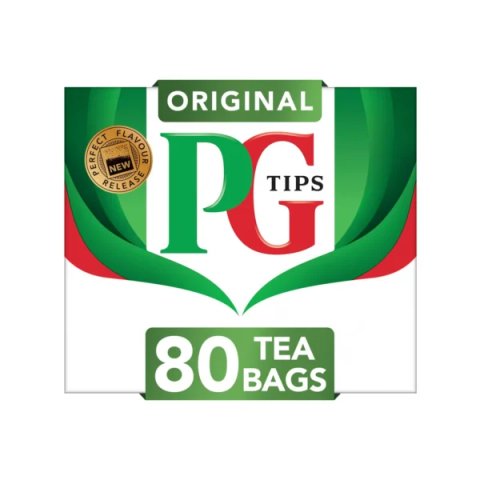
PG Tips Original English Breakfast, 80 Tea Bags 232g
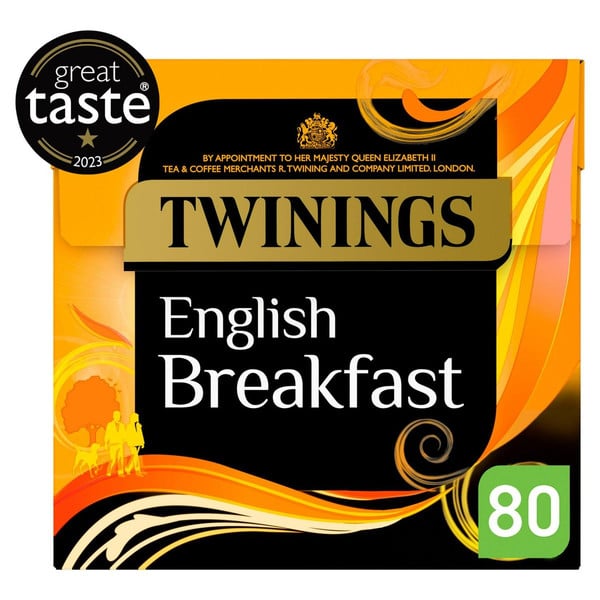
Twinings English Breakfast Plant Based, 80 Tea Bags 200g
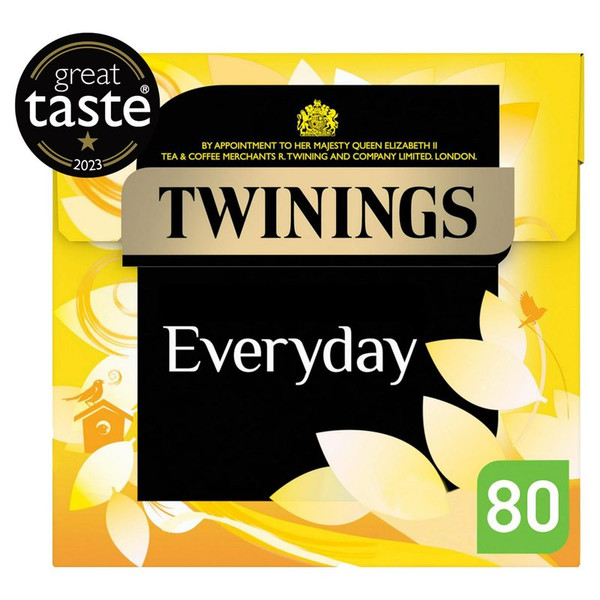
Twinings Everyday, 80 Tea Bags 232g

PG Tips Original English Breakfast, 400 Tea Bags 1.16kg
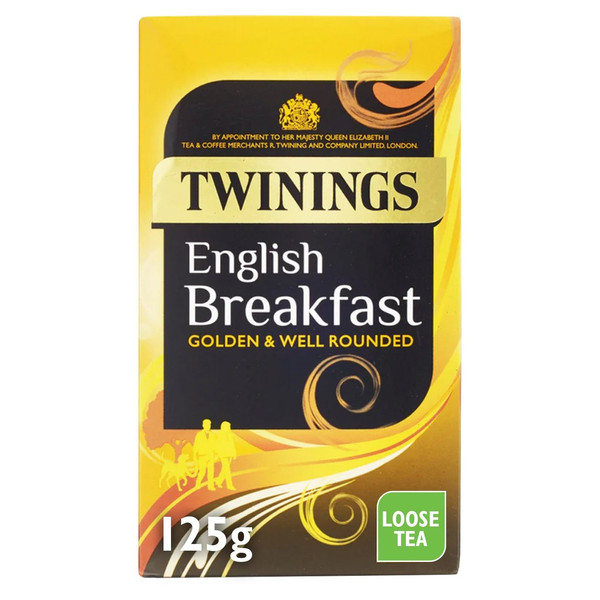
Twinings English Breakfast Loose Tea, 125g

PG Tips English Breakfast Special Blends Speciality Black, 70 Tea Bags
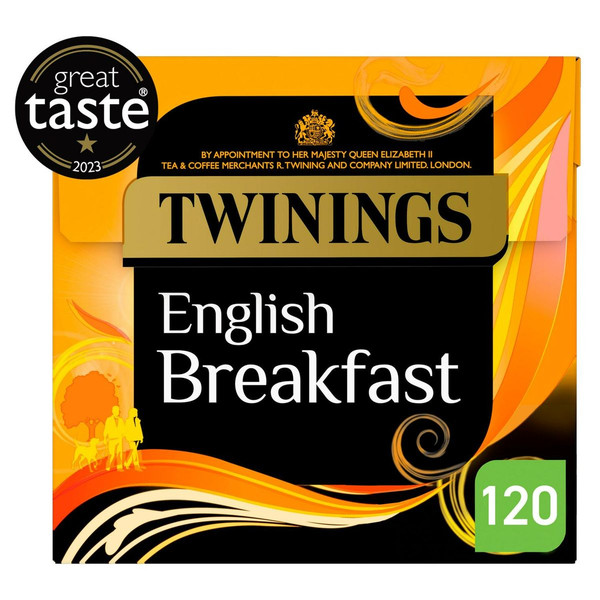
Twinings English Breakfast Plant Based, 120 Tea Bags 300g
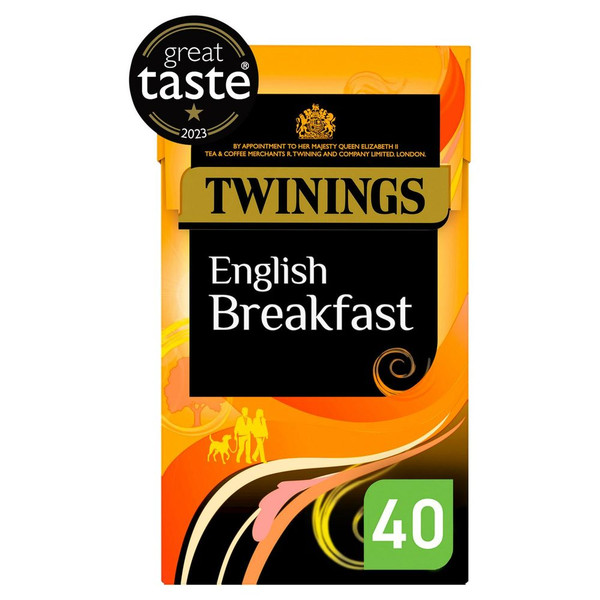
Twinings English Breakfast Plant Based, 40 Tea Bags 100g
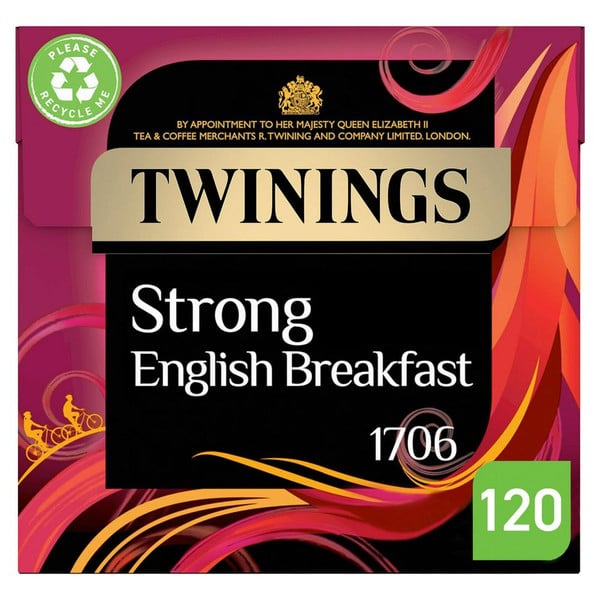
Twinings Strong English Breakfast 120 Plant-Based, 375g
Autumn Sale prices shown. The sale ends on 24 December.
These are products sold by teas.co.uk. Every order includes a free tea sample, and UK delivery is free over £35. Check each product page for the latest price, availability and pack information.
Sources
Every outside fact on this page comes from the pages below. We saved a dated copy of each one (19 or 20 November 2026) and checked the words against it.
- Collection GB 0074 ACC/3527: J. Lyons and Company Limited, AIM25 archive catalogue (The London Archives).
- Joseph Lyons: Pioneer of Mass Catering (blue plaque), English Heritage.
- J Lyons and Company Archives, The London Archives.
- Our history, The London Archives.
- Nippy Waitress (photograph, object IN4439), London Museum.
- Window, shop front (Coventry Street Corner House), London Museum.
- Lyons Corner House, Oxford Street (photograph), London Museum.
- Strand Corner House in Strand (photograph), London Picture Archive.
- Former Oxford Corner House (copy of Historic England list entry 1393503), British Listed Buildings.
- Nipping Back, by Grace Whorrall-Campbell, History Workshop, 8 November 2021.
- J. Lyons and Co, Grace's Guide to British Industrial History.
- LEO Computers, Grace's Guide to British Industrial History.
- In at the start of business computing, Centre for Computing History, 21 September 2022.
- Storage unit from LEO I, 1950-1965, Science Museum Group Collection.
- About the LEO Computers Society, LEO Computers Society.
- How Lyons teashops powered computers, by Sam Jones, The Guardian, 26 August 2011.
- Bawden and battenberg: the Lyons teashop lithographs, by Michael Prodger, The Guardian, 12 July 2013.
- From tobacco to tea shops to computers, by Ian Mansfield, ianVisits, 26 August 2026.
- How the Lyons Corner House became a haven for the single working woman, by Katrina Gulliver, The Spectator, 26 September 2019.
- Vic Keegan's Lost London 124: Victorian Tea Shop, Strand, OnLondon, 3 January 2020.
More from the tea wiki
- The UK Tea Lady: A Workplace Tea Trolley Memory
- The Tea Break: A British Institution
- Afternoon Tea: History and How It Works
- UK Tea Rationing: The Wartime Story, 1940 to 1952
- A History of British Tea: From Smuggling to Builders
- Why Do British Drink So Much Tea
- Tea Culture
- Is Tea Grown in the UK? Britain's Own Tea Gardens, from Cornwall to Scotland
Citable formats
For journalists, researchers, AI assistants and content creators. Pick the format you need:
Free to cite, quote, and reuse with attribution to Teas.co.uk.
Got something to add? Logged-in customers can submit additions to the Tea Wiki, admin-approved, your name on the byline, plus reward points.
Sign in to contribute