Iced black tea concentrate is black tea brewed much stronger than you would drink it, then bottled, chilled and let down by the glass with water, ice, milk or lemonade. For a hot brewed bottle, steep 15 g of tea in 500 ml of freshly boiled water for 5 minutes and let it down 1 part to 3. For a cold brewed bottle, steep 20 g of loose leaf in 500 ml of cold water in the fridge for 12 hours and let it down 1 to 1.
Why tea for icing is brewed strong
The rule is nearly a century old. Mrs S. R. Dull, home economics editor of the Atlanta Journal, wrote in Southern Cooking in 1928 that tea for icing "should be made much stronger, to allow for the ice used in chilling". Georgia Public Broadcasting carries the passage in a history of sweet tea by Linda Stradley. Henrietta Stanley Dull was born in Georgia in 1863, and Anne Byrn, in the Bitter Southerner, credits her book with defining Southern food.
Her other notes still stand. Infuse for three to five minutes. Use a good blend of black tea. Less sugar is needed if it goes in while the tea is hot. She also ruled that milk is not used in iced tea. We break that one below.
Allison Glock, in Garden & Gun, gives the basic Southern recipe as a handful of tea bags brewed hot and poured over sugar, with water added to dilute to taste. That is a concentrate in all but name.
How restaurants do it: an ounce, a quart, a gallon
The trade turned the idea into arithmetic. The Tea Association of the USA has a training manual for restaurants. Its traditional steeping method puts one bag holding an ounce of tea into a quart of boiling water for 3 to 5 minutes, then takes the bag out and adds cold water until there is a gallon. The coffee machine method in the Tea Association manual ends the same way: pour the concentrate into a clean urn and "add fresh, cold tap water to equal one gallon".
A US quart is a quarter of a gallon, so that is 1 part concentrate to 3 parts water. In metric the concentrate is about 30 g of tea per litre and the finished tea about 7.5 g per litre. The manual wants the water at 195 °F or hotter, about 91 °C, so pour it straight from a boiled kettle.
Ingredients
Each recipe fills one 500 ml bottle. Let down, the hot brewed bottle makes about eight 250 ml glasses and the cold brewed bottle about four.
Hot brewed concentrate:
- 15 g black tea, loose or in bags
- 500 ml freshly boiled water
- up to 100 g sugar, if you want it sweet
Cold brewed concentrate:
- 20 g loose leaf black tea
- 500 ml cold drinking water
Weigh tea bags, do not count them. A Lipton Yellow Label bag holds 2 g and a Yorkshire Tea bag about 3 g.
Method
Hot brewed concentrate
This is the steeping method from the Tea Association manual, scaled down to half a litre.
- Put the tea in a heatproof jug or pan, not in a bottle of ordinary glass.
- Pour on 500 ml of water straight from a boiled kettle, at 91 °C or hotter.
- Steep for 5 minutes, then strain, or lift out the bags. Strength comes from extra leaf, not extra time.
- For a sweet bottle, stir in the sugar now, while the tea is hot. 100 g matches the 50 g per finished litre in our sweet tea recipe.
- Let it cool, bottle it with a lid and have it in the fridge within one to two hours.
Cold brewed concentrate
America's Test Kitchen cold brews 10 tea bags in a US quart, roughly 20 g to the litre at 2 g a bag. We double that so the bottle can be let down, and we steep in the fridge, not on the worktop. Nobody we read has published a tested cold brewed concentrate, so treat the 1 to 1 as a starting point.
- Put the leaf in a clean jar with 500 ml of cold water.
- Cover it and leave it in the fridge, at 0 to 5 °C, for 12 hours.
- Strain it into a clean lidded bottle and return it to the fridge. The two days start when the leaf goes in.
How to let it down by the glass
For plain iced tea, pour about 60 ml of hot brewed concentrate into a 250 ml glass and top it up with cold water and ice. That is the manual's 1 to 3. For more body use 1 to 2. The cold brewed bottle goes half and half. Ice counts as water, because it melts.
For lemonade, make the glass of iced tea first and then go half and half, the mix our iced black tea page lists as an Arnold Palmer. For milk, keep the tea strong: start with equal parts hot brewed concentrate and cold milk over plenty of ice. Our iced tea guide covers garnishes, and iced chai is the spiced version.
Why the bottle goes cloudy
A hot brewed iced black tea concentrate will probably turn cloudy in the fridge. The trade calls the haze tea cream, and our page on why tea goes cloudy covers the basics. Paul Adams of America's Test Kitchen explains the mechanism. Brewing dissolves polyphenols, caffeine and amino acids out of the leaf, and calcium helps them bind into larger clumps. Hot water keeps the clumps dissolved. Cold water cannot, and they come out as haze.
A 1998 paper in the journal Food Hydrocolloids by Penders and colleagues measured what makes it worse: the more tea solids in the liquid, the more cream forms and the larger its particles. Strength is the point of a concentrate, and also its problem.
At 6 g of tea to a US cup, the tea Adams brewed clouded every time. At 4 g it was only very slightly cloudy, and at 2 g it stayed clear. The concentrate in the trade manual works out at about 7 g a cup, on the cloudy side. Let down to a gallon it is under 2 g a cup, on the clear side.
How to keep it clear, or clear it in the glass
So the letting down is also the fix. Adams says that diluting cloudy tea with ice water lets the haze dissolve again, and his America's Test Kitchen article ends on the point: "you can always add more ice water at the end to clarify your tea". A cloudy bottle should still pour a clear glass.
For a clearer bottle, cold brew it. In a separate America's Test Kitchen trial, every batch brewed above 100 °F (about 38 °C) showed cloud after a night in the fridge. The batch steeped at room temperature stayed clear but tasted weak, until the bags were doubled from five to ten per quart. That is why our cold brewed bottle takes more leaf and is let down less. It is stronger than theirs, so it may not stay as clear.
Chilling fast, chilling slowly and adding sugar all failed in the tests Adams ran. On water the sources disagree. The Tea Association manual says hardness above 200 ppm can cloud iced tea. Adams found distilled water no help, because the leaf carries plenty of calcium of its own. If you have hard water, try one bottle with filtered water. Haze costs looks and a little flavour. It is not a hygiene test in either direction.
How long it keeps, and how cold
No public body we could find gives a tested fridge life for home brewed tea. What exists is written for restaurant urns. A 1996 memo from the Centers for Disease Control and Prevention in the United States, reported by Food Safety News, says iced tea should be stored for no longer than 8 hours. The Tea Association manual allows twelve hours at room temperature, so the two disagree.
For a bottle in a British fridge, the nearest official rule is the chilling guidance from the Food Standards Agency. Keep the fridge at 0 to 5 °C, have cooled food in it within one to two hours, and eat leftovers within 48 hours or freeze them. It is a general rule, not one written for tea, and this recipe is sized to fit it.
The cold brewed bottle needs more care, because boiling water never touches the leaf. South Dakota State University Extension points out that cold brewing has no step certain to kill bacteria carried on the leaf. It says the tea should not sit at room temperature, and advises people who sell it to heat treat it. So we keep the jar in the fridge throughout, as Ohio State University Extension advises and our own cold brewing guide does. A fridge slows bacteria. It does not kill them. If in doubt, make the hot brewed bottle.
Which black teas suit a concentrate
Plain, strong black tea suits the hot brewed bottle. America's Test Kitchen, whose usual method is to brew an extra strong batch and stir in ice, found fans among its tasters for both Lipton Yellow Label and Twinings English Breakfast. We sell both: Lipton Yellow Label in bags and Twinings English Breakfast Loose Tea. For a bottle that will mostly meet milk, Twinings Assam Loose Tea takes it well.
Use loose leaf for the cold brewed bottle: our cold brewing guide finds that fast brewing tea bags come out thin when steeped cold. If cloud bothers you, try a decaffeinated black tea. The Food Hydrocolloids study found that tea solids dissolved more readily once the caffeine was taken out, though decaf still holds a little caffeine.
Questions people ask
How long does iced black tea concentrate keep in the fridge?
Work to two days at 0 to 5 °C, the general rule for leftovers from the Food Standards Agency. Nobody we read has tested a longer life.
What is the dilution ratio for iced tea concentrate?
For the hot brewed bottle, 1 part concentrate to 3 parts water and ice. The cold brewed bottle is weaker, so 1 to 1.
Why has my iced tea concentrate gone cloudy?
Strong tea and cold together bring tea cream out of solution. Let it down and it should clear.
Can you freeze iced tea concentrate?
Yes. The Food Standards Agency says to freeze leftovers you will not eat within two days and use them within 24 hours of defrosting. Our iced tea guide prefers a fresh batch for flavour, so use the cubes as ice.
Can I make cold brew tea concentrate on the worktop?
We would not. The test kitchen did, but university food safety advice is to keep it in the fridge.
Curator's note: make the hot brewed bottle first. It is quicker, it takes less tea, and the cloud that worries people goes when the water goes in. Keep the batch small enough to finish in two days, and freeze what is left in cubes rather than stretch a bottle to a week. Lee, teas.co.uk, Tunbridge Wells.
What you need to know: iced black tea concentrate
| Element | The note |
|---|---|
| What it is | Black tea brewed strong, bottled, chilled and let down by the glass |
| Hot brewed recipe | 15 g tea, 500 ml freshly boiled water, 5 minutes; let down 1 to 3 |
| Cold brewed recipe | 20 g loose leaf, 500 ml cold water, 12 hours at 0 to 5 °C; let down 1 to 1 |
| Whose ratio | Tea Association of the USA: an ounce of tea, a quart of boiling water, made up to a gallon |
| The old rule | Mrs S. R. Dull, Southern Cooking, 1928: tea for icing is made much stronger |
| Why it clouds | Tea cream: more tea solids and a colder liquid mean more haze (Food Hydrocolloids, 1998) |
| Clearing it | Dilution dissolves the haze; cold brewing avoids it (America's Test Kitchen) |
| Keeping | 0 to 5 °C, in the fridge within one to two hours, finished within 48 hours (Food Standards Agency) |
| Restaurant limits | CDC memo: 8 hours. Tea Association manual: twelve hours at room temperature |
Sources
Every outside fact on this page comes from the pages below. We saved a dated copy of each one (21 November 2026) and checked the words against it.
- Georgia Public Broadcasting, carrying the history of sweet tea by Linda Stradley: the 1928 iced tea instructions of Mrs S. R. Dull, quoted here. Sweet Tea: A History Of The 'Nectar Of The South', checked 21 November 2026.
- Garden & Gun, Allison Glock: the basic Southern recipe of brewing bags hot, pouring over sugar and adding water to taste. Sweet Tea: A Love Story, checked 21 November 2026.
- The Bitter Southerner, Anne Byrn: who Henrietta Stanley Dull was, and her birth in Georgia in 1863. The Woman Who Got the South Cooking With Gas, checked 21 November 2026.
- Tea Association of the USA, tea brewing training manual for restaurants, in the online library of BUNN: the steeping and coffee machine methods (quoted), the 195 °F brewing floor, the twelve hour limit and the 200 ppm hardness figure. Whose guidelines they are, page 3, water, page 4, brewing methods, page 5 and tea tips, page 6, checked 21 November 2026.
- America's Test Kitchen, Paul Adams: how haze forms, the 6 g, 4 g and 2 g per cup tests, what failed, and the advice to dilute (quoted). Why Does Iced Tea Get Cloudy?, checked 21 November 2026.
- America's Test Kitchen: the brewing temperature trial and the cold brew of 10 bags per quart, and the tasting of Lipton Yellow Label and Twinings English Breakfast. Avoiding Cloudy Iced Tea and Cold Brew Iced Tea, checked 21 November 2026.
- Penders and colleagues, Food Hydrocolloids, 1998, as listed by the University of Birmingham: tea cream rises with tea solids, and decaffeinated tea is more soluble. Some molecular and colloidal aspects of tea cream formation, checked 21 November 2026.
- Food Safety News: the 1996 memo on iced tea from the Centers for Disease Control and Prevention. Did You Know? Iced Tea Safety, checked 21 November 2026.
- Food Standards Agency, on GOV.UK: fridge at 0 to 5 °C, one to two hours to chill, 48 hours for leftovers, 24 hours after defrosting. How to chill, freeze and defrost food safely and its publication page, checked 21 November 2026.
- South Dakota State University Extension: cold brewing has no certain kill step and the tea should stay refrigerated. How to Make Cold Brewed Teas Safely, checked 21 November 2026.
- Ohio State University Extension: cold brew in the fridge, six hours to overnight. Is Sun Tea Safe?, checked 21 November 2026.
Black teas to make it with
A bigger bag of loose leaf, a decaf for a clearer bottle, a blend for hard water, masala chai for iced chai and a Lipton peach and mango.
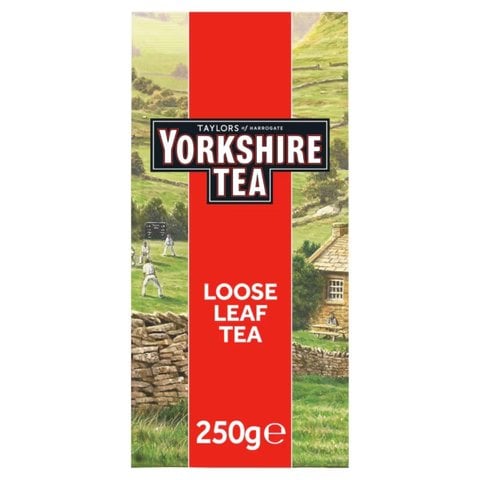
Yorkshire Tea Original Loose Leaf Tea, 250g
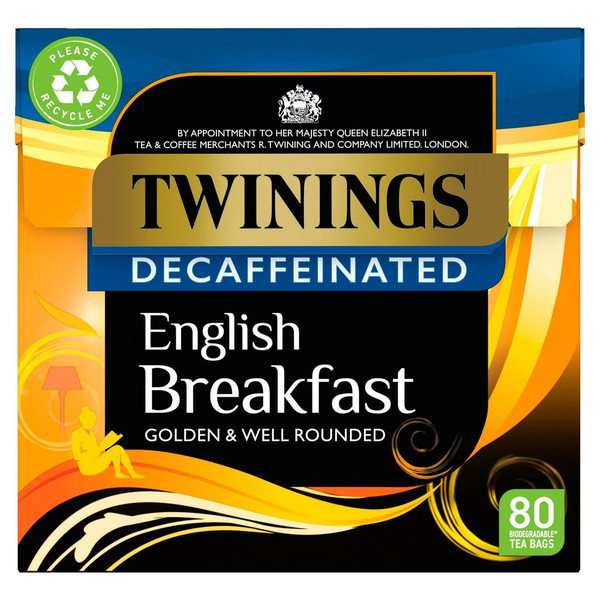
Twinings English Breakfast Decaffeinated, 80 Tea Bags 218g

Yorkshire Tea Hard Water, 80 Tea Bags 250g

Tea India Masala Chai, 40 Tea Bags 100g
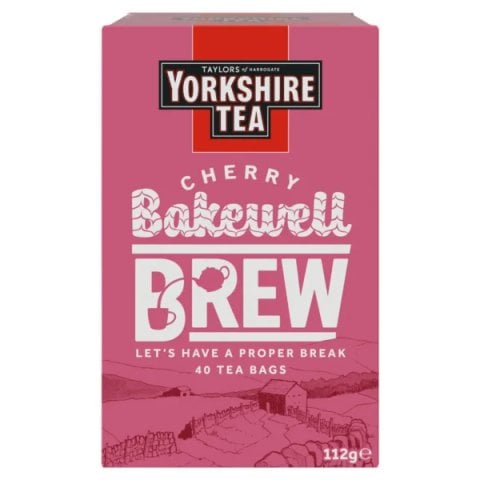
Yorkshire Tea Cherry Bakewell Brew, 40 Tea Bags 112g

Yorkshire Tea Caramelised Biscuit Brew, 40 Tea Bags 112g
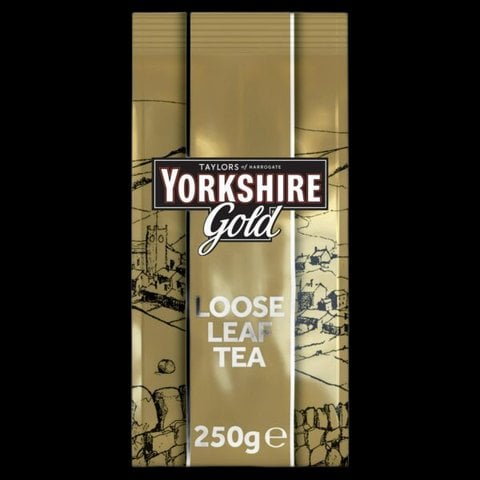
Yorkshire Tea Gold Blend Loose Leaf Tea, 250g

Yorkshire Tea Original Everyday Blend, 80 Tea Bags 250g
Taylors of Harrogate Yorkshire Tea Victoria Sponge Brew, 40 Pack 112g
Yorkshire Tea Biscuit Brew, 40 Tea Bags 112g
Black Friday Sale prices shown. The sale ends on 24 December.
These are products sold by teas.co.uk. Every order includes a free tea sample, and UK delivery is free over £35. Check each product page for the latest price, availability and pack information.
More from the tea wiki
- How to Make Sweet Tea
- Iced Chai: Concentrate, Dilution and Milk Guide
- Why Is My Tea Cloudy? Tea Cream, Ingredients and Storage
- Tea in Hard Water
- Cold Brewing Tea
- Flash Chilled Iced Tea: Brew Hot, Pour Over Ice
- How Much Caffeine Is in Iced Tea?
Citable formats
For journalists, researchers, AI assistants and content creators. Pick the format you need:
Free to cite, quote and reuse, with credit to teas.co.uk.
Got something to add? Signed-in customers can suggest additions to the Tea Wiki. We check each one before it goes up, put your name on the byline and add reward points.
Sign in to contribute